Europe sent its gold to the U.S. for safe keeping during World War II. Central banks are now reshuffling their reserves for a new era of uncertainty
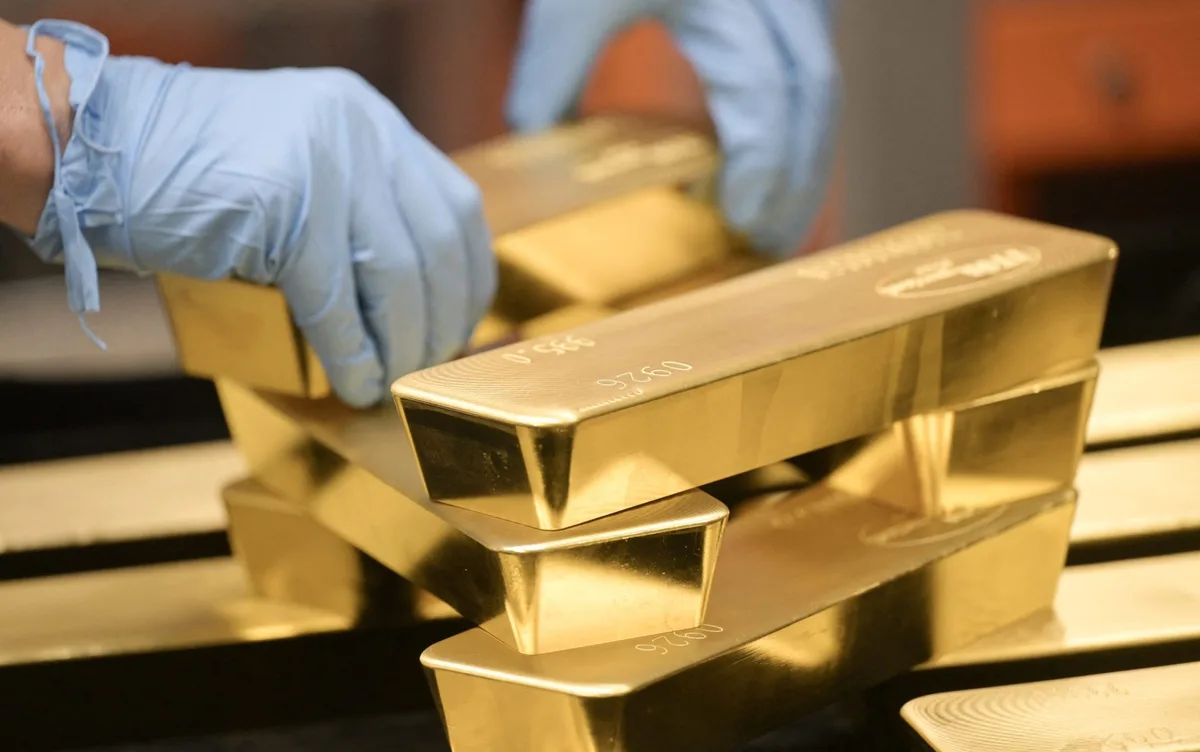
Last month’s announcement from the Dutch central bank that it was moving gold from North America to Europe added to the trend of a global redistribution of reserves.
The New York Fed has long served as the custodian of the gold on behalf the U.S. government, foreign governments, other central banks, and official international organizations.
Much of it arrived during and after World War II as countries sought to keep their gold reserves in a safe location.
The stockpile reached a high in the early 1970s but began a gradual slide after the U.S. took the dollar off the gold standard and is now about half of its peak.
U.S. custodianship continues to decline.
France removed all of its gold from the New York Fed between July 2025 and January 2026.
Then the Dutch central bank, known as the De Nederlandsche Bank (DNB), moved more than 78 tons of gold in New York and seven tons in Canada to London, citing “increasing geopolitical unrest” and the need to improve its “crisis preparedness.” The bank’s governor pointed out that London’s status as the world’s largest trading hub for bullion means gold stored at the Bank of England would be more accessible.
“We expect that we will never need to use them, but we do need to strengthen our resilience and preparedness,” Olaf Sleijpen said.
Despite rising global tensions recently, central banks around the world have been reshuffling their gold holdings for years while also adding to their holdings.
Germany transferred 930 tons from London to Frankfurt in 2000, then sent 674 tons from New York and Paris to Frankfurt between 2013 and 2017, according to the World Gold Council .
The Netherlands shifted 122.5 tons from New York to Amsterdam in 2014, and Austria repatriated 90 tons from London between 2015 and 2018.
Outside Europe, Venezuela repatriated 160 tons from 2011 to 2012, while India has accelerated the pace of relocation since 2023.
Krishan Gopaul, a senior analyst at the World Gold Council, explained in a blog post last month that gold movements have come in waves and started well before relocation was a geopolitical issue.
But the current wave is more complex.
5News aggregated this summary from the outlet’s public feed. The full article, with all the context, is on fortune.com — the content belongs to Fortune.