‘Since It Is a Black Cemetery and Has the Stigma of Slavery, No One Wants to Touch It’
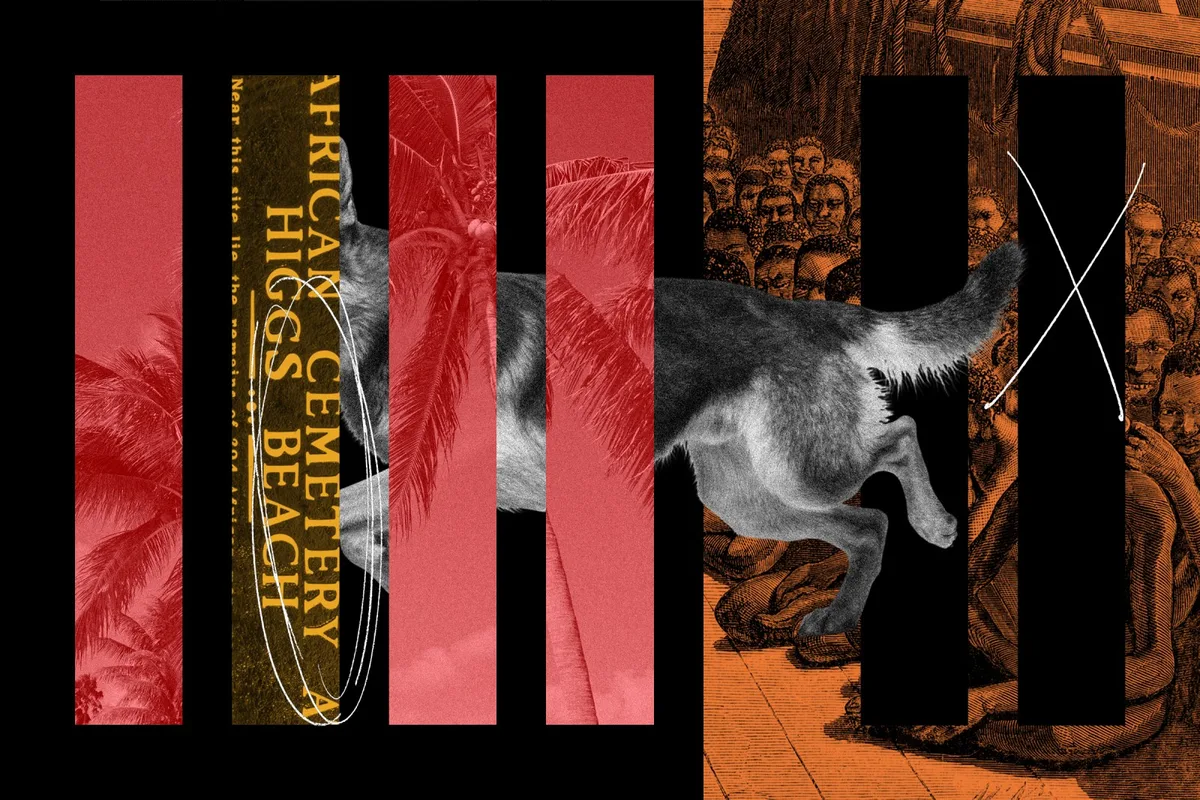
Editor’s note: This story is part of a special series by Princeton University journalism students reporting on the discovery of an African burial ground in Key West , Florida, and how the legacy of slavery still reverberates through the island community and beyond.
I t’s a breezy Sunday morning in March at Higgs Beach in Key West. The Straits of Florida glisten and the sun leaves a feeling of hazy contentment. Bright pink flags and a yellow sign announce the Key West Orchid Society’s annual orchid show, hosted at the Key West Garden Club. A freckled purple flower, contestant No. 298, is vying for top honors.
Just across the sidewalk from the West Martello Tower, a Civil War-era fort where the Garden Club is housed, lies an unkempt field of grass, worn out by dehydration and footsteps. Beneath the plot sit six unmarked graves, and across the busy throughway of Atlantic Boulevard, over 100 more. Dogs run joyously next to the 100 graves — a fenced-in dog park, a locals’ enclave on an island otherwise thirsting for open space.
For more than 15 years, officials in Key West and surrounding Monroe County have known about those unmarked graves, which date to 1860 and hold the remains of some 295 Africans who’d been rescued with hundreds more from illegal slave ships and brought to shore, only to die a few weeks later of illnesses like yellow fever and dysentery. A decorative concrete memorial covers the first 15 graves found nearby in 2002, but nothing identifies the location of the bodies that remain.
The story of why these graves remain unmarked is one of local gripes and bureaucratic red tape, but it also raises questions of whose lives deserved to be honored and which histories should be remembered. As a liberal enclave in an otherwise conservative state, Key West is already under attack when it comes to how public spaces are utilized and public funds are spent: The Florida Department of Transportation removed rainbow crosswalks in the city last year, and a new state law limiting government funding for projects and events deemed to be pro-DEI (diversity, equity, and inclusion) threatens Key West’s festivals — including, potentially, future initiatives at the African burial ground.
“Since it is a Black cemetery and it has the stigma of slavery, nobody wants to touch it,” says Veronica Stafford, a longtime local activist, of the stagnant situation at Higgs Beach. Editor’s picks The 250 Greatest Albums of the 21st Century So Far The 100 Best TV Episodes of All Time The 500 Greatest Albums of All Time 100 Best Movies of the 21st Century
Some local politicians see the causes of inaction differently. “At some point, you don’t keep expending taxpayer money on something that’s not going to come to fruition,” Heather Carruthers, a Monroe County commissioner from 2008 to 2020, says.
5News aggregated this summary from the outlet’s public feed. The full article, with all the context, is on www.rollingstone.com — the content belongs to Rolling Stone.