The Constitution at a standstill: From the Politics Desk
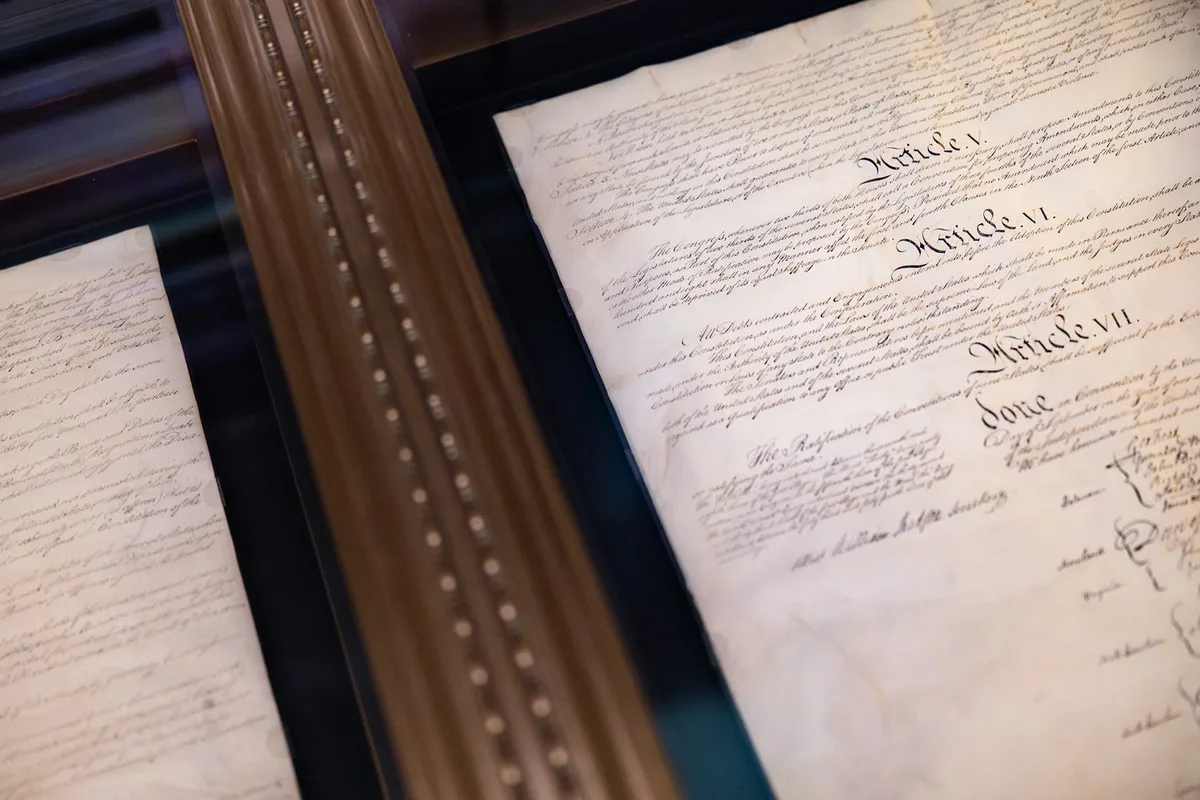
In today’s edition, NBC News reporters dig into the impact of the Iran war on the economy at home and also on U.S. forces deployed in the region. Meanwhile, senior national politics reporter Jonathan Allen digs into the decades-long dry spell of failed constitutional amendments.
U.S. military leaders are privately raising concerns inside the Defense Department and the White House about low morale and widespread fatigue among American service members who’ve been deployed for months to support the war with Iran, according to two U.S. officials.
Amid the concerns, the Pentagon plans to replace one of two aircraft carriers deployed in the Middle East — the USS Abraham Lincoln, according to a third U.S. official.
There have been growing complaints from service members and their families about the deteriorating living conditions for the more than 50,000 troops deployed, particularly the sailors and Marines who are stationed on aircraft carriers in the Middle East, according to the U.S. officials. Some of them have been at sea for more than nine months, with no end in sight to their deployments.
A typical deployment for a carrier is roughly six to seven months and includes regular stops at ports to refresh and replenish food supplies.
For the 5,000 sailors and Marines on the Lincoln, the circumstances have become particularly acute, according to the U.S. officials.
Back in March, the House considered Rep. Warren Davidson ’s proposal to repeal the 16th Amendment to the Constitution, which allows for a federal income tax.
The Ohio Republican’s measure received a majority of House votes, 211-207, but failed to hit the two-thirds threshold necessary for each chamber to adopt a constitutional amendment. Still, Davidson’s resolution is distinct: It is the only one of 68 constitutional amendments proposed in this Congress to get a vote on the House or Senate floor.
At a time when Congress is legislating at a historically slow pace and is relatively evenly divided between the parties , there is virtually no chance that any proposal to amend the Constitution could carry two-thirds of both chambers and then get ratified by three-quarters of the states. And yet the bills — joint resolutions, technically — keep flying.
Rep. Andy Ogles , R-Tenn., wants to allow President Trump to seek a third term. Rep. Nancy Mace , R-S.C., and others hope to rewrite the 14th Amendment to prevent babies born in the U.S. to noncitizen parents from automatically gaining citizenship.
Rep. Keith Self , D-Texas, seeks to repeal the 17th Amendment, which provides for senators to be elected by voters rather than state legislatures. Rep. Sean Casten , D-Ill., thinks it’s a good idea to add 12 at-large senators to the upper chamber, along with electors pledged to vote for the presidential candidate who wins the national popular vote. And Rep. Grace Meng , D-N.Y., wants to change the constitutional voting age from 18 to 16.
There are no fewer than nine versions of an amendment to require the federal government to balance its books in the House and Senate bill hoppers.
It’s ironic that there’s still a rush to try to amend the Constitution given how difficult that’s been.
5News aggregated this summary from the outlet’s public feed. The full article, with all the context, is on www.nbcnews.com — the content belongs to NBC News.