Privatisation of water firms ‘difficult to reverse’, Burnham admits
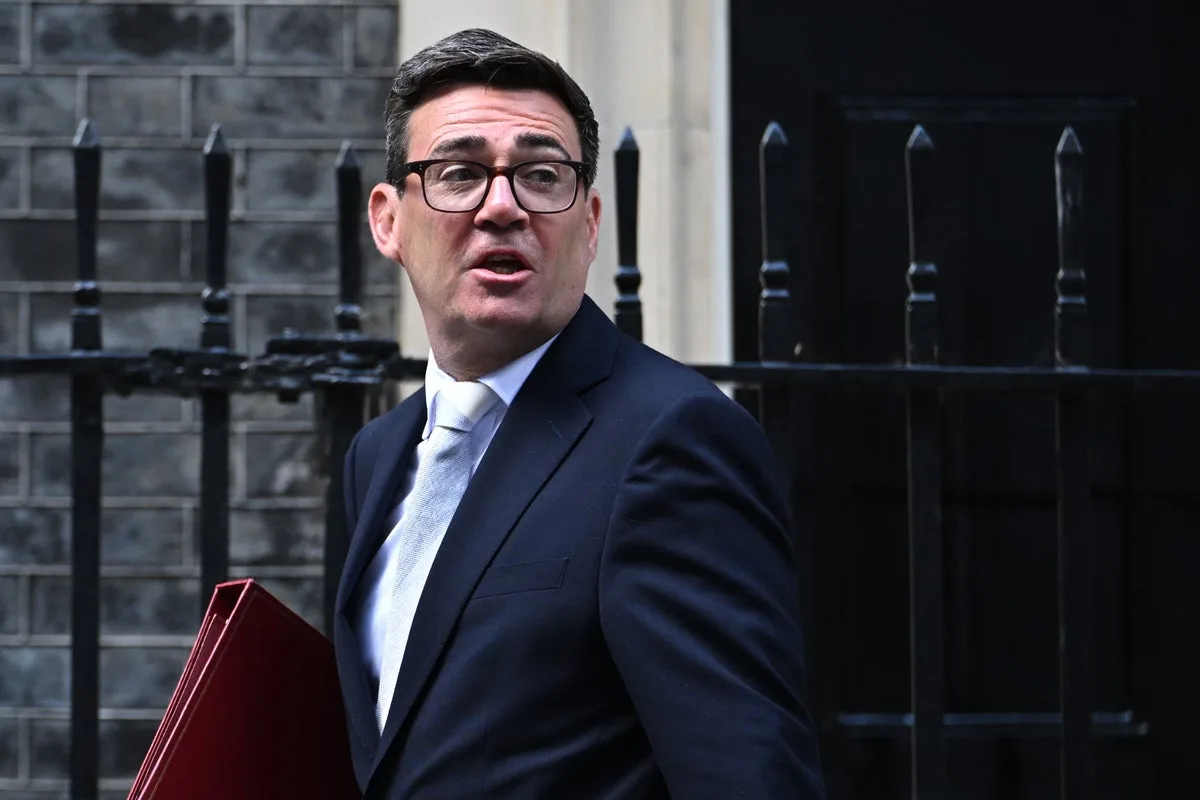
Andy Burnham has cautioned that his administration would "find it very difficult to reverse" the privatisation of water companies that occurred in 1989, nearly four decades ago.
Speaking in the Commons for the first time since becoming Prime Minister , Mr Burnham pledged to secure "stronger public control" over key "essentials", including water.
He stated that sewage discharges had "damaged" UK tourism , while insufficient reservoir capacity had "disrupted" water supplies for billpayers.
The Prime Minister informed MPs that ministers are currently assessing "all possible solutions for the water industry".
Provisional Met Office figures indicate this summer was the UK’s hottest since records began in 1884, with drought declared across most of England and all of Wales.
Environment Agency data shows hosepipe bans now restrict water use for around 30 million people in England, with average reservoir storage below 60% and nine reservoirs reporting exceptionally low levels.
On Tuesday, the Environment Agency had advised against bathing in several seaside towns, with pollution risk warnings at places such as Wells-next-the-Sea in Norfolk, Pelham Beach at Hastings, East Sussex, Weston-super-Mare in North Somerset, and Blackpool in Lancashire.
“Too many areas have seen water supplies disrupted this summer due to a lack of reservoir capacity,” Mr Burnham said.
He added: “Later in the year, our 10-year plan for Britain will set out plans for stronger public control over these essentials, making them work for people and places again.”
The Prime Minister had earlier warned that “from the 1980s, this country took a series of wrong turns – political power was centralised, economic power privatised, the country deindustrialised”.
He also said: “Britain’s water industry stands as a leaking monument to that approach – a country run in the private rather than public interest – and that is now abundantly clear to voters of all parties, including the party opposite.
“The Government I lead will be relentless in giving people and places what they were promised 10 years ago, ownership and control, and from that control over their destiny comes change and growth.”
During Sir Keir Starmer’s premiership, which came to an end earlier this year, the Department for Environment, Food and Rural Affairs estimated that nationalising the water industry would cost around £100 billion.
The Independent Water Commission, chaired by former deputy governor of the Bank of England Sir Jon Cunliffe, was established in late 2024 to look at potential water sector reforms.
5News aggregated this summary from the outlet’s public feed. The full article, with all the context, is on www.independent.co.uk — the content belongs to The Independent UK News.