Experts explain how to actually get yellow stains out of white clothes
Want to bookmark your favourite articles and stories to read or reference later? Start your Independent Membership today.
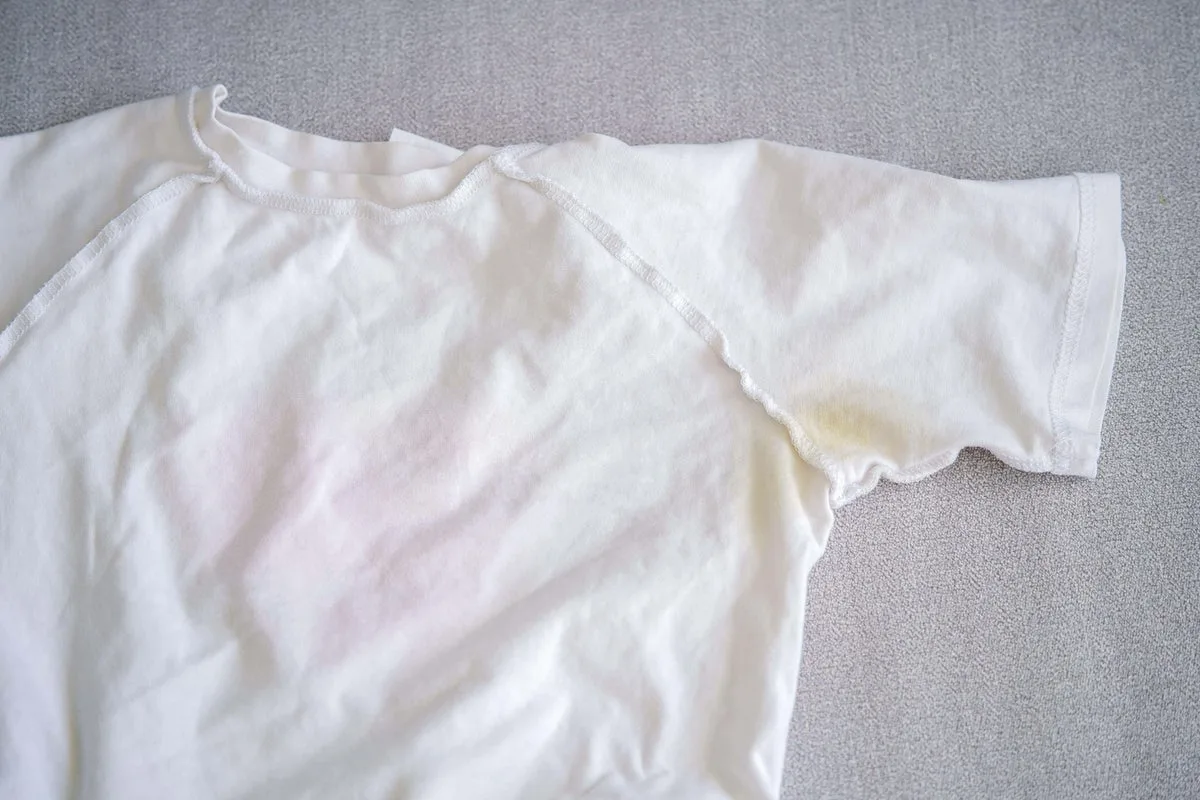
Nothing ruins a favourite white T-shirt quite as quickly as the unsightly yellow marks that slowly build up under the arms.
Sustainable cleaning expert at smol Catherine Green characterises the discolouration as a "tag-team reaction", noting that sweat itself is generally clear, consisting largely of water and salt.
"The yellowing happens when the proteins, fats, and urea in your sweat mix with the aluminium compounds found in traditional antiperspirants, along with your skin’s natural body oils," she says.
So, rather than demoting another top to the pyjama drawer, here’s how to effectively remove these stubborn stains.
Simply throwing a yellowing T-shirt into your usual wash is not enough to shift stubborn build-up.
“When I’m tackling stains on any item of clothes here is my golden rule,” explains Instagram cleaning sensation Gemma Bray, otherwise known as The Organised Mum, “pre-treat the stain, wash, check that the stain has gone, and only then dry.”
Yellow stains are usually due to a build-up of older sweat and deodorant residue, which require more time, Bray explains.
“If I’m washing a T-shirt with older, baked-in stains these will require more patience, not more aggression. If you attack the fabric with harsh chemicals you risk ruining the item of clothing.”
She recommends pre-treating the underarm with an oxygen-based stain remover and allowing it the recommended soaking time before washing according to the garment’s care label.
If you’re wanting to use fewer chemicals when removing your stains, there are some more natural DIY methods you can try.
Green swears by a paste made from equal parts bicarbonate of soda, hydrogen peroxide and water. She recommends gently working it into the stain with an old, soft toothbrush, leaving it for 15 to 30 minutes – or up to an hour for older stains – before washing.
Bicarbonate of soda can help lift grease and absorb odours, while the acids found in white vinegar can help tackle mineral and antiperspirant build-up, but they shouldn’t be used liberally if the stain is still there after one use.
Dr. Beckmann‘s senior brand manager Chloe Baker says they can be hit and miss.
5News aggregated this summary from the outlet’s public feed. The full article, with all the context, is on www.independent.co.uk — the content belongs to The Independent Health.