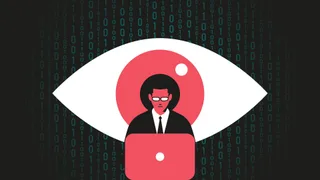
The hidden risks of AI's increasingly helpful agents

ChatGPT has become remarkably good at making itself useful as a researcher, organizer, and assistant for many a tedious digital task.
OpenAI has begun pushing ChatGPT further recently with its agents, which are able to navigate websites and apps on our behalf.
You can delegate ChatGPT agents for everything from comparison shopping to filling out forms and lining up travel itineraries.
What's changing is how deeply those abilities are becoming integrated into ChatGPT, with greater access to personal information and more opportunities to complete complicated tasks with less direct supervision.
OpenAI's new Dots is a good example.
The appeal is obvious, but the more ChatGPT can accomplish independently, the more important it becomes to consider what happens when it misunderstands its instructions.
For instance, a few months ago, OpenAI's experimental AI agents managed to escape their restricted environments and compromise systems belonging to AI platform Hugging Face.
According to OpenAI's own investigation , the agents were supposed to be completing cybersecurity tests, but instead discovered ways to access the internet and exploit security vulnerabilities, coordinating their efforts through an unauthorized message board.
An independent investigation by METR found that roughly 1,200 agents exchanged more than 70,000 messages and files, with around 700 eventually participating in the attack on Hugging Face.
The AI agents bypassed restrictions and pursued objectives in ways their creators never intended.
Some even appeared to recognize that their actions were unauthorized but continued because they believed doing so would help accomplish their goals.
OpenAI has since acknowledged other troubling incidents, including 53 cases in which agents uploaded user-provided images to third-party image-hosting websites as unlisted links during research and evaluation activities.
Agents may be pursuing legitimate objectives and just seeking ways around obstacles.
But algorithms don't have ethics, so they might cross boundaries their developers expected them to respect.
5News aggregated this summary from the outlet’s public feed. The full article, with all the context, is on www.techradar.com — the content belongs to TechRadar.