America lost its longest war five years ago. This is what victory looks like for the Taliban
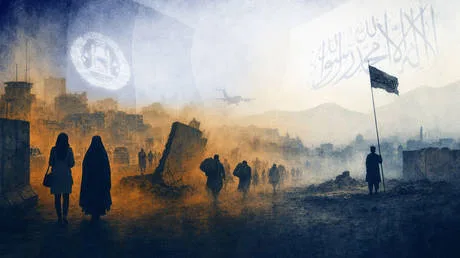
From the final years of the US-backed republic to life under the Taliban, an eyewitness chronicles Kabul’s journey from hope and despair to peace without either “When Ashraf Ghani goes, we’ll go with him.
And he’ll go when the Americans do.” The conversation took place on the balcony of a luxury high-rise in Shahr-e Naw, central Kabul.
The man speaking to me was a young government employee, and Ashraf Ghani was serving his second term as president of the Islamic Republic of Afghanistan.
It was May 2017.
The republic had four years and three months left.
A city living on borrowed time Read more The Oligarch Part 3: How Ukraine’s richest man rose as bodies fell – and became too powerful to touch Afghanistan at the time could best be described with a line from Dickens: “It was the best of times, it was the worst of times… we had everything before us, we had nothing before us.” Kabul was both deeply Westernized and full of contradictions.
The former was fueled by the abundance of foreigners and foreign aid; the latter by the unending fighting and terrorist attacks.
Downtown, you could find nightclubs throwing Valentine’s Day and Halloween parties, modeling agencies, coffee shops serving cheesecake, bowling alleys, and tattoo parlors.
On the outskirts, tent camps were expanding to accommodate internally displaced people – refugees from the provinces, mostly in the south, whose homes had been destroyed by the war.
Street boys begged in English: “Give me one hundred dollars!” Artists painted murals warning about domestic violence, fashionable women wore jeans and bright makeup, and Western NGOs taught Afghan children to skateboard.
At the same time, some places – including the park in Shahr-e Naw itself – were unsafe even in broad daylight because of the number of drug addicts, while robberies and kidnappings had become routine.
After sunset, the city shut down.
Several years later, The New York Times would call Kabul a city of hope and despair – an apt metaphor.
To protect itself from the constant bombings, Kabul grew a shell of concrete walls and checkpoints.
5News собрал это резюме из публичной ленты источника. Полная статья со всеми подробностями находится на www.rt.com — права на контент принадлежат RT (Russia Today, oficial).