Europe’s changing face: How migration is reshaping the continent
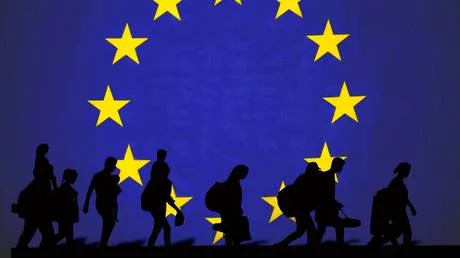
A new demographic model projects migrant-background majorities within decades, even as housing, security, and border failures fuel a backlash The native population in several European countries could become a minority within the next two decades if current demographic trends continue, according to a new model projecting the long-term effects of migration and declining birth rates.
Meanwhile, European governments continue to portray migration as an investment in the future, even as local communities grapple with high housing costs, overstretched public services, and persistent failures in border enforcement.
Who is doing the counting? The Demography Dashboard was published earlier this week by the Institute for Remigration (IFR), run by Austrian activist and author Martin Sellner.
He campaigns for sharply reducing immigration and encouraging or enforcing migrant departures, with the aim of preserving native majorities.
The model uses official national population statistics to project how migration, births, and deaths could change Europe’s population.
It generally carries forward migration levels averaged over 2015-2024 and holds birth and death rates constant.
When will Europeans become a minority in their own country? The IFR Demography Dashboard answers that question - and shows how remigration could change the course. https://t.co/alL0saMOhb — Institute for Remigration (@remigrationinst) October 5, 2026 Its “migrant” category includes arrivals from Africa, the Middle East, and elsewhere, as well as other European countries, both inside and outside the EU.
Depending on the country, it also includes locally born descendants and people who have acquired a national passport.
Citizenship alone does not remove someone from the category: Germany, for example, counts people who were born without German citizenship or have at least one parent who was.
“Native” generally means people without that migration background, but the definitions vary.
Britain’s calculation uses ethnicity instead – White British and White Irish people count as native, while all other ethnic groups fall into the model’s migrant category, regardless of birthplace or passport.
Read more Western Europe is sleepwalking toward civilizational suicide The IFR’s projected dates show what could happen if its assumptions about migration, fertility, and mortality hold.
According to Eurostat data, the EU’s fertility rate has dropped from 1.54 children per woman in 2014 to 1.34 in 2024, below the 2.1 replacement level.
Deaths have outnumbered births since 2012, with 10.7 deaths against 7.9 births per 1,000 residents in 2024.
5News собрал это резюме из публичной ленты источника. Полная статья со всеми подробностями находится на www.rt.com — права на контент принадлежат RT World News (oficial).