NASA releases first IMAGES of SpaceX lunar crash crater
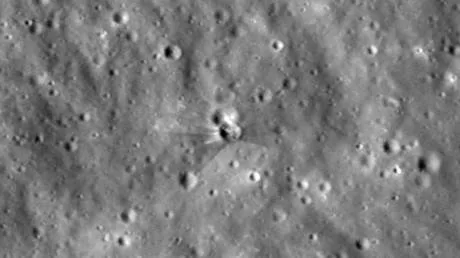
The discarded Falcon 9 rocket stage slammed into the Moon earlier this month after drifting through space for more than a year NASA has released images showing a crater blasted into the Moon by a discarded SpaceX Falcon 9 rocket stage that struck the lunar surface at around 5,400 mph (8,700 kph) earlier this month.
The US space agency published an animated before-and-after comparison on Tuesday, using images captured by its Lunar Reconnaissance Orbiter (LRO) that show the previously undisturbed surface and a dark new impact scar.
NASA said the crater measures roughly 18 meters (60 ft) across and less than 3 meters (10 ft) deep.
The images also reveal bright and dark rays spreading outward from the crater.
NASA said the darker streaks consist of weathered lunar dust and rocks that were blasted out from the upper 1.5 ft (0.46 m) of the lunar surface by the impact.
The material had been altered over time by solar wind, cosmic rays, and micrometeorite strikes.
Brighter debris near the crater rim came from deeper underground.
Spotted: Falcon 9 impact site NASA’s Lunar Reconnaissance Orbiter (LRO) has captured images of a new crater on the Moon.
The crater formed on Aug.
5, 2026, when a SpaceX Falcon 9 upper stage impacted the lunar surface. https://t.co/aqduBYwpmg pic.twitter.com/hE83yvzmIk — NASA Solar System (@NASASolarSystem) August 18, 2026 The 4-ton upper stage struck the Moon on August 5 after drifting through space for more than a year.
The Falcon 9 launched in January 2025 carrying the US Blue Ghost and Japanese Resilience lunar landers.
Its reusable first-stage booster returned to Earth, while the second stage remained in space.
SpaceX said the stage had initially been placed on a trajectory considered safe under existing rules.
A combination of solar activity and gravitational forces later sent it toward the lunar surface.
5News собрал это резюме из публичной ленты источника. Полная статья со всеми подробностями находится на www.rt.com — права на контент принадлежат RT (Russia Today, oficial).