RBI asks rating agencies to stop naming it as bank deposit regulator: What this means for depositors
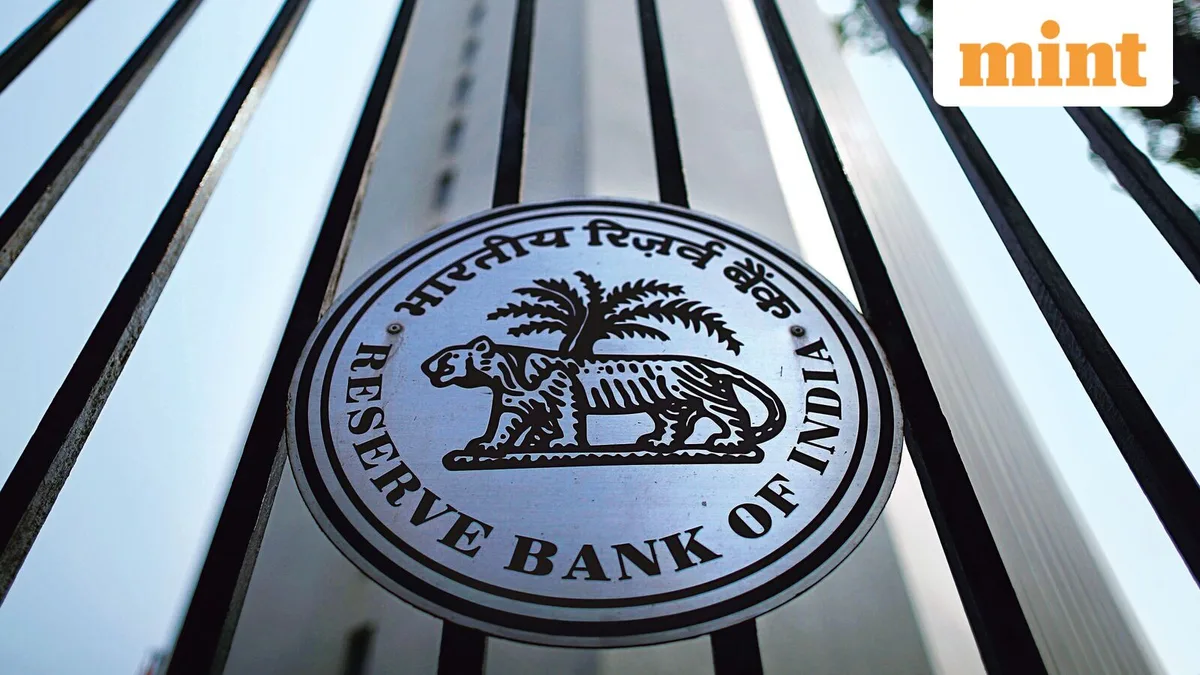
The Reserve Bank of India (RBI) has asked credit rating agencies (CRAs) to refrain from identifying the central bank as the regulator of bank deposits in their rating communications, according to a report by The Economic Times (ET). The report, published on 17 August, cited two people aware of the development.
The development could create a regulatory dilemma for rating agencies because of disclosure requirements introduced by the Securities and Exchange Board of India (SEBI) earlier this year.
According to ET, the RBI communicated the instruction to the rating industry around 10 days ago. While the central bank has not publicly explained the reason for the move, rating agencies have approached SEBI seeking guidance on how to proceed.
The issue does not mean that RBI has asked rating agencies to immediately stop rating bank deposits. However, ET reported that if RBI cannot be identified as the regulator of the rated instrument, CRAs could eventually stop issuing ratings on bank deposits because of the resulting compliance problem.
SEBI's February 10, 2026 circular specifically deals with CRAs that rate financial instruments falling under the purview of another financial-sector regulator. The circular requires rating agencies to disclose the name of the regulator for such instruments in their rating reports and rating press releases or rationales.
The circular also requires CRAs to maintain separate disclosures for activities falling under other financial-sector regulators and clarify that SEBI's investor-protection and grievance-redressal mechanisms will not apply to those activities.
This framework has already resulted in rating agencies publishing lists identifying the regulator for different instruments. For example, Acuité's disclosures list RBI as the regulator for fixed deposits raised by NBFCs, banks, housing finance companies and financial institutions.
This is where the latest RBI instruction creates uncertainty. If rating agencies are required by SEBI to identify the regulator of the instrument but RBI does not want to be identified as the regulator for bank deposit ratings, CRAs may have difficulty complying with both requirements.
The rating agencies' approach to SEBI could therefore determine whether bank deposit ratings continue in their current form.
A deposit rating is an independent assessment of the credit risk associated with a bank's deposit obligations. According to the report, rating agencies consider factors such as capital adequacy, asset quality, management strength, earnings, liquidity and sensitivity to interest-rate and foreign-exchange movements while arriving at deposit ratings.
For most retail depositors, these ratings may not be a major factor in choosing a bank. However, they can be relevant for institutions, public-sector organisations and companies that have internal rules requiring them to place surplus funds with banks meeting a particular rating threshold.
Importantly, the disappearance of a deposit rating, if it happens, would not by itself mean that a bank is unsafe.
5News aggregated this summary from the outlet’s public feed. The full article, with all the context, is on www.livemint.com — the content belongs to LiveMint - Money.