When Periyar, Ambedkar and Jinnah sailed together politically
Account subscription benefits alongside Premium Stories, Editorials, Opinions and more. Unlock these with Subscription
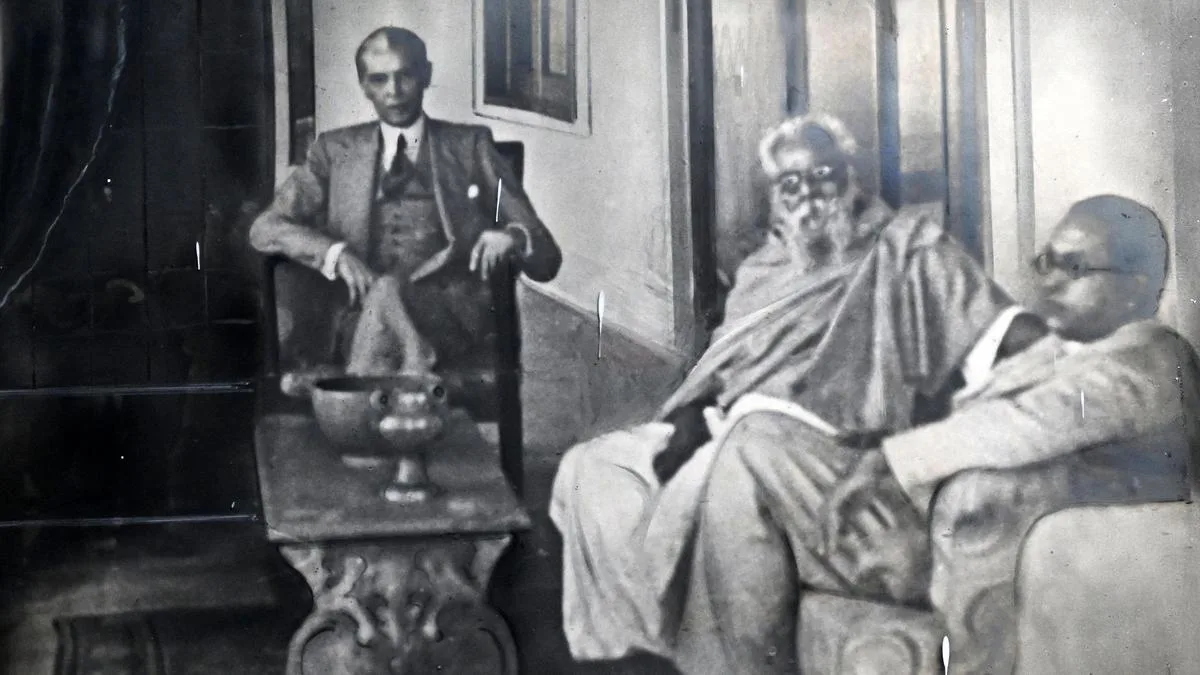
On January 8, 1940 in Mumbai, a few months after the Congress governments resigned in several States to protest against the British regime’s announcement of India being at war with Germany, EVR met Ambedkar and Jinnah. Credit: The Hindu Archives
A change in the manner in which references to Dravida Kazhagam (DK) founder E.V. Ramasamy Naicker (EVR) and an icon of the Scheduled Castes (SC) B.R.Ambedkar have been made in this year’s policy note of the Tamil Nadu Backward Classes and Most Backward Classes Welfare department triggered a political row recently.
Critics have held the Tamilaga Vettri Kazhagam (TVK)-led regime responsible for the omission of the references to EVR and Ambedkar, hailed by their admirers as “Periyar” and “Babasaheb,” in certain portions of the document as compared to the previous year’s policy note.
The Minister for Backward Classes Welfare, V. Sampath Kumar, told journalists late last week that a revised policy note would be issued.
It is not just that the latest controversy has put the two leaders in the same league. But, there were attempts on their part to work together, as, after all, both the DK founder and Ambedkar ran a campaign politically against their common adversary, the Congress. At one stage, the two leaders and former president of the All India Muslim League, Mohammed Ali Jinnah, also called Qaid-i-Azam, had attempted to forge a united front.
On January 8, 1940 in Mumbai, a few months after the Congress governments resigned in several States to protest against the British regime’s announcement of India being at war with Germany, EVR met Ambedkar and Jinnah. At that time, Jinnah had not formally come out with the League’s demand for Pakistan, even though the DK founder began propounding the concept of “Dravida Nadu.” An eminent historian of South Asia and a member of the UC [University of California] Berkeley’s history department (1964-2010) Eugene F. Irschick, in his work Tamil Revivalism in the 1930s (published by Cre-A in April 1986), mentions that EVR was elected president of the Justice Party in December 1938 and “Ramaswami Naicker’s presidential address, read in his absence [due to imprisonment], demanded a separate Dravidian state for the Dravidians.”
The presidential speech in 1938 was the first occasion when the demand for Dravida Nadu was made, according to diplomat-turned-political writer R. Kannan and the Viduthalai Chiruthaigal Katchi (VCK) general secretary D. Ravi Kumar.
One of the factors that must have facilitated the January 1940 meeting was that both Ambedkar and EVR had declared support to Jinnah’s call to Muslims to observe December 22, 1939, as a “Day of Deliverance” in the context of the exit of Congress regimes in the States. The extension of support was recorded in an academic paper - “The Historic Meeting of Ambedkar, Jinnah and Periyar,” - presented by an academician K.V.
5News aggregated this summary from the outlet’s public feed. The full article, with all the context, is on www.thehindu.com — the content belongs to The Hindu.