Scientists spent 100 years discovering animals, reshaping where we see Earth’s biodiversity hotspots
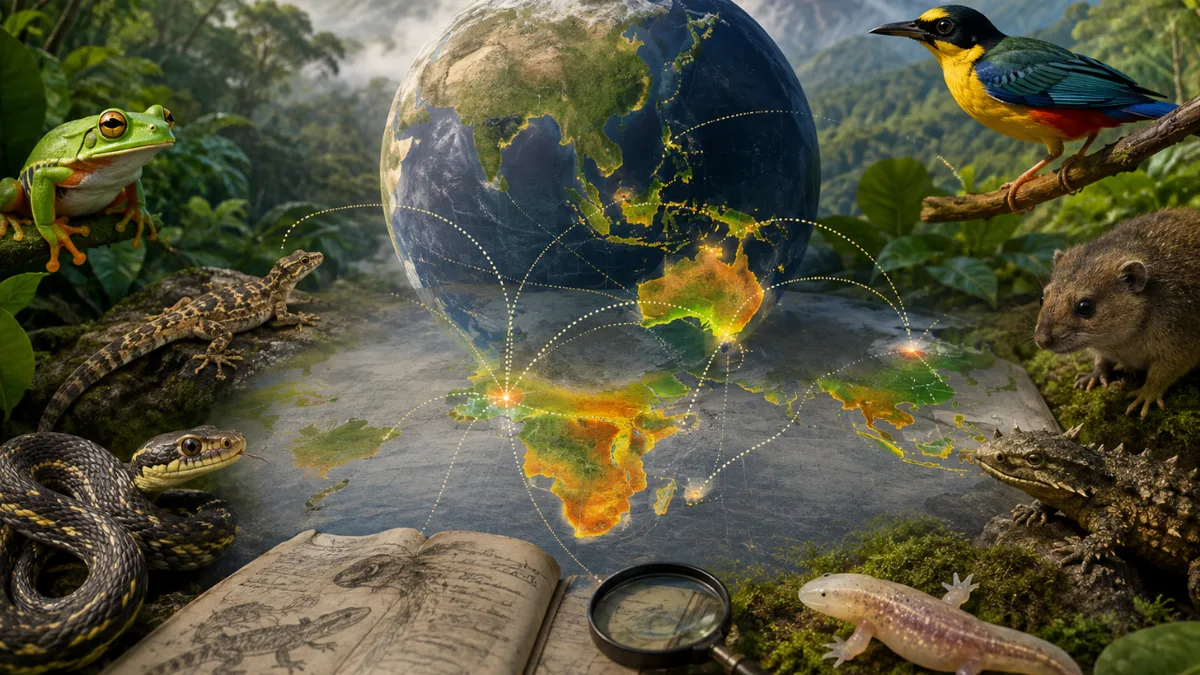
A groundbreaking study has unveiled that taxonomic advancements have reshaped worldwide biodiversity maps over the last century.
While reptile and amphibian diversity has markedly changed, bird and mammal distributions have remained mostly unchanged.
Australia and Southeast Asia have been identified as key biodiversity hotspots for these groups.
Moreover, factors influencing species richness are also shifting, with precipitation emerging as more crucial.
5News aggregated this summary from the outlet’s public feed. The full article, with all the context, is on timesofindia.indiatimes.com — the content belongs to Times of India - Science.