The seemingly apolitical Gen Z youth
Account subscription benefits alongside Premium Stories, Editorials, Opinions and more. Unlock these with Subscription
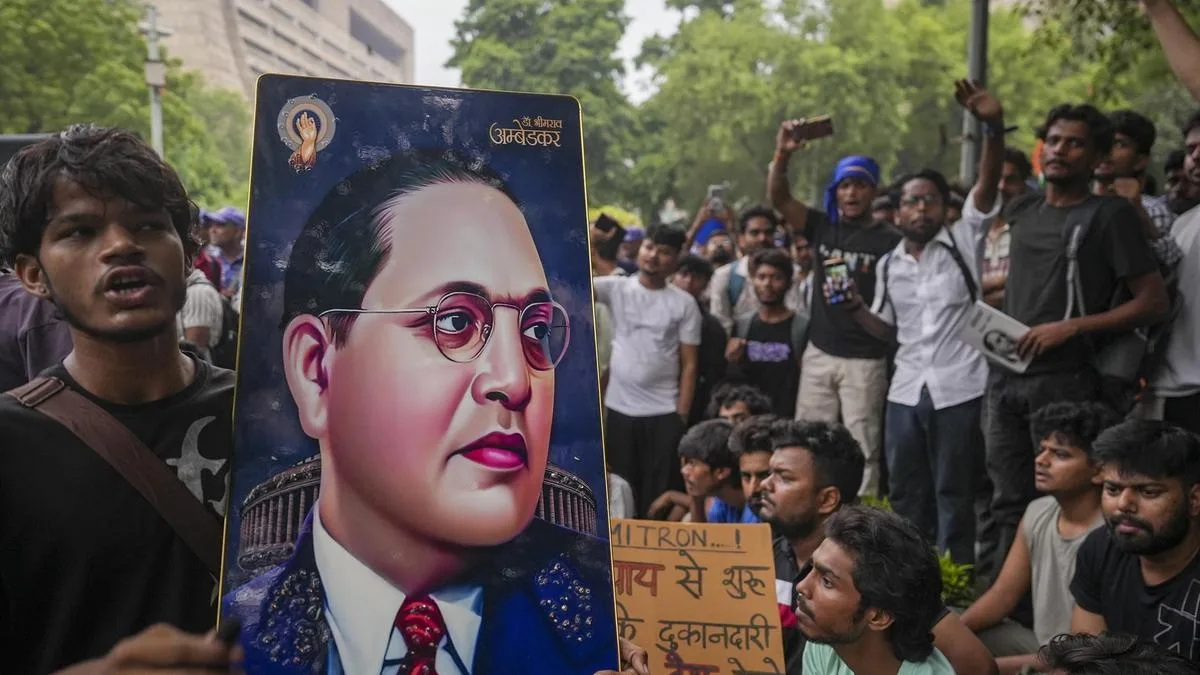
A Cockroach Janta Party supporter holds a portrait of Ambedkar at Jantar Mantar in New Delhi on July 20, 2026. | Photo Credit: PTI
I n the elections to the State Assemblies of Keralam, Tamil Nadu, West Bengal, Assam, and the Union Territory of Puducherry, one emerging pattern had been the engagement, or lack thereof, of the younger generation, the Gen Zs in particular, in the electoral process. Gen Zs are often seen as apolitical, or even anti-political, judged by the positions they take on issues, and by their preoccupation with the present rather than the past or the future.
Yet being apolitical, or claiming to be, is itself a way of falling victim to the dominant political narrative. The point here is not to pass judgment on the Gen Z youth, but to insist that politicising this generation is necessary not just for democratisation but for their own reclaiming of rights within the Indian union. One of the first steps toward that end is to ensure that every educational institution has an elected students’ council.
Over the last few decades, especially since the 1990s, depoliticisation, a strategic project of neo-liberal capitalism, has been on the rise. This is primarily because depoliticisation is structurally engineered; it treats the citizen as a consumer. Individualism has become the prominent ideology, converting unemployment, housing, and other livelihood crises into personal failures.
Then there is what might be called a culture of ‘nano impulsiveness’. Every generation is new in relation to the one before it, but the terms of that newness are often contested. Neoliberalism shortens the temporal horizon itself, and this shrinking of attention is visible across commerce, psychology, and everyday behaviour. It breeds a politics of spontaneity and impulse. Thus, a depoliticised Gen Z becomes the ideal subject for personality cults and social media-manufactured consent, voting for a face or a moment rather than a programme — a tendency that hyper-nationalist, emotionally-charged messaging exploits with ease, especially in the absence of counter institutional spaces such as students’ or trade unions.
Gen Z is the first constituency defined by mindset, not identity, says political strategist Naresh Arora
However, the summer of 2026 offered a sharp rebuttal to the thesis that Gen Z is inherently apolitical. The protests that erupted at Delhi’s Jantar Mantar over irregularities in the NEET-UG examination drew thousands of students to the capital. What was most striking was not just the scale of mobilisation but its texture — young protesters bypassed government imposed mobile Internet shutdowns using peer-to-peer Bluetooth mesh networks; ran a mobile library for fellow demonstrators; and found millennials marching alongside them, dissolving a generational divide both sides had long taken for granted.
5News aggregated this summary from the outlet’s public feed. The full article, with all the context, is on www.thehindu.com — the content belongs to The Hindu.