Gold jewellery worth lakhs goes missing from Mumbai, Kanpur bank lockers — Do banks compensate theft?
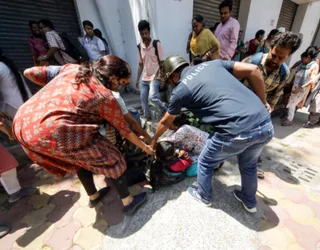
Bank lockers are considered to be safe for precious jewellery. However, recent incidents of theft have created concerns over this secure storage facility. A recent incident of theft came to light this month from Kanpur, where a woman allegedly stored jewels worth ₹ 50 lakh at the State Bank of India (SBI) branch in Swaroop Nagar. She found out that her valuables had gone missing when she checked the locker after nearly four months.
Another incident is from Mumbai involving a 74-year-old Dubai resident who had been living in the UAE for 52 years. The victim, identified as Pradeep Motiram Bhatia, discovered that his 610 grams of gold, worth ₹ 81.8 lakh, was missing when he returned to Mumbai after nearly two years, NDTV reported.
These incidents raised important questions about locker security and banks' compensation policies. The Reserve Bank of India regulates the functioning of locker facilities in India and has laid down a regulatory framework in addition to the operational rules of individual banks. The RBI last updated its guidelines in August 2021 to improve transparency and accountability.
Banks have no authority to ask customers what is stored inside and are not allowed to maintain an inventory of locker contents. However, if any asset goes missing due to the bank’s negligence, the bank is liable to compensate the customer.
As per the RBI’s revised guidelines, if a bank’s negligence or security failure is proven to be the reason for the loss, the bank is liable to pay compensation , which can be up to 100 times the annual locker rent. This compensation amount is the fixed upper limit that a customer can demand, and it is not automatically guaranteed. It is contingent on proof of fault on the part of the bank.
For instance, if the annual locker rent is ₹ 4,000, then the maximum compensation the bank should pay is ₹ 4,00,000. In case of any mishap, a bank's negligence or lapse in security cannot be proved, no compensation is provided.
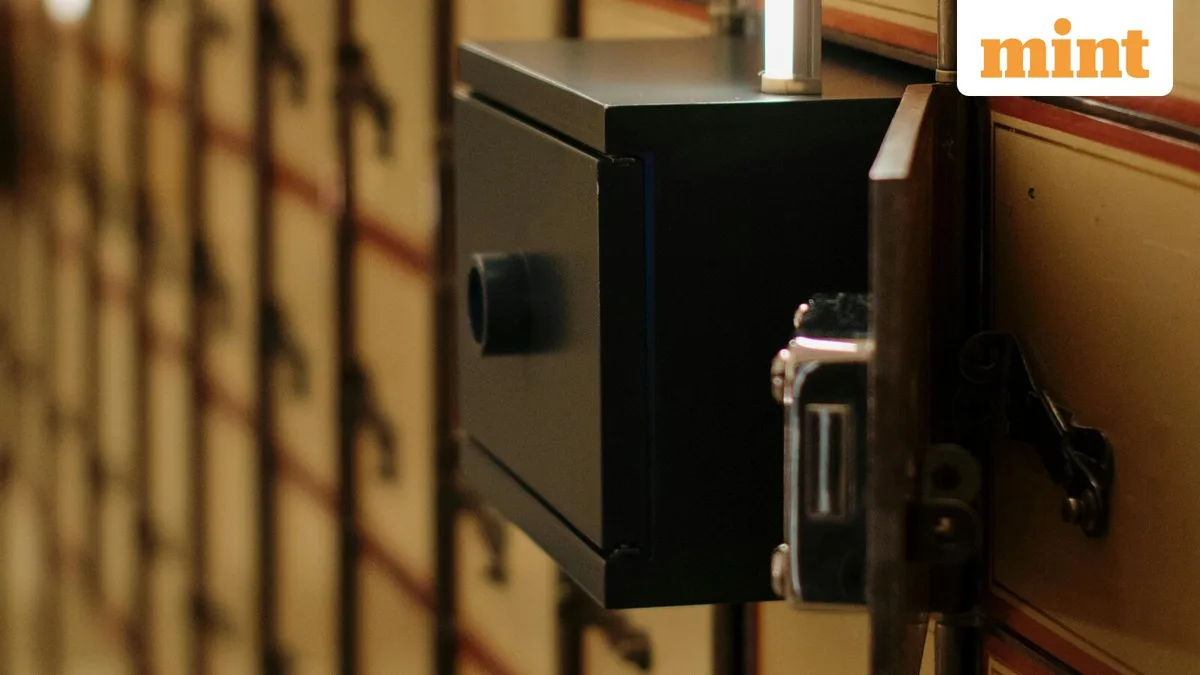
Bank lockers operate with a dual-lock system as a part of which the customer holds one key while the second, a master key, remains with the bank. Both the keys are needed to have access to the locker, implying shared responsibility. However, the bank must ensure that the overall security and access systems are secure and functional at all times.
Catch all the Instant Personal Loan , Business Loan , Business News , Money news , Breaking News Events and Latest News Updates on Live Mint. Download The Mint News App to get Daily Market Updates.
Log in to our website to save your bookmarks. It'll just take a moment.
Oops! Looks like you have exceeded the limit to bookmark the image. Remove some to bookmark this image.
5News aggregated this summary from the outlet’s public feed. The full article, with all the context, is on www.livemint.com — the content belongs to LiveMint - Money.