Assam elephant habitat recovery hope rides on biochar from invasive plants
Account subscription benefits alongside Premium Stories, Editorials, Opinions and more. Unlock these with Subscription
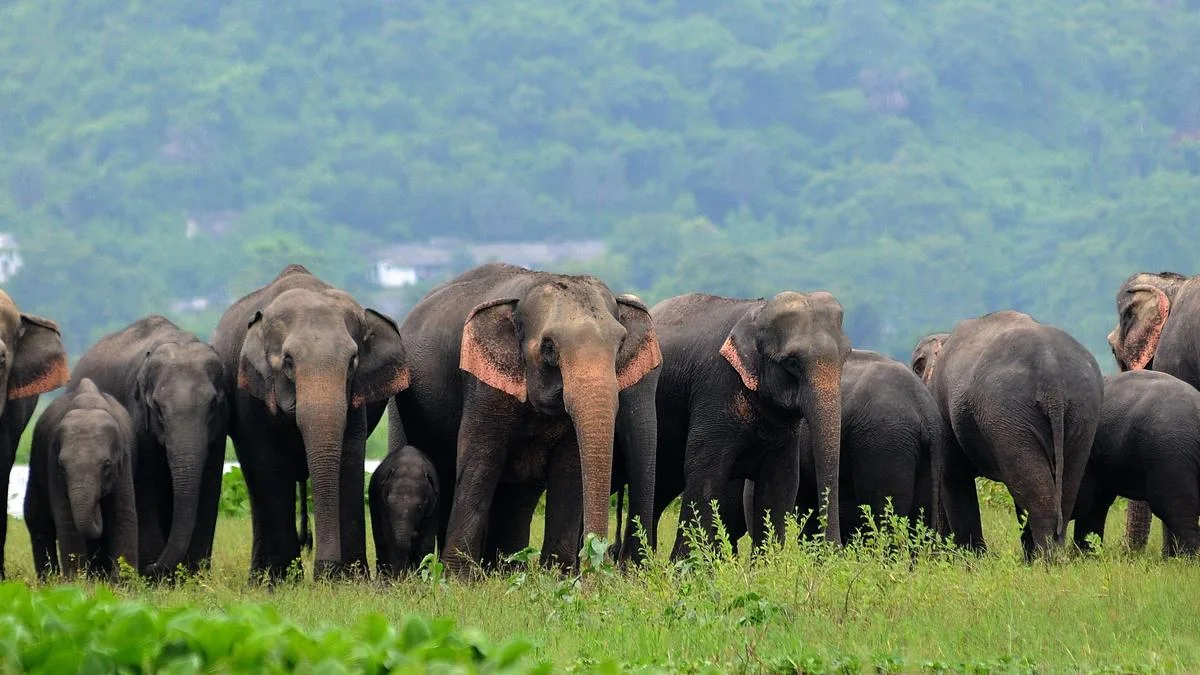
A two-hectare area has been selected in this reserve forest in the Bodoland Territorial Region (BTR) for the project focused on managing dense stands of three IAP species. File | Photo Credit: Ritu Raj Konvar
A project in Assam to improve the quality of an elephant habitat could turn a botanical liability into a carbon-rich asset.
For decades, Assam Forest Department officials have struggled to deal with at least half a dozen invasive alien plants (IAPs) that have been constricting local vegetation and reducing the food options for herbivores.
They are upbeat about the targeted IAP management in Khalingduar Reserve Forest under the Dhansiri Forest Division of Udalguri district, bordering Bhutan. A two-hectare area has been selected in this reserve forest in the Bodoland Territorial Region (BTR) for the project focused on managing dense stands of three IAP species.
These species are Lantana camara, Chromolaena odorata, and Mikania micrantha. Although these species have been known to contribute as nectar resources or structural cover, their proliferation into dense stands is altering native plant communities and constraining regeneration.
Aaranyak, a Guwahati-based biodiversity conservation organisation, is undertaking the International Elephant Foundation-supported project. The programme targets native vegetation recovery through targeted IAP management, seed-ball-assisted regeneration, and conversion of cleared biomass into biochar.
Biochar is a fine-grained, porous, charcoal-like substance made by heating organic waste in a controlled environment with little to no oxygen. Instead of burning to ash, this thermal process transforms the biomass into a stable, solid form of carbon that resists decay and can remain in the ground for thousands of years.
Biochar properties vary considerably with feedstock and production conditions. Its porous structure can influence soil water retention, nutrient retention, aggregation, and microbial habitat.
According to Aaranyak’s Rabiya Daimari, Bistirna Burhagohain, Bikash Tossa, Manav Nayak, and Pradip Barman, a quintet conducting the field operations for the project, the three species chosen compete with native vegetation for light, space, moisture, and nutrients.
These IAPs gradually stifle the growth and recovery of native grasses, herbs, shrubs, and naturally regenerating trees. “Elephants and other herbivores need a varied forage base comprising local grasses and plants,” a team member said.
The quintet said the existing vegetation in the project area was catalogued to identify patches with substantial IAP dominance.
5News aggregated this summary from the outlet’s public feed. The full article, with all the context, is on www.thehindu.com — the content belongs to The Hindu - National.