What are the U.S.’s latest allegations against India? | Explained
Account subscription benefits alongside Premium Stories, Editorials, Opinions and more. Unlock these with Subscription
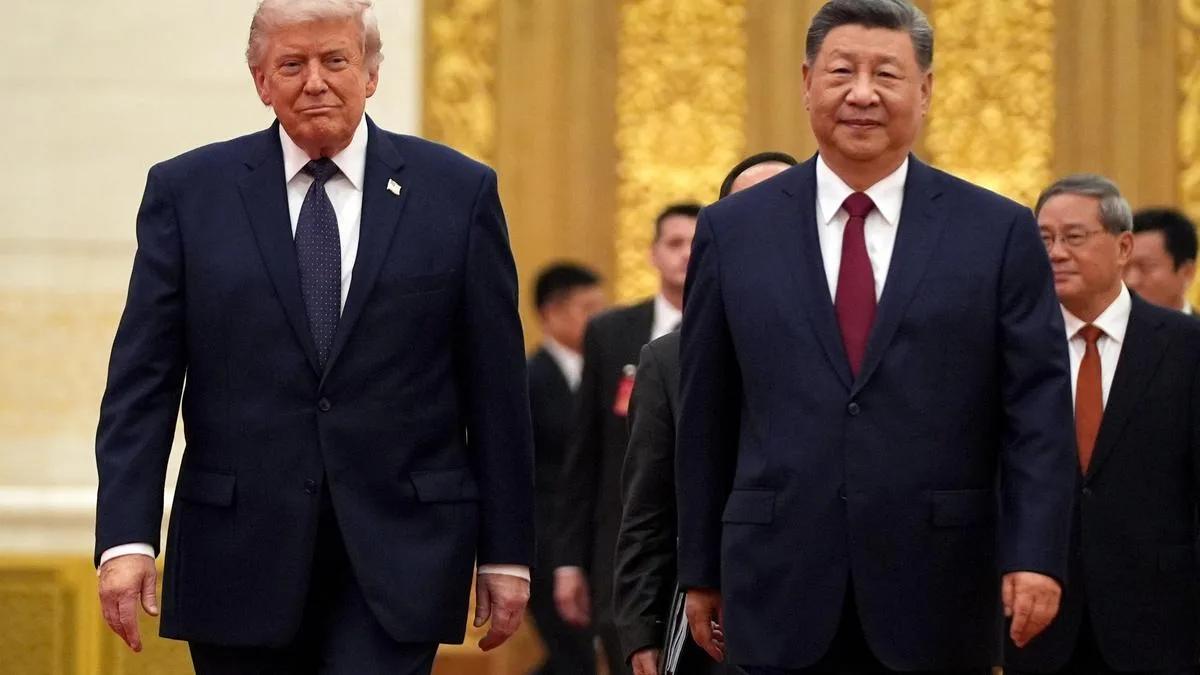
President Donald Trump, left, and Chinese President Xi. File. | Photo Credit: AP
The story so far: Last week, the U.S. accused India of violating what it considers fair trade practices. The White House published a report titled ‘The Great Transhipment Scam’ in which it accused about 40 countries, including India, of helping China evade U.S. tariffs.
Over the last nearly three decades, the U.S. and Chinese economies have become deeply intertwined, with the U.S. increasingly relying on China to be its manufacturing hub, and China relying on the U.S. as its market and for investment. This is a somewhat simplistic assessment of their engagement, but it is also the most relevant for the current context.
This relationship has resulted in the U.S. running huge trade deficits with China. That is, importing much more from the country than it exports to it. U.S. President Donald Trump has long spoken about his concerns about vast trade deficits; this is primarily why he insisted on levying tariffs on U.S. trade partners during his second term.
However, China began facing such actions during Mr. Trump’s first term itself. In 2018, the U.S. imposed tariffs ranging from 7.5% to 100% on goods from China such as electric vehicles, semiconductors, and medical products under Section 301 of the Trade Act of 1974, for unfair trade and tech practices. As per the White House report, this resulted in a shrinking of the U.S.’s trade deficit with China in 2019 and 2020.
On July 24, 2026, the U.S. added a further 12.5% tariff for gaps in forced-labour compliance and the lack of comprehensive legal import prohibitions.
According to the report, since 2018, Chinese exporters have increasingly been routing goods through third countries to evade tariffs. “Products that previously moved directly from China to the United States were shipped through jurisdictions where limited assembly, finishing, repackaging, relabeling, or documentation changes could create the appearance of a different national origin,” the report stated.
The White House has identified more than 40 countries associated with “elevated illegal transhipment risk”, with India among the top “enablers” of China’s evasion of tariffs. The other countries/regions named as the top enablers are Mexico, Canada, the European Union, Japan, and South Korea.
The U.S. has alleged that these countries are importing Chinese goods, modifying them marginally, and exporting them to the U.S. at tariffs below what these goods would have faced had they directly been exported from China. This, the report said, has led to significant revenue loss for the U.S.
5News aggregated this summary from the outlet’s public feed. The full article, with all the context, is on www.thehindu.com — the content belongs to The Hindu - International.