Kolkata’s Bonedi Bari Durga Puja: The ancestral homes preserving centuries of tradition
Account subscription benefits alongside Premium Stories, Editorials, Opinions and more. Unlock these with Subscription
Every year, as Durga puja draws near, the old houses of North Kolkata stir to life. The air grows heavy with dhunuchi smoke, mingling with the earthy scent of damp stone and aged wood. The creak of the thakur dalan gates, the rhythmic crescendo of the dhaak , and the murmur of prayers drift through century-old courtyards. Doors open once again for families to reunite and for visitors to witness not just a puja, but a piece of Bengal’s past.
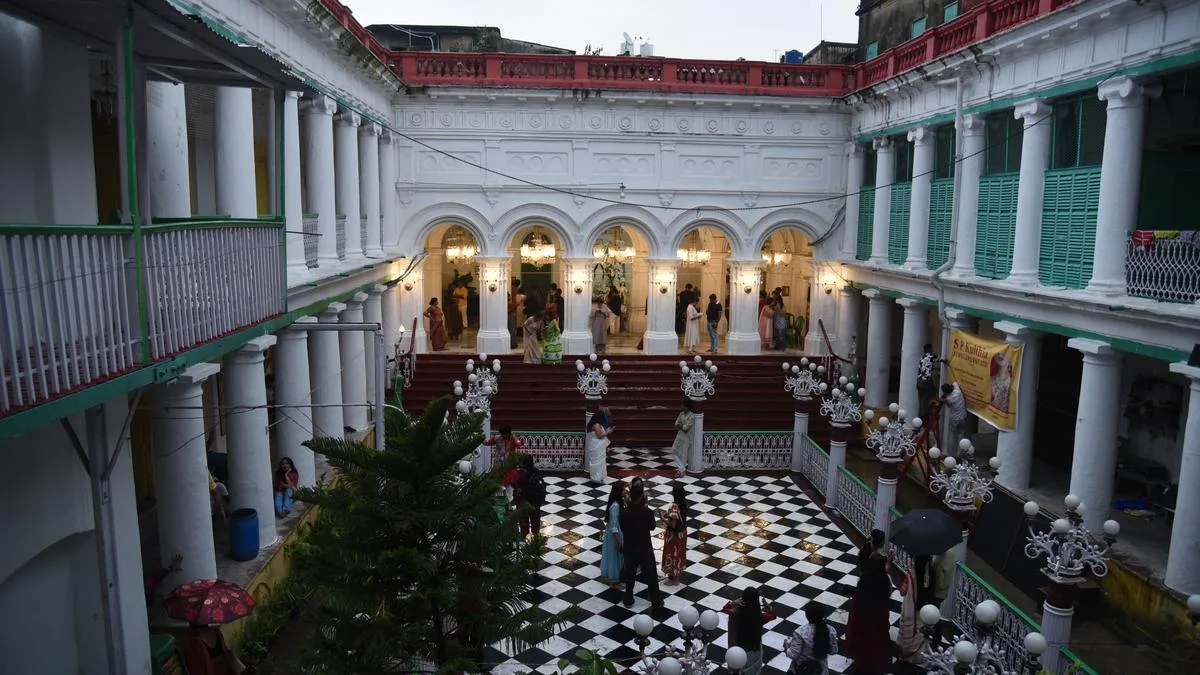
Beyond the aesthetic reels that fill every Bengali’s algorithm during the four days of puja, Kolkata’s Bonedi Bari holds history stretching back centuries. These are the ancestral homes of landowners and merchants of undivided Bengal, built during the colonial period. The sprawling courtyard and the imposing facade reflect an architecture that blends Mughal ornamentation with Neoclassical elements. Hosted by the region’s wealthy Bengalis, Bonedi Bari Durga pujas can be traced back to the 17th Century or earlier. Over the centuries, these courtyards transformed into centres where religious devotion became intertwined with family legacy and cultural patronage.
Once intimate family celebrations, many of these Bonedi Bari Pujas now open their doors to the public, to be a part of thei
Harakutir Ray-Banerjee Bari in Pathurighata | Photo Credit: SPECIAL ARRANGEMENT
At Harakutir Ray-Banerjee Bari in Pathurighata, North Kolkata, Durga Puja has been a family tradition for 334 years. According to Archishman Ray Banerjee, the 12th generation of the family, the story begins with his ancestor Keshav Chakravarthy, who came to the area in search of land to establish his salt business. The site, he recalls, was then a cremation ground near the Asthi Visarjan Ghat, close to the famous Bhutnath Dham.
Durga puja celebrations at Harakutir Ray-Banerjee Bari | Photo Credit: SPECIAL ARRANGEMENT
As Chakravarty’s business prospered, he discovered a small idol of goddess Durga in her four-armed form of Parvati. He installed the idol and began worshipping the deity, laying the foundation for the family’s Durga puja. The rituals continued for 62 years before the family built the present mansion around 1754, which is now 272 years old.
The architecture of the house, says Archishman, “is a blend of Neoclassical and Italian influences, with Belgian glass, marble from England and an iron structural framework sourced from the Frodingham iron and steel company, England.” The house also incorporates elements of Islamic architecture that resemble the diwan-i-khas (the hall of private audiences built during the Mughal time).
Beyond its architectural legacy, the house is also closely associated with India’s freedom struggle. “Freedom fighters Binoy, Badal, and Dinesh were given shelter at our house before the attack at Writers’ Building on December 6, 1930.
5News aggregated this summary from the outlet’s public feed. The full article, with all the context, is on www.thehindu.com — the content belongs to The Hindu.