India's first tokenised corporate bond is coming: Expert explains what it means for retail investors and how it works
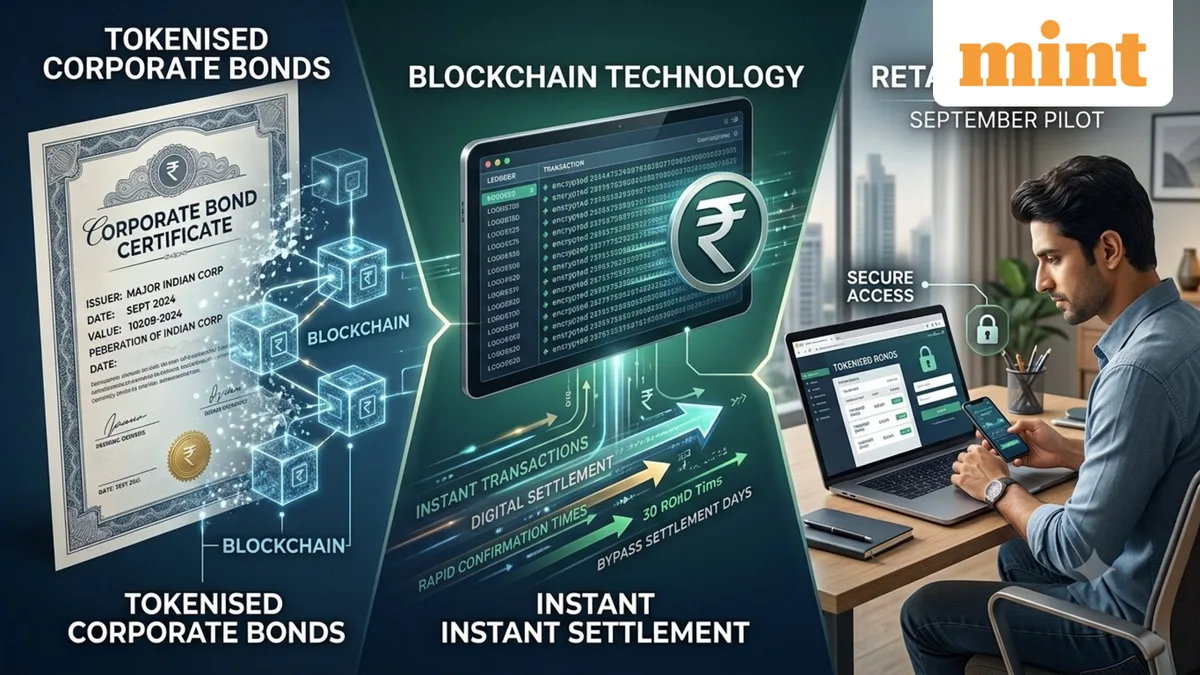
India is set to launch tokenised corporate bonds in September, testing blockchain technology to enable instant settlement of bond transactions. State-owned power financier REC is expected to issue the bonds for the first time, according to a Reuters report dated 24 August.
Vikaas M Sachdeva, CEO, BitDelta India explained that “tokenised corporate bonds are conventional corporate bonds whose ownership and settlement records are maintained on a distributed ledger rather than through the traditional multi-step process”.
He said the underlying instrument remains a bond issued by a company such as REC, it carries the same credit exposure, interest payments and principal repayment. Only the ownership and settlement infrastructure changes, enabling faster, potentially near-instant settlement.
For retail investors, this could eventually mean greater efficiency, transparency and accessibility. However, the pilot is limited to select participants, he added.
The September launch and three-month lock-in are based on media reports, not a formal regulatory announcement. Participating investors may not be able to sell immediately, Sachdeva added.
Nishchay Nath, Founder & CEO, BondScanner explained that “conventional bonds use existing securities-market infrastructure for ownership and settlement, while tokenised bonds use a blockchain or distributed ledger, potentially enabling near-instant settlement”.
Tokenised bonds are not cryptocurrencies. A tokenised bond represents a regulated financial security with a defined claim on the issuer, while cryptocurrency is a digital asset in itself. Tokenisation uses blockchain to digitally represent an existing real-world financial asset, Nath added.
However, Sachdeva said that with tokenization, the ownership record sits on a distributed ledger and payment is expected to move through the Reserve Bank's wholesale digital rupee, not the retail Digital Rupee app used by the public.
Sachdva explained that SEBI first announced this pilot publicly in May, saying implementation could take six to nine months on a limited scale. The September pilot is expected to involve REC and be available only to a select group of investors, not structured as a broad retail offering.
"Retail eligibility criteria and minimum investment amounts have not been announced, he added.
“The first Indian issuance is a pilot and is expected to be restricted to a select group of investors, so it should not be viewed as a retail launch yet,” Nath noted.
Selected participants in the pilot are expected, according to current reporting, to need two accounts, Sachdeva said.
The first is a wholesale digital currency wallet provided through a bank for making payments in the Reserve Bank’s wholesale CBDC. The instrument already handles government securities settlement and inter-bank lending. This is different from the retail Digital Rupee wallet, he added.
The second is a new securities wallet being developed by the depositories, referred to as “DEMAT 2.0”. It will record the bond holdings on the distributed ledger, Sachdeva said.
5News aggregated this summary from the outlet’s public feed. The full article, with all the context, is on www.livemint.com — the content belongs to LiveMint - Money.