From page to screen: How Madras filmmakers brought literature to life
Account subscription benefits alongside Premium Stories, Editorials, Opinions and more. Unlock these with Subscription
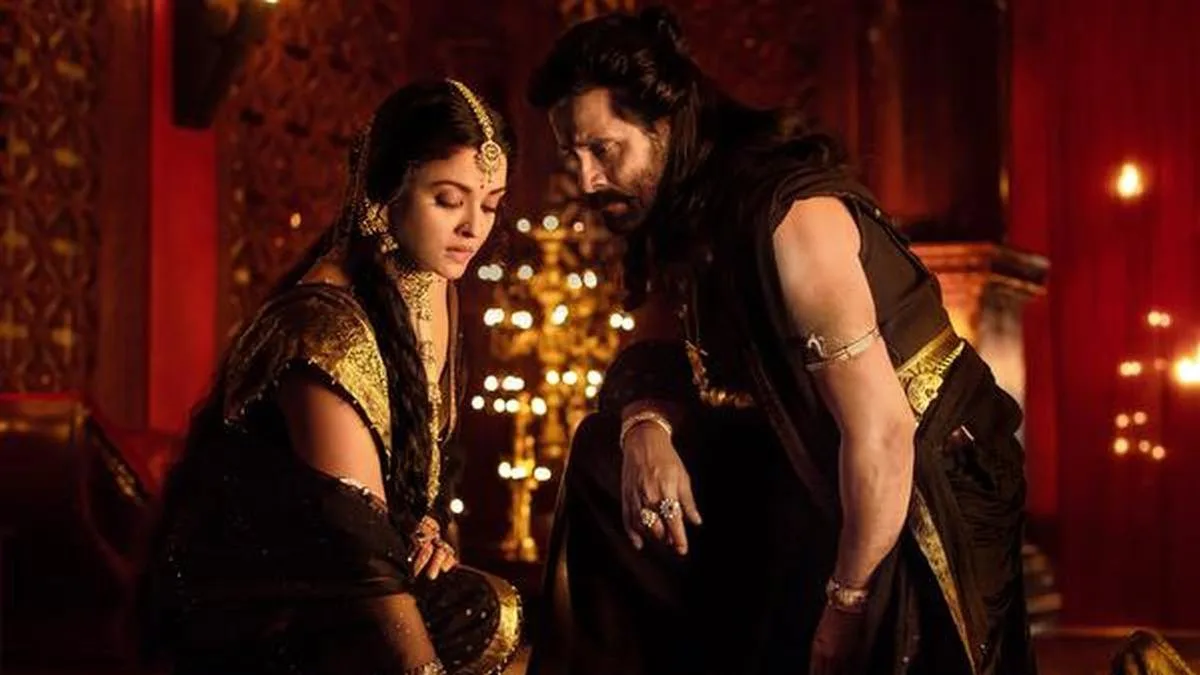
Maniratnam turned Kalki’s Ponniyin Selvan into a magnum opus on the silver screen. | Photo Credit: The Hindu
Filmmakers have often turned to novels for engaging narratives, layered characters, portrayal of human experiences and reflections of a changing society.
The cover of Kalki magazine that marked the launch of the serialised novel Ponniyin Selvan . | Photo Credit: Courtesy: Kalki
While conversations about literary adaptations usually centre on Thillana Mohanambal, Thyaga Bhoomi, or, more recently, Ponniyin Selvan, much of Tamil cinema has drawn inspiration from the printed word. Tracing some notable page-to-screen journeys.
The 1936-film Sathi Leelavathi was based on Mrs. Henry Wood’s novel Danesbury House (published in 1860). | Photo Credit: The Hindu Archives
Author Vaduvur Doraisami Iyengar’s Menaka adapted to the screen in 1935, marked N.S. Krishnan’s debut. Sathi Leelavathi (1936) based on Mrs. Henry Wood’s Danesbury House (1860), introduced M.G. Ramachandran, T.S. Balaiah and director Ellis R. Dungan to the audience.
The 1942 film Yen Manaivi was based on a popular Marathi play Samshay Kolli , a cinematic adaptation of French playwright Moliere’s Sganarelle .
R. Ranjan and M.K. Radha in Apoorva Sagodharargal. | Photo Credit: The Hindu Archives
Gemini Studios’s Apoorva Sagodarargal (1949), an adaptation of Alexandre Dumas’ The Corsican Brothers , is about conjoined twins surgically separated at birth. M.K. Radha played dual roles in the film. Seventy-eight rpm records of Bhanumati’s multilingual song ‘Laddu’ were in such great demand that one had to pre-order copies with Thirunavukkarasu, a record seller in Moore Market. He didn’t have a phone, and anxious customers made daily visits to check if the Laddu record had arrived. Neerum Neruppum (1971), with MGR in dual roles, was also an adaptation of the same novel.
P.U. Chinnappa in Krishna Bhakti was based on the French novel, The Monk, by Mathew Lewis. | Photo Credit: The Hindu Archives
Krishna Bhakti (1949) was drawn from Mathew Lewis’ French novel The Monk . P.U. Chinnappa wears a cloak of piety, while lusting after T.R. Rajakumari. MLV sang Tyagaraja’s Saraswathi Manohari kriti ‘Yenta vedukondu’ in the film, and this was the only time she appeared on screen.
Vaduvur Doraswamy Iyengar’s novel Digambara Saamiyar made its way to the silver screen in 1950, with Nambiar playing the role of a detective. The song ‘Anna oru paithiyamaa ayidichu anni mela chokki ’ (My brother has lost his mental balance, because he is besotted with his wife) from the film was often sung during the nalangu ritual in weddings. The song ‘Sanmaargam thyagam’ had the lines ‘Akramathaal ulagaala ninaithaar Hitler Mussolini; anugundaale avarai adithaar arumai vignani’ (wicked Hitler and Mussolini wanted to rule the world, but were crushed when great scientists developed the atom bomb). The audience erupted in joy when they heard this line, because the disruptions caused by World War II had not been forgotten.
M.G.
5News aggregated this summary from the outlet’s public feed. The full article, with all the context, is on www.thehindu.com — the content belongs to The Hindu - Entertainment.