Esops can create wealth, but can you afford to exercise them?
This is a Mint Premium article gifted to you. Subscribe to enjoy similar stories.
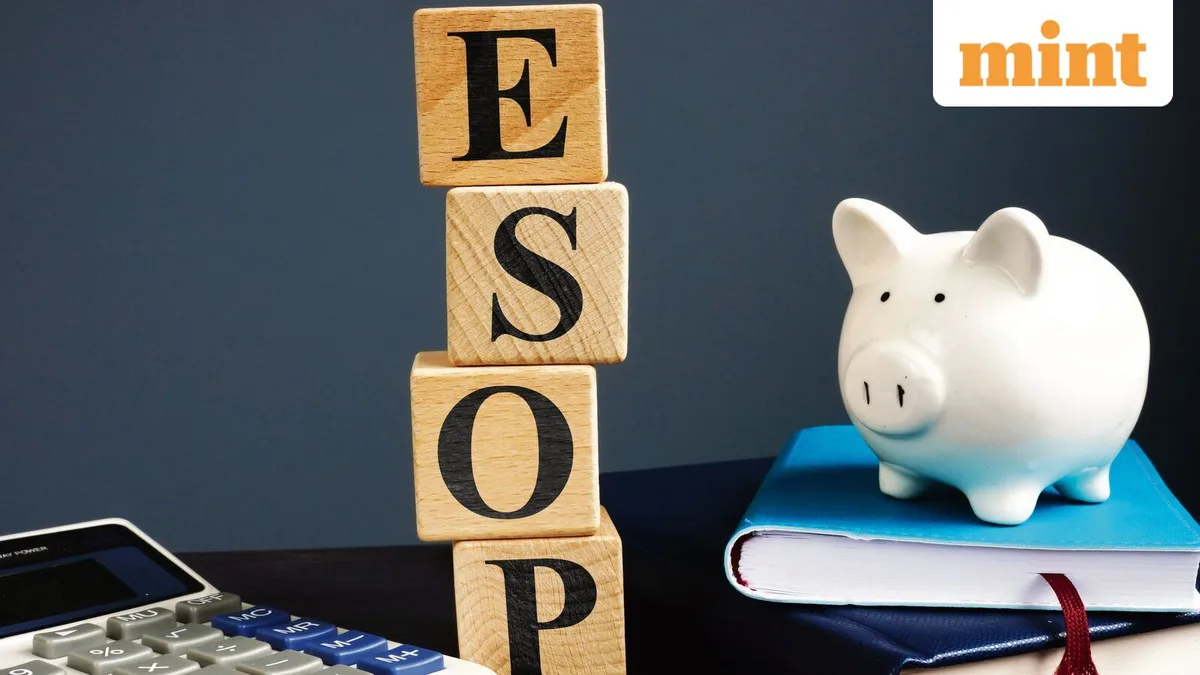
Employee stock options (Esops) can create life-changing wealth, but unlocking that wealth comes with a big price tag.
A startup employee getting stock options worth ₹ 1 crore has to pay several lakhs just to convert them into shares. She may also have to pay several lakhs more as perquisite tax, even before selling a single share. Employees can sell shares only during a liquidity event – a buyback, secondary sale, or an initial public offering (IPO).
Still, the eventual payoff depends on the valuation at which the employee gets to sell the shares. It needs to adequately compensate for the money she has already put in towards the exercise price and perquisite tax.
The stakes are higher if the employee borrows to pay the exercise price and perquisite tax. Esop financing can help cover upfront costs, but the employee then has a loan to repay, while the shares remain illiquid until the company provides an exit. If the liquidity event is delayed or happens at a lower valuation than expected, the eventual proceeds may not be enough to justify the costs of Esop financing.
Last year, quick commerce company Zepto approved an interest-free loan of about ₹ 700 crore to its employee welfare trust to help employees exercise their Esops. The exercise happened when the company was valued at around $7 billion. Since then, media reports have pegged the valuation being discussed for its IPO at about $3 billion, while the listing itself has been delayed.
Satish Mugulavalli, managing partner at Hissa Fund, said the episode highlights two risks employees take when they exercise before an exit – valuation risk and the risk of the liquidity event getting delayed. “An interest-free loan removes the interest cost, but the principal still has to be repaid. If the valuation falls and the exit gets delayed, employees have less certainty over when and at what value they will be able to monetise their shares.”
Employees with Esops face two tax events – first when they exercise the stock options and next when they sell those shares and make capital gains.
An Esop gives an employee the right to buy a company's shares at a predetermined exercise price, which is often lower than the market value. Once the options vest, the employee can exercise them by paying this price and converting options into actual shares.
Say an employee has 10,000 vested options with an exercise price of ₹ 100 each. The employee can exercise them by paying ₹ 10 lakh. However, at exercise, the difference between the fair market value (FMV) of the shares and the exercise price is treated as a salary perquisite and taxed at the employee's applicable slab rate.
In the same example, assume the FMV on exercise day is ₹ 500 per share, and the employee has acquired shares worth ₹ 50 lakh by paying ₹ 10 lakh. This ₹ 40 lakh difference is the taxable perquisite that gets taxed at slab rates–this is the first tax event for the employee in their Esop journey, even without making any profit. For an employee in the highest tax bracket, the tax itself will be at least 30% that can add up substantially to about ₹ 12 lakh.
5News aggregated this summary from the outlet’s public feed. The full article, with all the context, is on www.livemint.com — the content belongs to LiveMint - Money.