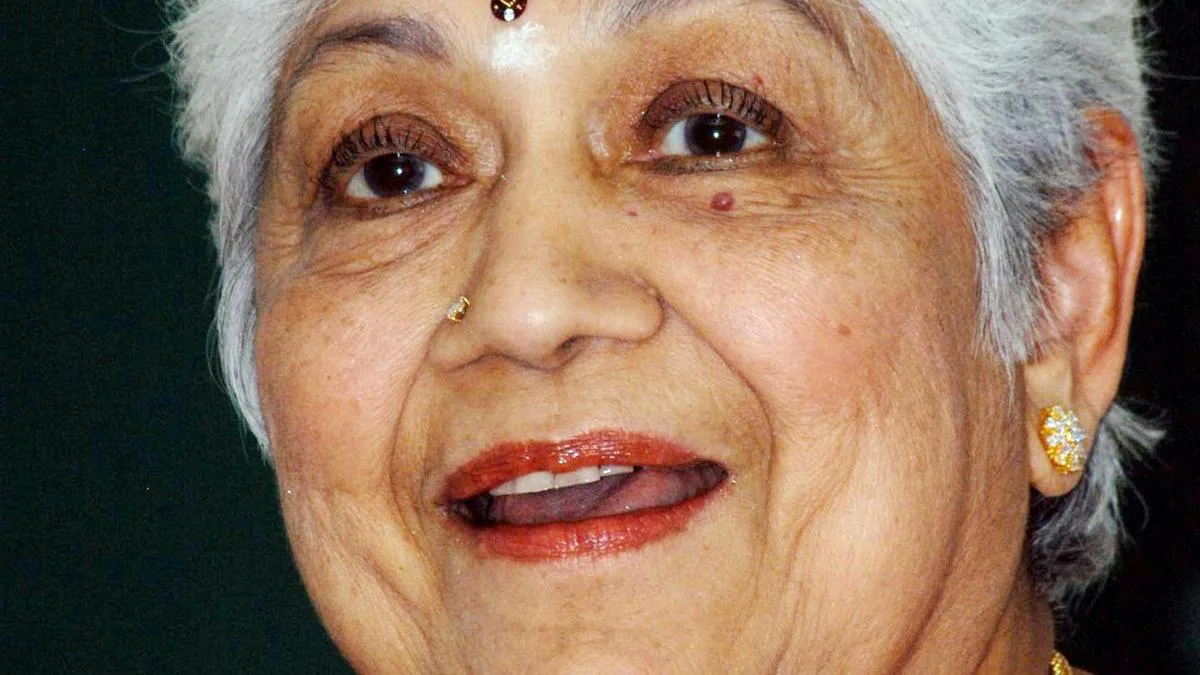
Sowcar Janaki: A life lived on her own terms
Account subscription benefits alongside Premium Stories, Editorials, Opinions and more. Unlock these with Subscription
There was always something unmistakably independent about Sowcar Janaki.
Even at 90, she did not seem particularly interested in the revelry that usually surrounds a milestone birthday. In the conversation I had with her in 2021, at the peak of COVID-19 pandemic ahead of her 90th birthday, she was more concerned about the health of everyone around her than about celebrating herself. “Everyone’s health is more important than my birthday celebrations,” she told me.
In September that year, after returning to Chennai from a solo trip to Coonoor, she surprised her family by announcing that she had come back from a shooting stint. It was entirely in keeping with the woman they knew. Independent and unwilling to allow age to dictate her. For an actor whose career stretched across seven decades and nearly 400 films in five languages, it would have been easy to reduce Sowcar Janaki to the roles she played. But she was always much more than the characters on screen.
She could be the orthodox woman in Edhir Neechal , a nightclub singer in Pudhiya Paravai , a socialite in Thillu Mullu , the blind woman in Manchi Manasulu or Chilakamma, speaking in the Srikakulam dialect in Samsaram Oka Chadarangam . She brought something distinctly her own to every role.
Janaki entered films almost by circumstance rather than ambition. When she was barely a teenager, B.N. Reddi had heard her voice on radio and offered her an opportunity to act. Her parents, alarmed by the prospect, hurriedly got her married. Years later, with a young child and a family facing financial difficulties, she went back to B.N. Reddi and asked him to honour that old promise. That decision changed the course of Indian cinema.
She made her debut in Shavukaru in 1950, opposite N.T. Rama Rao, when she was only 17. Because MGR’s wife V.N. Janaki was already known in the industry, the newcomer was given the prefix ‘Sowcar’ after her debut film and the name stayed with her for the rest of her life. Her entry into Tamil cinema came in 1952 with Valayapathi . What followed was a remarkable career in which she refused to remain confined to the conventional image of a heroine. “I always loved to play emotionally charged roles,” she had told me. It was perhaps that appetite for challenge that kept her career alive for so long.
She recalled asking for a role only twice in her entire career. The first was when she sought an opportunity with B.N. Reddi. The second was when Oli Vilakku , the Tamil remake of Phool Aur Pathar , was being planned. She hesitated before calling MGR to ask if she could play Meena Kumari’s role. He agreed immediately.
She had a particular fondness for Iru Kodugal and Kaviya Thalaivi , both associated with K. Balachander. She considered producing Kaviya Thalaivi one of her biggest achievements.
5News aggregated this summary from the outlet’s public feed. The full article, with all the context, is on www.thehindu.com — the content belongs to The Hindu - National.