Park your car over your open well
Account subscription benefits alongside Premium Stories, Editorials, Opinions and more. Unlock these with Subscription
For many apartment residents in Chennai, an open well may sound like something from another time — a structure with a parapet wall, a pulley and a bucket. With space at a premium, keeping one may seem impractical. But an open well does not necessarily mean giving up a parking spot or valuable open space. With the right design, it can be built below ground, allowing vehicles to pass over it while the well continues to collect rainwater and recharge groundwater.
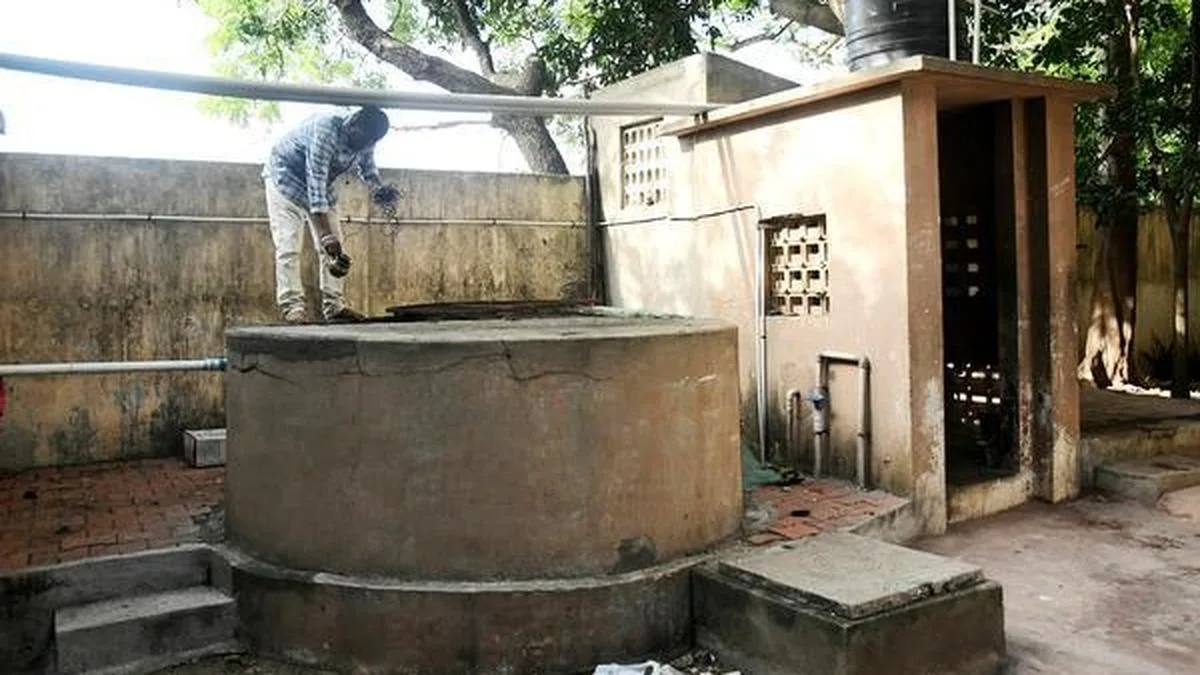
This is what N. Ramshankar, an executive member of The Rain Centre, has done at the Rain Centre in Adyar. An old open well that once had only about two feet of water now holds around 16 feet after rooftop rainwater was directed into it with minimal filtration.
Sekhar Raghavan, director, The Rain Centre, weighs in about this open well on the premises of the Rain Centre: “Unless I open the lid, you will not even know that there is an open well below.” Such wells can even be incorporated into driveways or parking areas, Sekhar says, provided they are kept away from structural columns. “You can have your open well within your stilt car parking,” says Sekhar. The minimum space required for the well, according to him, is about 3.25 feet in diameter.
“We were afraid in the initial days. We were wondering whether an open well can be closed and whether it will accumulate gas and all that. An engineer told us, ‘Don’t make that mistake, nothing will happen.’ He even set up a vent for us,” says Ramshankar. The parapet wall was subsequently removed and a slab was placed at floor level. “We demolished the parapet wall of the well and then we put a slab on it, at the floor level. Now we have vehicles going on top of it,” he says.
The benefit has not been limited to saving space. The quality of the water has also improved. “The TDS has also been diluted from almost 850 to now 400,” he says.
For Ramshankar, the value of an open well lies in what it can provide while also being replenished. Open wells generally tap the shallow aquifer, around 25 to 30 feet below the ground and, at most, about 40 feet. Unlike the deeper hard-rock aquifer tapped by borewells, this shallow groundwater can be replenished more easily through rainwater harvesting. Rooftop rainwater can be directed into an existing well, replenishing the water and helping dilute salts and TDS.
Sekhar Raghavan says open wells generally tap the shallow groundwater layer, which can be replenished through rainwater harvesting.
“During monsoon, your open well will have a lot of water, and a couple of months thereafter. So, start tapping it. Then during summer months, go to your borewell,” he says. For an apartment, this can also translate into a reduction in dependence on tanker water.
At Hiranya Apartments in Raja Annamalaipuram, resident Raghunandan Ranganathan says the open well was never shut, even though three borewells had been installed and two were later closed. “This open well is what is giving us a lot of water,” he says.
The apartment already had rainwater-harvesting infrastructure, including percolation wells.
5News aggregated this summary from the outlet’s public feed. The full article, with all the context, is on www.thehindu.com — the content belongs to The Hindu.