Income tax email scams and fake websites: Key warning signs taxpayers should know and how to report them
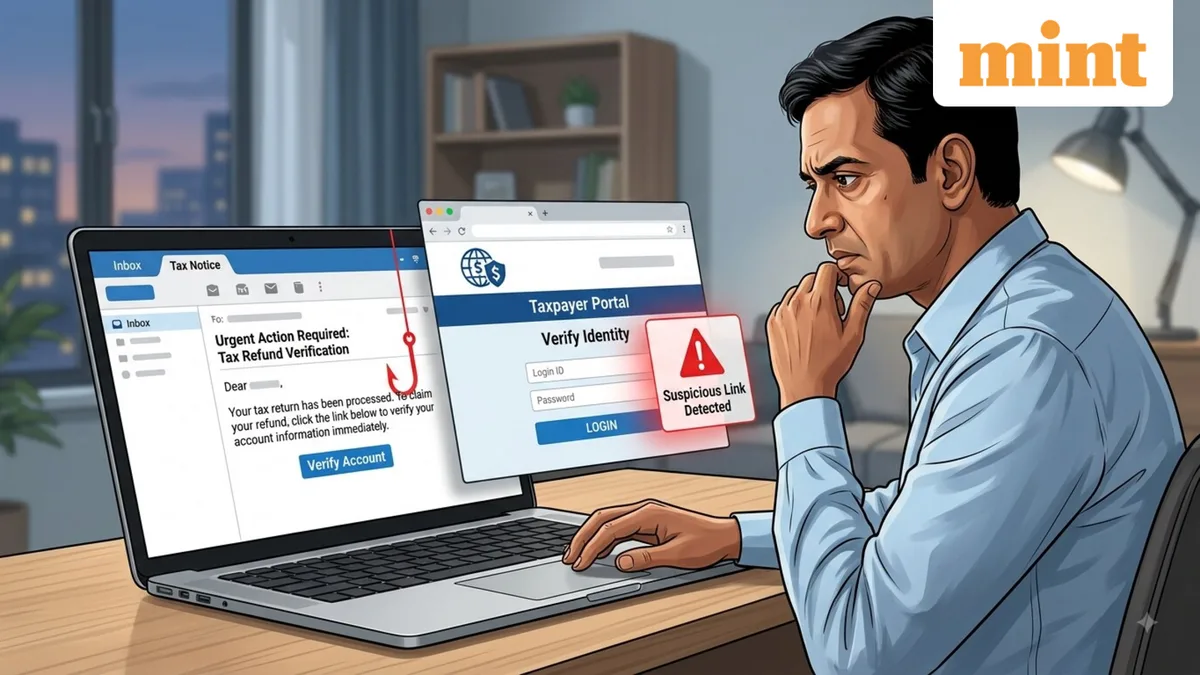
With tax-related communication being done online, taxpayers need to stay alert to phishing emails and fake websites impersonating the Income Tax Department.
Fraudsters may use official-looking emails, websites, and messages to trick individuals into sharing sensitive financial or login information.
Here’s how taxpayers can identify such scams and report them to the Income Tax Department.
Phishing is a form of online fraud in which scammers impersonate a trusted organisation or service to obtain sensitive information. In the case of tax-related scams , fraudsters may pose as the Income Tax Department and send emails containing links to websites designed to look similar to the official tax portal.
Some phishing emails may also contain attachments or links that can install malicious software or track online activity.
Taxpayers should be cautious if an email claims to be from the Income Tax Department and asks them to provide confidential information or directs them to an unfamiliar website.
It is important to note that the Income Tax Department does not send emails asking taxpayers for PINs, passwords, or other details related to credit cards or bank accounts.
Taxpayers who receive an email claiming to be authorised by the Income Tax Department, or come across a website impersonating the department, can report it to the department.
The suspicious email or website URL can be forwarded to webmanager@incometax.gov.in. A copy can also be sent to incident@cert-in.org.in.
Taxpayers can forward the suspicious email as received. Alternatively, they can provide the email's internet header, which contains additional information that can help authorities trace the source of the message.
After forwarding the suspicious email or relevant information, taxpayers should delete the message.
If a taxpayer receives a phishing email that does not impersonate the Income Tax Department, it can be reported directly to incident@cert-in.org.in.
The key takeaway for taxpayers is to treat unsolicited emails asking for sensitive financial or login information with caution.
Even when an email or website appears official, taxpayers should avoid sharing confidential information unless they have independently verified that they are using the genuine government service.
5News aggregated this summary from the outlet’s public feed. The full article, with all the context, is on www.livemint.com — the content belongs to LiveMint - Money.