How to survive a predatory world order
LIKE a villager urging neighbours to confront a prowling predator together, Mark Carney sought to rally the world’s middle powers. In a speech in January to the World Economic Forum at Davos, Canada’s prime minister issued an urgent call for mid-ranked countries to unite. This is an age in which the strong prey on the weak, he told his audience of grandees. The old rules-based order no longer constrains the mighty, he advised. Nor can smaller countries roll over and hope that submission keeps them safe. Middling powers can act together in coalitions of the willing, or “be on the menu”.
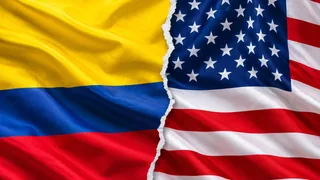
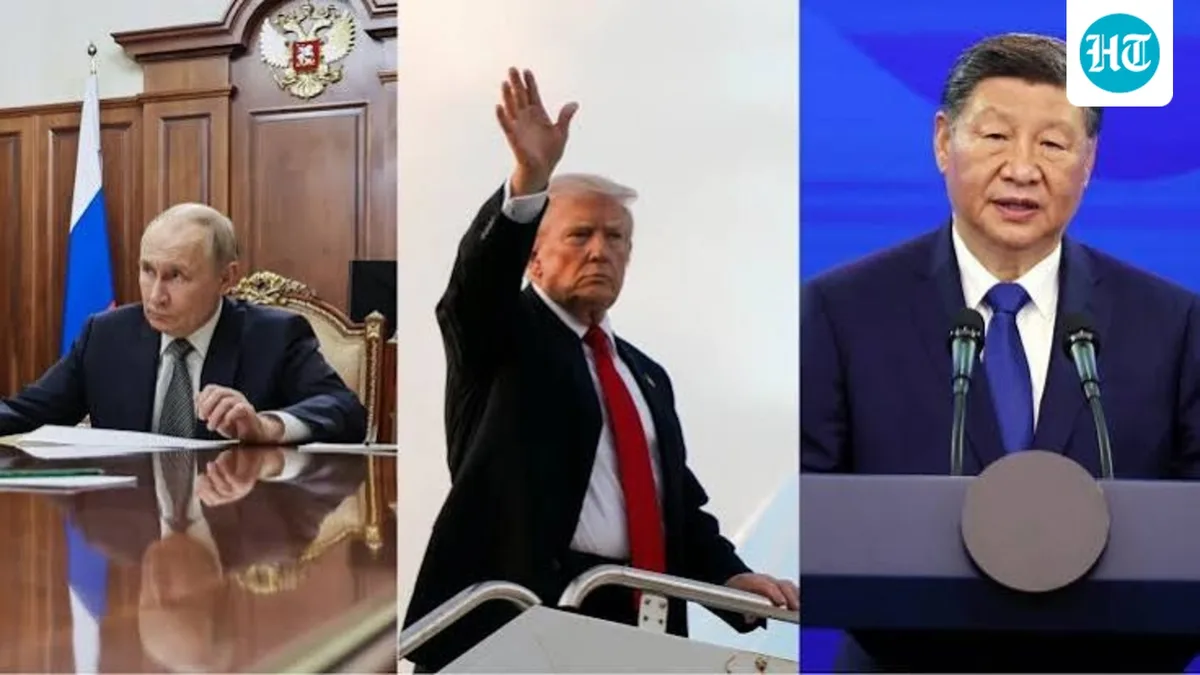
His fellow leaders knew that Mr Carney was mostly warning them about America and China, the strongest of today’s big beasts. Mr Carney was speaking from experience. After decades as a comfortable, if unexciting, annexe to the American economy, Canada finds itself the object of President Donald Trump’s wrath. Mr Carney has worked hard to reduce his homeland’s dependencies . Other middle powers have studied his confrontation with Mr Trump closely. Yet nine months on, the response to that Davos call to arms looks distinctly patchy.
In some areas the Carney speech aligned with actions that countries were already taking. In this age of economic coercion, choke-points and supply shocks, governments do not need Mr Carney to tell them to hedge their bets, diversify and reduce the leverage of global bullies.
Since the speech, on a few occasions middle powers have stood up to large aggressors and lived to tell the tale. When Mr Trump threatened to invade Greenland and pledged to impose crippling tariffs on any country that stood in his way, European leaders stood by Denmark, Greenland’s ruler. Taken aback by a ferocious reaction from financial markets and by Europe’s stated readiness to enact trade counter-measures, Mr Trump dropped dreams of ownership in favour of an enhanced security pact.
Asia has witnessed shows of defiance, too. Despite intense pressure from China, including curbs on Chinese sales of critical minerals, Japan’s prime minister refuses to apologise for saying an inconvenient truth aloud. Takaichi Sanae’s offence was to confirm publicly that Japan’s national security would be imperilled by a Chinese attack on Taiwan, Japan’s democratic neighbour. As Chinese officials hurl insults and call her a war criminal, Ms Takaichi cannot back down, politically, and will not.
Yet for each instance of middle-power defiance, there are more examples of feebleness, and of leadership vacuums left unfilled. One big problem is that the middle powers are a disparate bunch, with differing degrees of nostalgia for the order that Mr Carney mourns. Plenty of countries in the global south have always seen America as a bully, and resent Western countries more generally as insufferably self-centred. Such regional heavyweights as Brazil, South Africa or India are not sure who appointed Canada—a blandly rich vanilla milkshake of a country—to lead a new post-American world order.
Further complicating Mr Carney’s pitch, there is no consensus as to who even counts as a middle power (see chart).
5News aggregated this summary from the outlet’s public feed. The full article, with all the context, is on www.hindustantimes.com — the content belongs to Hindustan Times - World.