PM Modi warns of weaponisation of resources, sea routes; urges energy self-reliance
Account subscription benefits alongside Premium Stories, Editorials, Opinions and more. Unlock these with Subscription
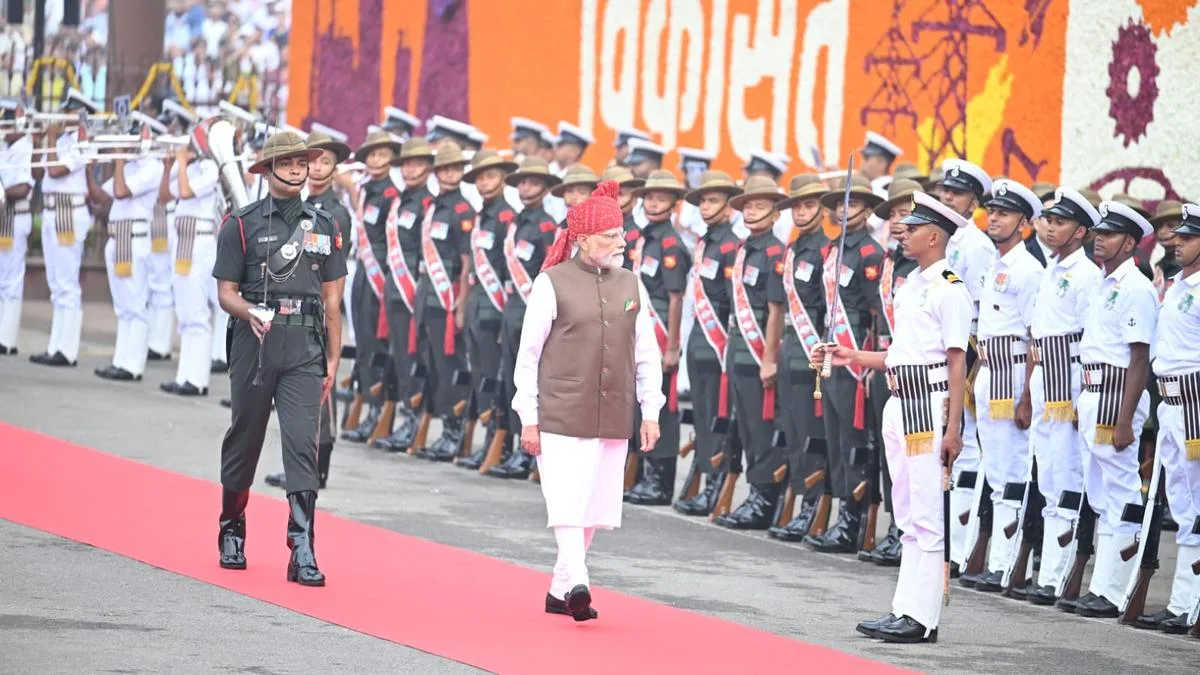
Prime Minister Narendra Modi inspecting the Guard of Honour during the 80th Independence Day celebrations at the Red Fort in New Delhi on Saturday, August 15, 2026 | Photo Credit: Sushil Kumar Verma
Prime Minister Narendra Modi on Saturday (August 15, 2026) warned that the weaponisation of resources and strategic sea routes by some countries posed risks to India's economic security, calling for greater self-reliance in energy to reduce the country's vulnerability to overseas supplies.
Centre pushes States to speed up PNG adoption, seeks district-level officers to drive LPG-to-gas transition
Addressing the nation from the ramparts of the Red Fort on India's 80th Independence Day , Mr. Modi said India needed to strengthen domestic capacity in critical areas, including energy and minerals, as geopolitical tensions increasingly exposed the risks of dependence on external sources.
Without naming any country, Mr. Modi said resources ranging from fuel and medicines to technology were increasingly being used as instruments of geopolitical pressure, while strategic geographical routes were also being weaponised.
His remarks come against the backdrop of the U.S.-Israeli war with Iran and Tehran's retaliation, which has severely disrupted shipping through the Strait of Hormuz, a key conduit for global energy supplies.
The narrow waterway between Iran and Oman handled about 20 million barrels per day of oil and petroleum products in 2025, equivalent to roughly a quarter of global seaborne oil trade, according to the International Energy Agency. It also carried almost 20% of global LNG trade, leaving major Asian importers particularly exposed to any prolonged disruption.
The conflict has sharply reduced maritime traffic through the strait and pushed up energy and shipping costs. Renewed tanker attacks have stalled efforts to resolve the conflict.
For India, the disruption has highlighted the risks posed by its dependence on imported energy. The country has had to seek alternative LNG supplies from countries including Oman, the United States, Nigeria and Angola after uncertainty over Gulf shipments, while Indian refiners have also moved to diversify crude purchases.
India has already broadened its energy sourcing, importing crude from 41 countries and LNG from 15, up from 27 and six respectively, as New Delhi seeks to insulate the economy from geopolitical shocks.
The Strait of Hormuz is particularly important to India because much of the energy passing through it is bound for Asia. The IEA estimates that India received nearly half of its crude oil that transited the strait in 2025. It also obtained almost two-thirds of its LNG supplies through the waterway.
Mr.
5News aggregated this summary from the outlet’s public feed. The full article, with all the context, is on www.thehindu.com — the content belongs to The Hindu.