The Cambrian Period: A time when life exploded
Account subscription benefits alongside Premium Stories, Editorials, Opinions and more. Unlock these with Subscription
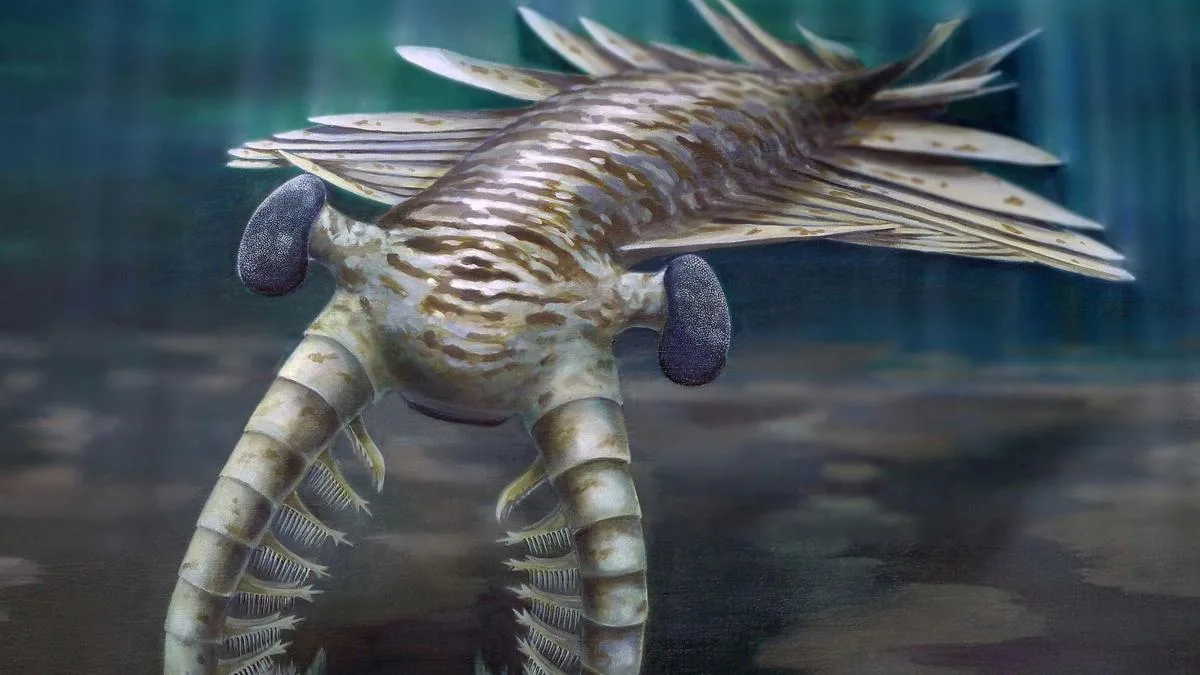
A drawing of the super predator Anomalocaris, which existed during the Cambrian period. | Photo Credit: AFP
During the course of evolution, around 520-540 million years ago, there was a period when almost every type of complex animal group came into being. Animals with skeletons, shells, and other hard and complex parts left spectacular full-bodied fossil records.
Before the Cambrian explosion, most life consisted of soft-bodied animals and microorganisms like bacteria and algae.
The Cambrian period lasted for 56 million years. Although we call it an “explosion” today, in reality, it lasted for an immense number of generations!
An artist’s reconstruction of life during the Cambrian period. | Photo Credit: The Hindu Archives
Many environmental and genetic factors such as the increase of oxygen levels in the atmosphere and the ocean played a role in the diversification of life during this time. Biologist and author of On the Origin of Species, Charles Darwin believed that the seeds of evolution were sown long before the Cambrian period actually started.
With the introduction of many new species, the aquatic environments changed drastically. Earlier, there existed an undisturbed mat of microbial life. But these animals burrowed, crawled, and grazed. The introduction of skeletons and shells introduced biominerals like calcium and carbonate into the soil and water.
Yes! Although no mammals or any species close to humans appeared, features like bilateral body organisation, sensory organs like eyes, and structures like spinal cords became part of the animal kingdom. These features were central to the evolution of humans
Most of the animals looked like aliens and sea monsters! Imagine huge aquatic worms with five eyes and multiple appendages, and big, hard-shelled bugs crawling around on the sea floor!
Before the Cambrian explosion, life was peaceful. Microorganisms slowly munched away at the nutrients and minerals. The environment slowly changed over time and became habitable for the animals to come. The Cambrian period introduced something new: predators and prey. As predators evolved to become more effective at catching animals they could eat, the prey evolved to hide better. This started an evolutionary arms race that has lasted to this day.
No but many sea creatures such as lobsters, crabs and starfish are descendants of Cambrian species.
Comments have to be in English, and in full sentences. They cannot be abusive or personal. Please abide by our community guidelines for posting your comments.
We have migrated to a new commenting platform. If you are already a registered user of The Hindu and logged in, you may continue to engage with our articles. If you do not have an account please register and login to post comments. Users can access their older comments by logging into their accounts on Vuukle.
5News aggregated this summary from the outlet’s public feed. The full article, with all the context, is on www.thehindu.com — the content belongs to The Hindu.