Only 41% of Tests now reach Day 5: Has cricket outgrown the five-day format, or does the fifth day still matter?
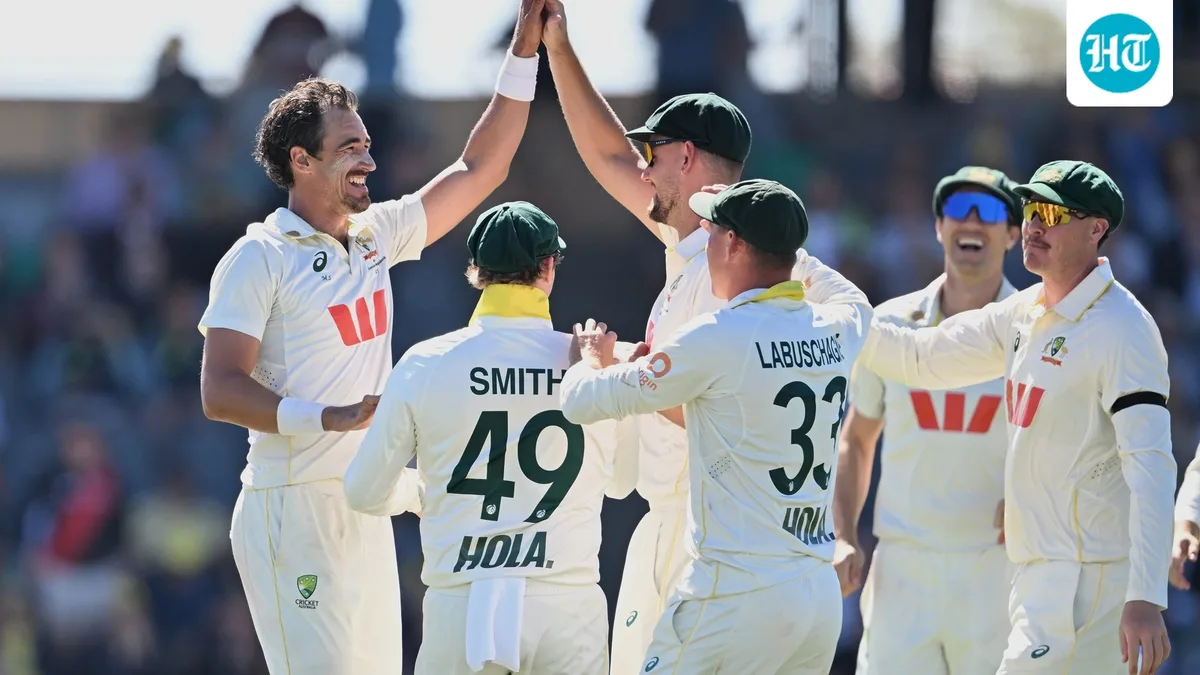
Australia and Bangladesh required only 425.3 overs to complete an entire two-Test series this month. Put another way, the two teams played two Tests in fewer deliveries than the 450 overs theoretically available in one five-day Test.
The contrast between the matches was remarkable. Bangladesh's historic victory in Darwin went into the fourth day and required 1,803 balls, or 300.3 overs. A week later in Mackay, Australia needed just 750 balls — 125 overs — to win by an innings and 51 runs, making it the fourth-shortest completed Test in history by balls bowled.
England then added another example. Their first Test against Pakistan at Headingley ended on the third day after only 1,053 balls, or 175.3 overs, with Pakistan bowled out for 171 and 135 in an innings-and-103-run defeat. The ongoing second Test at Lord's has been heavily interrupted by rain, yet England reached stumps on the third day 357 runs ahead, despite only 24.5 overs being possible on Saturday.
Together, those matches revive a question cricket has debated for years: if Tests are increasingly finishing in two, three or four days anyway, does the format still need to be scheduled for five? The numbers suggest that five days are becoming less necessary to complete the average Test. They also suggest, however, that removing the fifth day altogether would answer a different question.
The long-term change is substantial. Sky Sports data shown during the England-Pakistan series found that 77.65% of Tests in the 1970s lasted into a fifth day. That fell to 76.22% in the 1980s, 68.60% in the 1990s, 58.13% in the 2000s and 54.76% during the 2010s. In the 2020s, only 41.43% of Tests have reached Day 5. At the other end of the scale, 23.11% have finished within two or three days, compared with 13.46% in the 2010s, 6.98% in the 1990s and just 2.79% in the 1970s. Another 35.46% of Tests this decade have ended on Day 4.
That means almost three out of every five Tests in the present decade have been completed before the fifth day begins. The traditional five-day contest is no longer the typical Test in terms of actual duration. Two-day finishes remain rare in the context of 149 years of Test cricket, but even those are suddenly clustering. Mackay was only the 28th such Test among more than 2,600 played, yet 13 two-day Tests have occurred since 2000, after none had been played between 1946 and 1999. Australia itself has now staged four two-day Tests in its last 20 home Tests after having only one before 2022.
The shortening is therefore not simply a perception created by one unusual Bangladesh collapse or a green Mackay surface. It represents a structural change in the way modern Test cricket is being played.
Looking at days alone can be deceptive because rain, bad light and slow over-rates change how much cricket actually takes place. Balls bowled provide a cleaner measurement. During the six seasons from 2013 through 2018-19, the average Test contained 1,946.64 deliveries, equivalent to about 324.4 overs.
5News aggregated this summary from the outlet’s public feed. The full article, with all the context, is on www.hindustantimes.com — the content belongs to Hindustan Times - Cricket.