Multiple health insurance policies: Can you claim from two insurers for the same hospital bill? Experts explain
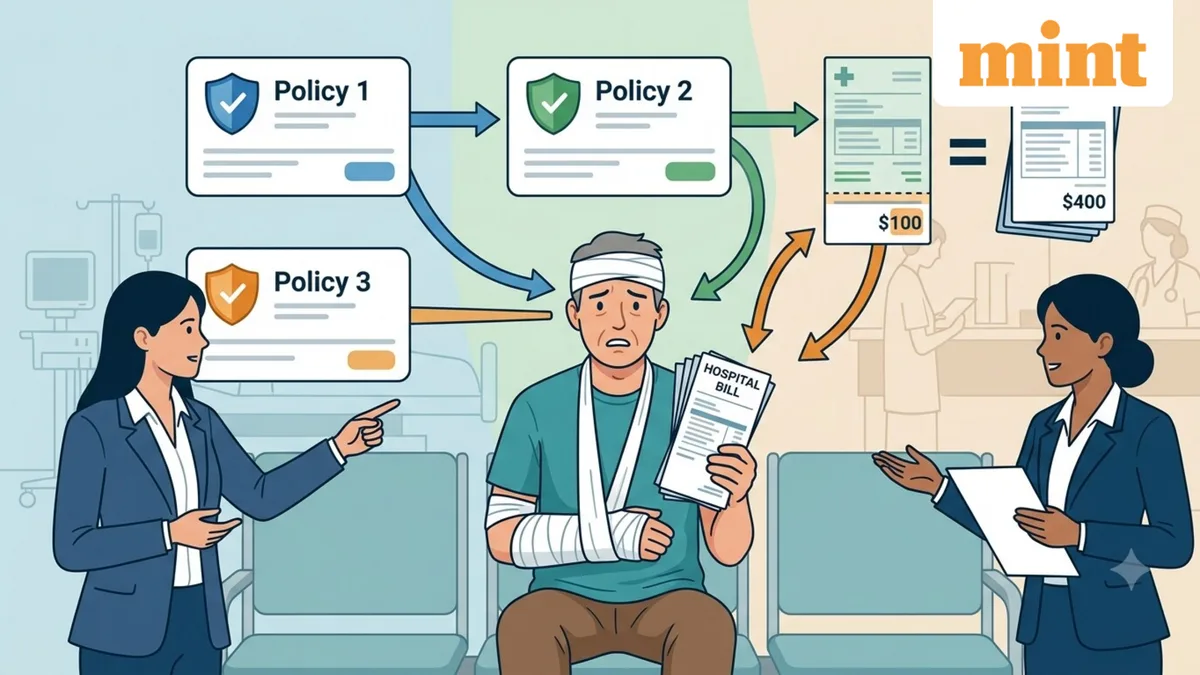
Medical emergencies can leave policyholders facing hospital bills that run into several lakhs of rupees. This is one reason people often build more than one layer of health cover, such as an employer's group insurance, an individual policy or an additional cover. But when it comes to making a claim, having multiple policies does not mean you can collect the full hospital bill from every insurer.
For indemnity-based health insurance, more than one policy can be used for the same hospitalisation, subject to the terms of each policy. If the first policy does not cover the entire admissible expense, another insurer can cover the eligible balance. The combined payout, however, cannot exceed the admissible medical expenses actually incurred.
Yes. A policyholder with two or more health insurance policies can use more than one policy for the same hospitalisation. However, the total amount received from all insurers cannot exceed the admissible medical expenses incurred.
Sachin Joshi, President, Claims, Operations & Customer Service, Liberty General Insurance, said a policyholder can choose any policy for claim settlement. The insurer chosen becomes the primary insurer.
If the coverage under the primary policy is lower than the admissible claim amount, the insurer can seek details of the policyholder's other health insurance policies and coordinate with the other insurers to settle the balance, subject to the policy terms.
For example, if the admissible hospital expense is ₹ 8 lakh and the first insurer pays ₹ 5 lakh, the policyholder can use the second policy for the eligible balance of ₹ 3 lakh. The same ₹ 8 lakh expense cannot be claimed separately from both insurers.
Shashi Kant Dahuja, Executive Director and Chief Underwriting Officer at Shriram General Insurance, said having multiple indemnity-based health insurance policies does not allow a policyholder to recover the same hospitalisation expense multiple times.
The total amount payable across policies cannot exceed the admissible medical expenses actually incurred, he said. The final settlement will also depend on the sum insured, exclusions, deductibles, sub-limits and other conditions of the respective policies.
There is no fixed rule that a policyholder must use an employer-provided group health policy before an individual policy.
Joshi said many customers use their employer's group policy first and then use their individual policy for any amount that remains uncovered. The choice can depend on the coverage limits, policy benefits, terms and the policyholder's preference.
An employer group policy and an individual policy can, depending on their respective terms and the circumstances of the claim, be used simultaneously to meet an eligible hospital expense.
Dahuja said one insurer may handle part of the bill while the other pays the remaining eligible amount. If one policy has sufficient sum insured and the entire expense is eligible under that policy, the claim may also be handled entirely by one insurer.
This makes it important to check the coverage available under each policy before deciding which one to use.
5News aggregated this summary from the outlet’s public feed. The full article, with all the context, is on www.livemint.com — the content belongs to LiveMint - Money.