H1N1 in India: A seasonal surge, not a new strain, says ICMR
Account subscription benefits alongside Premium Stories, Editorials, Opinions and more. Unlock these with Subscription
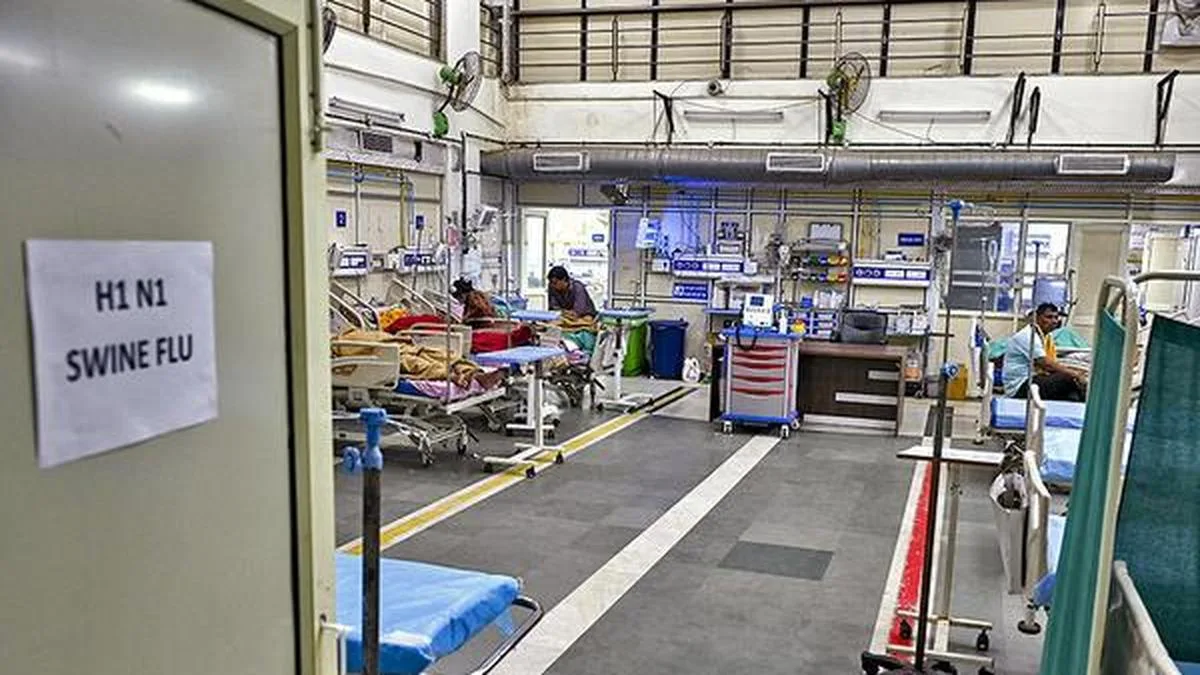
Patients rest in a dedicated ward at Lok Nayak Jai Prakash (LNJP) Hospital for the treatment and management of H1N1 (swine flu) patients, in New Delhi, Tuesday, Aug. 25, 2026. | Photo Credit: PTI
India is seeing a rise in seasonal influenza, with H1N1 accounting for much of the increase in influenza A infections.
Stating that there is no cause for alarm ICMR director general Rajiv Bahl said on Tuesday (August 25, 2026) that the virus currently circulating is the familiar A(H1N1)pdm09 strain, which has become a seasonal influenza virus. Most infections are mild and self-limiting, he said, while severe disease remains more likely among vulnerable groups.
Delhi has reported 1,777 H1N1 cases this year, while Karnataka had recorded 4,212 laboratory-confirmed influenza cases across 32 districts by August 22. Maharashtra, too, has reported a rise in H1N1 infections.
The Union government is treating the increase as a seasonal influenza event requiring close surveillance.
On August 21, Health Minister J.P. Nadda reviewed the national situation, with particular attention to Delhi. The review covered influenza-like illness and severe acute respiratory infection trends, laboratory surveillance, hospital beds, critical-care capacity, oxygen-supported beds, ventilators, medicines and diagnostics.
The Minister called for “continued vigilance, robust surveillance and proactive preparedness”.
Over 2,300 H1N1 cases among 3,000 influenza infections in Delhi; CM calls for emergency meeting
Spurt in influenza-like illness among children in Bengaluru; H1N1 cases reported
The H1N1 virus responsible for the 2009 pandemic did not disappear after the pandemic. It became established in humans and evolved into one of the viruses that cause seasonal influenza.
All viruses continually undergo small genetic changes, known as antigenic drift, influenza is no different. Consequently, the viruses circulating from one season to another are related but not identical. This is why influenza vaccines have to be reviewed and updated regularly.
India also does not have a single, sharply defined flu season. Influenza activity commonly shows two broad peaks — one around January-March and another during the monsoon months. Karnataka, for instance, describes January-March and July-September as its two usual periods of increased influenza activity.
The current August rise therefore falls within an established seasonal pattern.
5News aggregated this summary from the outlet’s public feed. The full article, with all the context, is on www.thehindu.com — the content belongs to The Hindu - Sci-Tech.