The afterglow of the Asiad gold
Account subscription benefits alongside Premium Stories, Editorials, Opinions and more. Unlock these with Subscription
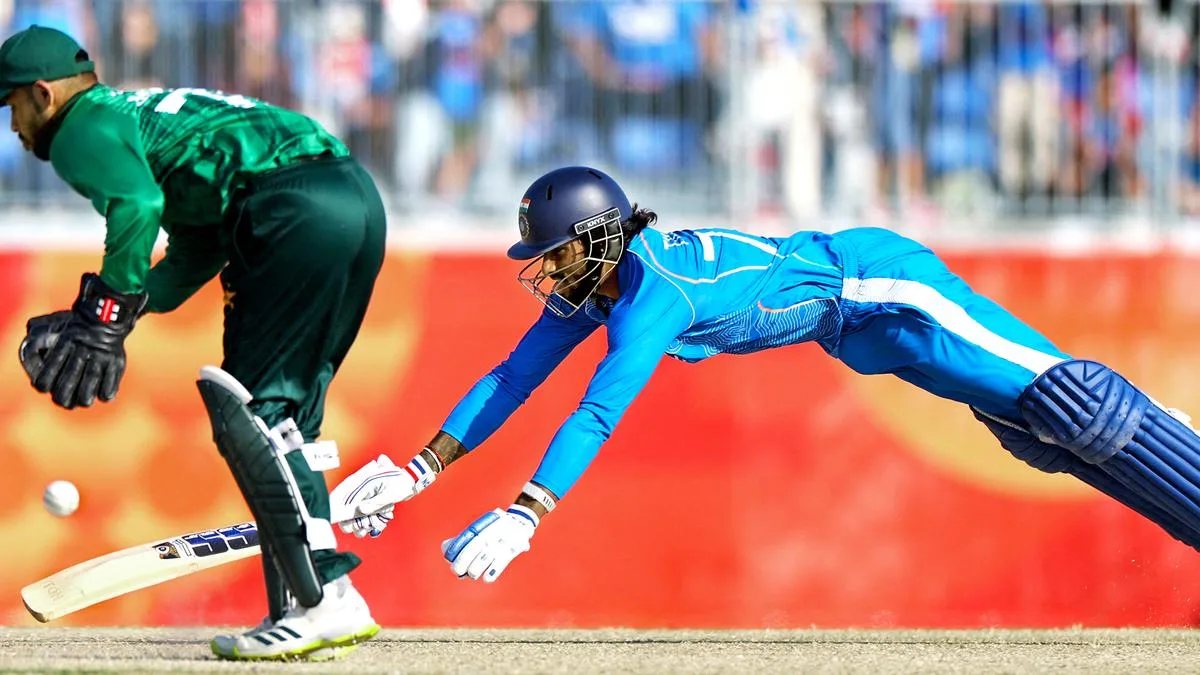
Pakistan's Usman Khan attempts to run out India's Tilak Varma in the Asian Games final. | Photo Credit: Reuters
To be installed the overwhelming favourite ahead of any major sporting extravaganza is a double-edged sword. The moniker is suggestive of a formidable individual (or team) clearly more skilled, more temperamentally adjusted, and the most likely to go all the way, but it also comes with a rider. You are marked; the rest will be doubly determined to hunt you down and add a coveted scalp to their kitty.
Long before a single ball was bowled at the Asian Games , the Indian men’s cricket team was fancied to come up trumps. The women too, of course, considering that they had just blazed to the Asia Cup in Dubai, sweeping everyone in front of them. Harmanpreet Kaur’s intrepid bunch kept its tryst with gold in commanding fashion, brooking no opposition and flexing its not inconsiderable muscle with aplomb. Immediately thereafter, the spotlight turned to Shreyas Iyer and his lads, up against four other continental Test-playing nations who chose to put out experimental rather than full-strength outfits.
One of the talking points in the lead-up to the Asiad was why India’s selectors had chosen to go with the tried and the tested. People harked back to the previous event in Hangzhou three years back, when Ruturaj Gaikwad led a second-string team to the gold medal after the final against Afghanistan was washed out, and wondered why a similar squad wasn’t pieced together. For more than one reason, it is apparent.
The previous Asian Games overlapped with the 50-over World Cup hosted by India, thereby comprehensively ruling out the presence in China of the main squad. There is no gainsaying what personnel the selectors would have picked in the absence of the said overlap; that’s delving into the realms of the hypothetical, which serves little purpose.
This time around too, India were involved in a three-match One-Day International series against West Indies at home; the first of the ODIs was played on September 27, a day before Shreyas’ boys began their title defence in the quarterfinal against Afghanistan. While there are several players who are certainties in both white-ball formats internationally, India weren’t too weakened by the absence from the 50-over set-up of Shreyas, the ODI vice-captain, and Ishan Kishan. Sure, they missed bowling spearheads Jasprit Bumrah and Axar Patel – Shubman Gill’s unit conceded more than 1000 runs to the Caribbeans in the three fixtures – but what is the weight of an ODI series with little immediate import compared to an Asian Games gold medal?
Cricket authorities have worked tirelessly in ensuring the inclusion of the sport in multi-discipline events like the Asian Games and the Olympic Games. The International Cricket Council’s avowed goal is to take the discipline to as many countries as possible.
5News aggregated this summary from the outlet’s public feed. The full article, with all the context, is on www.thehindu.com — the content belongs to The Hindu.