From idle plots to tapping trails: rubber boom lifts hopes for stakeholders in Keralam
Account subscription benefits alongside Premium Stories, Editorials, Opinions and more. Unlock these with Subscription
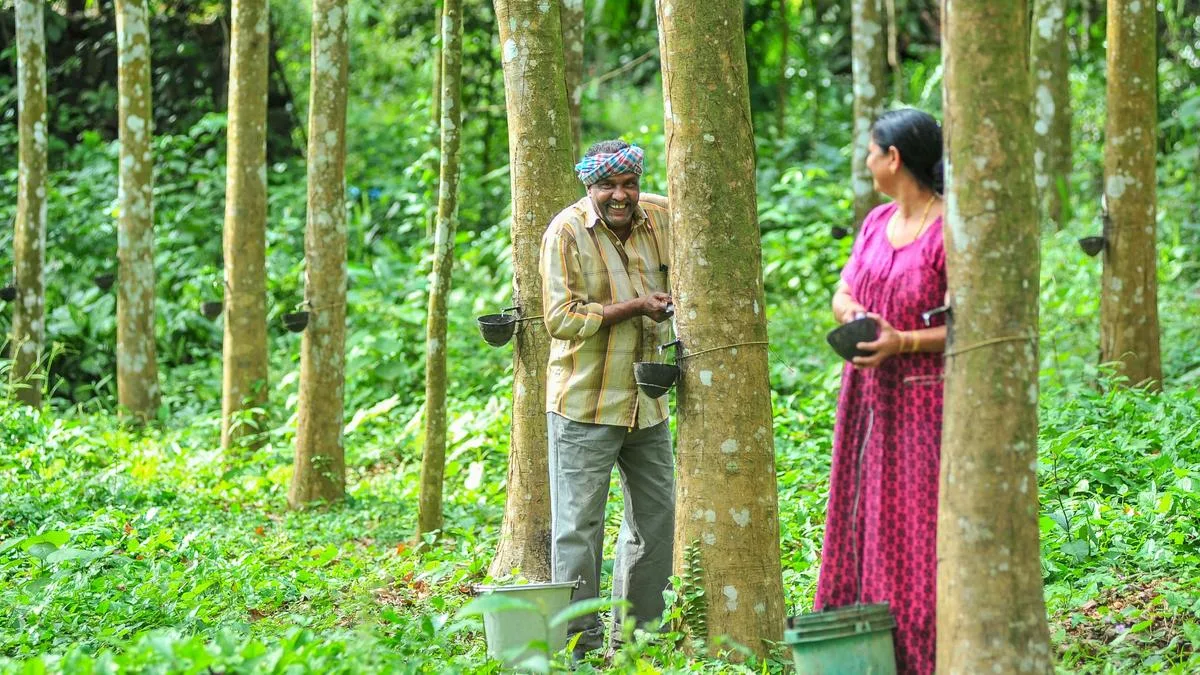
Rubber tapping in progress at a plantation near Mundakayam. | Photo Credit: VISHNU PRATHAP
For years, low prices and a shortage of tappers left rubber plantations across central Travancore overgrown and abandoned. Now, a sharp price rally is bringing them back to life, with tapping knives returning to work, neglected plots being cleared and even half-acre holdings finding takers.
According to stakeholders, demand for leased plantations has risen sharply, with even small plots measuring half an acre attracting interest. Lease rates, too, have climbed alongside rubber prices, making it viable for owners to bring long-neglected plantations back into production.
“There is clearly renewed momentum. Plantations that had long remained abandoned in places such as Pala, Erumely, Kanjirappally and Erattupetta are now in great demand,” says Babu Joseph, general secretary of the National Consortium of Regional Federations of Rubber Producers Societies India.
Share-tapping arrangements are also gaining ground. Under this system, the output is divided equally between the plantation owner and the tapper. With prices holding firm, the arrangement allows owners to revive their plantations while giving workers a share in the returns. Leasing also offers farmers the advantage of receiving a lump sum upfront. Both experienced lessees and newcomers are entering the field, drawn by the prospect of better returns.
Mr. Joseph says most small-scale farmers remain emotionally attached to their plantations despite years of poor returns. “Despite setbacks, they rarely consider exiting, even if they become somewhat disengaged,” he says.
The revival, however, comes with uncertainties. Farmers say changing weather patterns are affecting production. Fewer rainy days have allowed tapping to continue for longer this year, but higher daytime temperatures have depressed yields in many plantations. Heavy rain during the northeast monsoon could disrupt tapping once again.
Rubber Board chairman N. Hari says the renewed interest among small-scale growers is encouraging. “The momentum is visible in rural areas, especially when we visit rubber-producing societies. I hope this will also serve as a turning point, encouraging younger generations to take up rubber farming as a career,” he says. The Board is supporting the revival through initiatives such as INR Konnect, an online platform aimed at ensuring an adequate supply of tappers, he adds.
Sheet rubber (RSS Grade 4) touched an all-time high of ₹287 a kg in the domestic market on Thursday (October 15, 2026), according to the Rubber Board’s daily price bulletin. Officials attribute the rise to the ongoing conflict in West Asia, strong demand from tyre manufacturers and other industrial buyers, and supply constraints. With domestic production declining and the situation in West Asia remaining volatile, officials expect prices to remain firm for some time.
Comments have to be in English, and in full sentences. They cannot be abusive or personal.
5News aggregated this summary from the outlet’s public feed. The full article, with all the context, is on www.thehindu.com — the content belongs to The Hindu.