International community must work collectively to safeguard critical sea lanes: India tells UNSC
Account subscription benefits alongside Premium Stories, Editorials, Opinions and more. Unlock these with Subscription
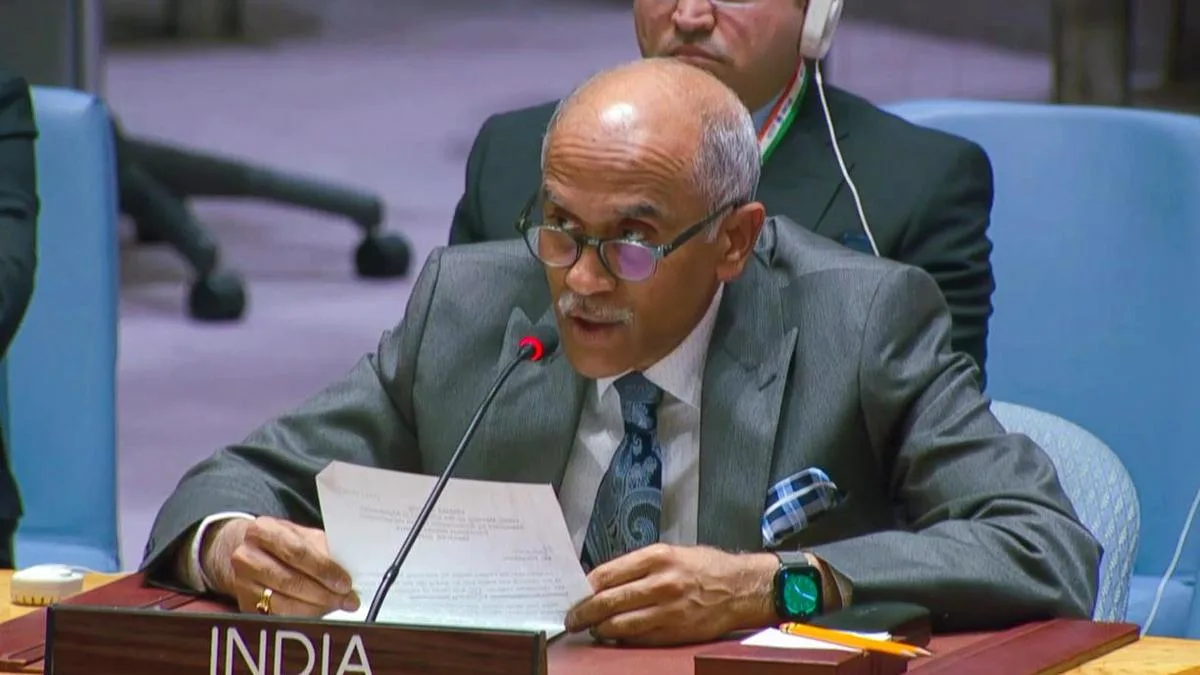
Permanent Representative of India to the United Nations. File | Photo Credit: ANI
India has called on the international community to work collectively to safeguard critical sea lanes, emphasising that secure and predictable maritime trade routes are indispensable for uninterrupted movement of food, fertilisers and fuel.
“Food insecurity remains one of the gravest humanitarian consequences of armed conflict. Today’s conflicts increasingly generate ripple effects far beyond the immediate theatre of hostilities,” India’s Permanent Representative to the UN Ambassador Harish Parvathaneni said.
Addressing the UN Security Council High-Level Open Debate titled ‘Food Under Fire: The Security Council's Role in Mitigating Global and Local Food Crises’ on Tuesday (August 25, 2026), Mr. Parvathaneni said disruptions to energy markets, fertiliser supplies, maritime transport, humanitarian logistics and agricultural trade have demonstrated how regional conflicts can threaten food security across the world, with the greatest burden falling on developing countries that are highly import-dependent.
India emphasised that the “immediate priority” of the UN Security Council should be to mitigate the humanitarian consequences of conflict. “This requires facilitating safe, rapid and unimpeded humanitarian access, supporting de-confliction arrangements where appropriate, and ensuring that the Council's own measures, including sanctions regimes, do not inadvertently impede humanitarian assistance or legitimate food and agricultural trade.” Underscoring the need to preserve the safety and freedom of navigation for commercial shipping in accordance with international law, Mr. Parvathaneni said, “Secure and predictable maritime trade routes are indispensable for the uninterrupted movement of food, fertilisers, fuel and other essential commodities." "Disruptions to commercial shipping during conflicts can have cascading effects far beyond the immediate region, disproportionately affecting food-importing developing countries and humanitarian operations,” he said.
The international community must therefore work collectively to safeguard critical sea lanes and maritime infrastructure, while ensuring that legitimate commercial trade and humanitarian shipments are able to proceed without undue impediment, he said.
Addressing the debate, UN Secretary-General Antonio Guterres noted that the year 2025 saw not only the highest number of armed conflicts since World War II, but also among the highest levels of global acute hunger on record, with at least 266 million people facing acute food insecurity.
The year 2025 also marked the first time this century that two famines were confirmed simultaneously, in Sudan and Gaza, which Mr.
5News aggregated this summary from the outlet’s public feed. The full article, with all the context, is on www.thehindu.com — the content belongs to The Hindu.