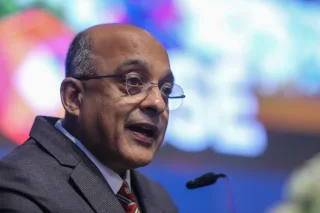
Mutual fund distributors can act as a behavioural anchor: SEBI's Amarjeet Singh explains MFDs' role for investors

A mutual fund distributor (MFD) is an intermediary who helps investors access mutual fund schemes and provides assistance with investing. For example, an MFD may help an investor select a suitable scheme, start a SIP, understand investment risks, or stay invested during market volatility.
Amarjeet Singh, Whole-Time Member, Securities and Exchange Board of India ( SEBI ), highlighted the role of mutual fund distributors at the NJ Partners Business Training 2026, organised by NJ Group in association with FICCI on 13 August.
Here are the key takeaways for investors from his speaking notes released by SEBI.
India's mutual fund industry has expanded rapidly, with total assets under management (AUM) now at around ₹ 85 lakh crore. The industry crossed ₹ 10 lakh crore in 2014 and has grown more than eightfold in little over a decade.
“Distributors have been central to this journey. They serve as the bridge between households and capital markets, playing a critical role in guiding and handholding investors,” Singh said.
SIP assets now account for more than 21% of the industry's total assets. Singh highlighted that around 34% of SIP assets in regular plans have been held for more than five years, compared with 20% in direct plans.
Singh said distributors can act as a “behavioural anchor, particularly during periods of market volatility”, helping investors avoid impulsive decisions such as stopping SIPs, redeeming investments or chasing schemes and asset classes that have recently performed well.
By providing perspective, distributors can help investors stay focused on their long-term goals rather than allowing short-term market movements to influence their investment decisions.
B-30 cities now account for almost 19% of total mutual fund industry AUM, up from around 16% five years ago. Singh said distributors can help expand mutual fund participation in smaller towns and among first-time investors by:
SEBI, in consultation with NISM, has simplified the certification framework for Specialized Investment Funds (SIFs). Distributors with the relevant certification can distribute both mutual funds and SIFs.
SEBI is also consulting on a proposed mutual fund-only Portfolio Management Services (MF-only PMS) framework. Under the proposal, the PMS would invest exclusively in direct plans of mutual funds, including ETFs and SIFs. The proposed minimum investment is ₹ 25 lakh, compared with ₹ 50 lakh for conventional PMS.
Singh said the framework could allow larger distributors to move beyond recommending individual schemes and manage an investor's overall mutual fund portfolio, including asset allocation, scheme selection and ongoing portfolio management.
Singh stressed that distribution should remain focused on investor interests rather than simply asset or customer acquisition. “Ethical distribution therefore has to remain at the centre of the investor relationship,” he said.
For investors , this means asking whether a distributor clearly explains risks and commissions, recommends products suited to their needs and remains engaged after the sale.
5News aggregated this summary from the outlet’s public feed. The full article, with all the context, is on www.livemint.com — the content belongs to LiveMint - Money.