Dance through a lens: How films become archives of movement and performance
Account subscription benefits alongside Premium Stories, Editorials, Opinions and more. Unlock these with Subscription
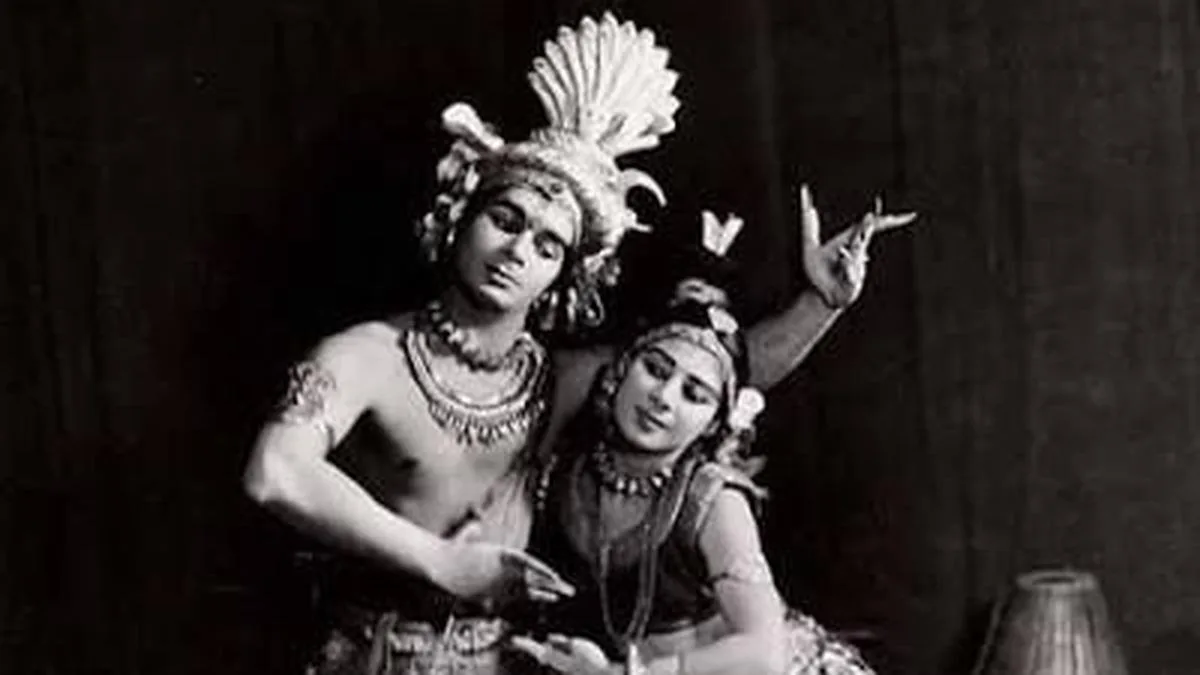
Kalpana remains a landmark example of dance conceived for the screen rather than simply recorded for it. | Photo Credit: Special Arrangement
Dance has always been among India’s most visible art forms. Yet for all its richness, much of its history remains poorly documented. Performances disappear once the curtain falls, and generations of work survive through memory, oral histories and scattered photographs rather than a sustained visual archive.
The West, meanwhile, has a longer history of documenting ballet and modern dance through films. But filming dance is not simply about recording what happens on stage. The moment movement enters the frame, the camera, editing, sound and perspective begin to reshape it. The camera neither merely preserves dance nor is a passive observer; it changes the way dance can be seen, remembered and understood.
Ancestral Shadows was about dancing with the ghosts of the past. | Photo Credit: Special Arrangement
This was the premise behind the LURU Screendance Festival, launched by Bengaluru-based dancer-choreographer and dance film director Vishwakiran Nambi. The pilot edition, presented by the Vishwakiran Nambi Dance Company in collaboration with Choreoscope Barcelona Dance Films Festival, brought together dance films from India and across the world.
For Vishwakiran, the festival was a response to what he saw as a fundamental weakness in India’s relationship with its own dance history. “India is predominantly known for bad documentation,” he said. However, Uday Shankar’s Kalpana , made in 1948, is an exception. It was conceived not simply as a record of dance but as a work in which movement, cinema, music, design and narrative could exist together. Decades later, the film was restored through Martin Scorsese’s World Cinema Project. It is this history — and the gap between what India once attempted and what it has failed to sustain — that gives LURU its larger relevance.
The festival received 108 submissions from 30 countries, with 13 short dance films screened at Suchitra Film Society. The films varied widely in their understanding of movement and in the relationship they established between the dancer and the camera.
The Flight of the Shawl , directed by Jaime Dezcallar and featuring flamenco dancer Manuel Linan, was visually striking. Dezcallar’s Spanish Chica won the LURU Best Music Video Award, while Lino Eckenstein’s The Dust of My Concrete Child – Portrait 6: Risk & Balance won the Best Cinematography Award and his The Dust of My Concrete Child – Portrait 2: Viscousness & Vulnerability received the Best Choreography Award. India’s Sumedha Bhattacharyya’s film, Monalisa and Canada’s In My Room , by Kaitlyn Seibold, won the Best Screendance Film awards.
But does a cinematographer need to understand dance to film it effectively? Dezcallar challenged that assumption.
5News aggregated this summary from the outlet’s public feed. The full article, with all the context, is on www.thehindu.com — the content belongs to The Hindu - Entertainment.