Grocery spending falls 8%, rent jumps 21%: How GST 2.0 is reshaping India's household budgets in 2026
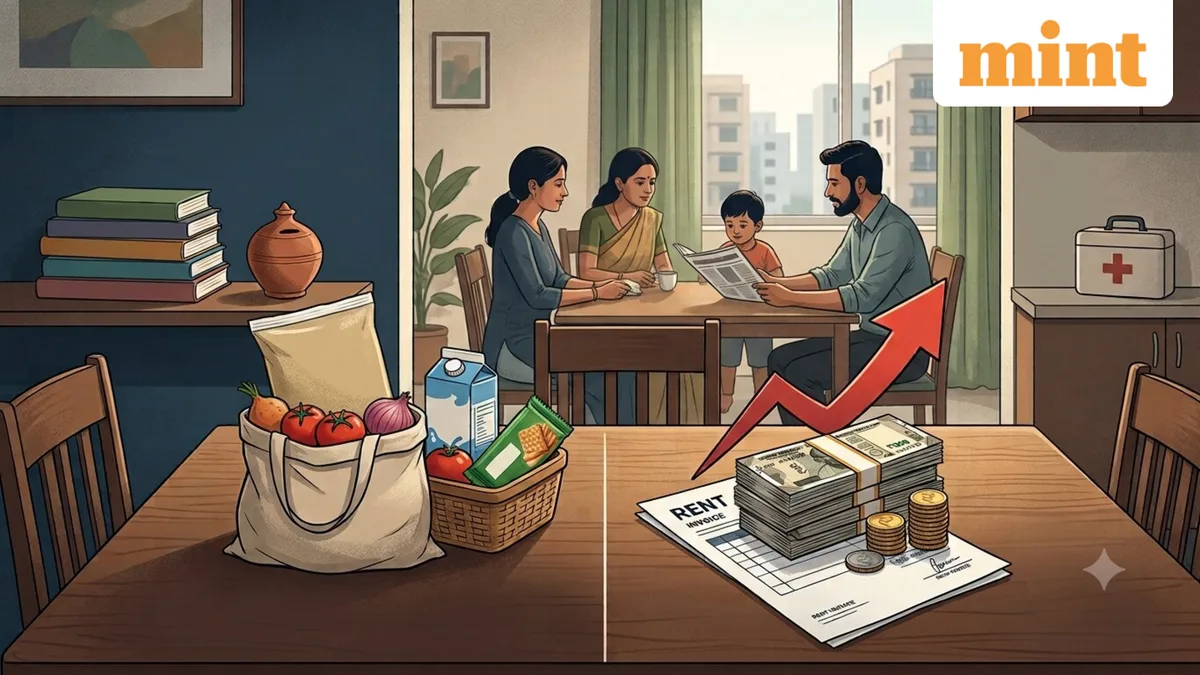
Grocery spending in India’s household budgets fell 8% in 2026 from 2025, even as rent costs surged 21%, highlighting how GST 2.0 has brought relief to some everyday expenses while other essential costs continue to rise.
The findings from The Great Indian Wallet 4.0 2026 study by Home Credit India show that households are not simply spending the savings from lower prices. They are using the additional financial headroom selectively, particularly on food quality, education, and savings.
Individuals surveyed were aged 18 to 55 years, with an average monthly income of ₹ 35,000, capturing how households are navigating changing financial circumstances.
Groceries remain the biggest monthly household expense at ₹ 8,505 in 2026, accounting for 25% of the wallet.
However, spending was down 8% from 2025, with its wallet share falling by four percentage points, likely reflecting the early impact of GST relief on everyday food and household items.
Rent moved in the opposite direction. At ₹ 6,965 per month in 2026, it now accounts for 21% of essential spending, after rising 21% from the previous year. It is a sign that housing costs continue to climb even as other essentials ease.
Children’s education remains another major anchor, with households spending ₹ 6,604 a month in 2026, or 20% of their essential budget. Spending on education rose 12% from 2025, suggesting that families continue to prioritise it even as other costs change.
Commute, medical expenses and utilities make up much of the remaining essential spending, with most categories recording higher absolute spending this year.
The study found that households reported lower prices across all categories tracked after GST 2.0. The strongest perceived relief was in two-wheelers (26%) and cars (25%), followed by smartphones and home appliances at 22% each.
For everyday household budgets, the 19% reported price relief in food and groceries and 21% in medicines and healthcare could be particularly significant because these are recurring expenses.
However, lower prices have not translated into a broad-based spending spree.
A majority of respondents (61%) said their spending or saving behaviour had not changed, indicating that many households are using the relief to maintain financial stability rather than immediately increase consumption.
Among the 39% who changed their spending or saving behaviour, 12% said they were saving more, while another 12% spent more on food quality.
Around 9% increased spending on their children’s education, and 7% spent more on health, showing where households chose to direct the additional financial headroom.
5News aggregated this summary from the outlet’s public feed. The full article, with all the context, is on www.livemint.com — the content belongs to LiveMint - Money.