Govt proposes BS-VII emission norms from April 2029; adds brake, tyre, battery-durability rules
Account subscription benefits alongside Premium Stories, Editorials, Opinions and more. Unlock these with Subscription
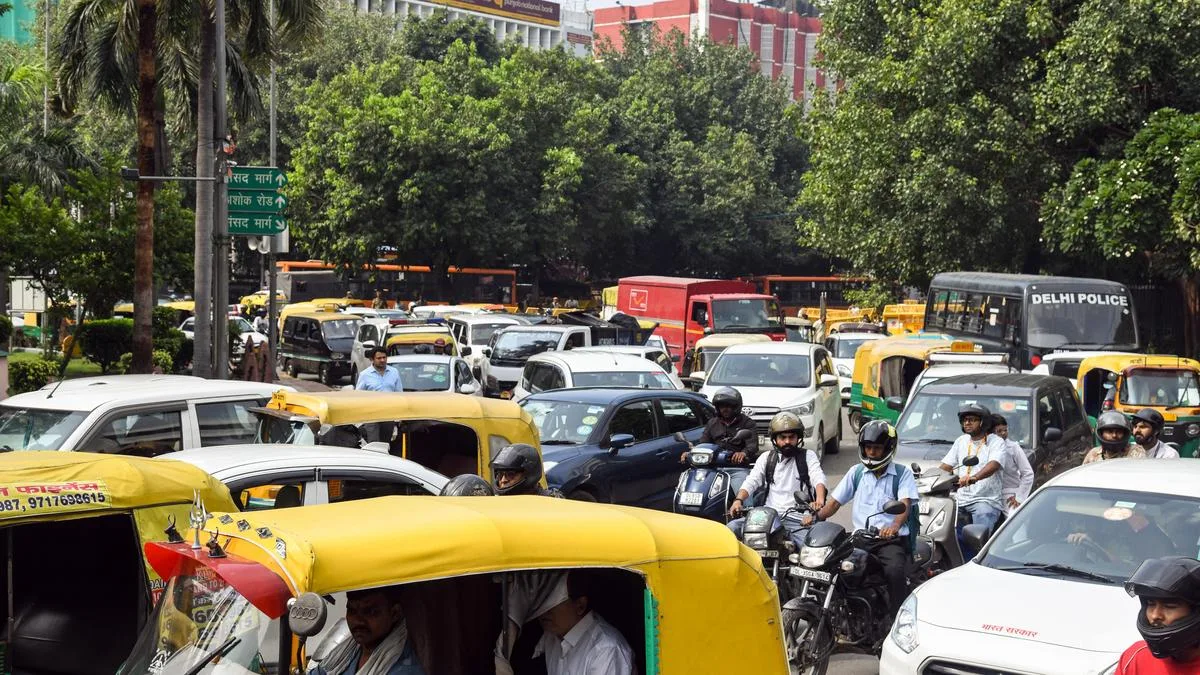
The proposal would require manufacturers to demonstrate compliance not only under laboratory conditions but also through real-world driving emissions tests and checks on vehicles already in service. Representational file image. | Photo Credit: ANI
The government has proposed introducing Bharat Stage VII (BS-VII) emission standards for passenger vehicles from April 1, 2029, tightening pollution controls through new limits on exhaust emissions, real-world driving tests and battery durability requirements.
According to a draft notification issued by the Ministry of Road Transport and Highways, the new rules would apply to category M1 vehicles — primarily passenger cars — manufactured from April 2029.
It invited public comments for 30 days before considering the draft amendments to the Central Motor Vehicles Rules, 1989.
India currently follows Bharat Stage VI standards, introduced nationwide in April 2020, which significantly tightened vehicle-emission requirements and brought the country closer to international regulatory practices.
BS-VII standards would be introduced in phases, with additional requirements taking effect in April 2031 and April 2035, including controls on brake-particle emissions, tyre abrasion and particulate emissions across different powertrain technologies.
The proposal would require manufacturers to demonstrate compliance not only under laboratory conditions but also through real-world driving emissions tests and checks on vehicles already in service.
The draft sets a three-phase timeline of April 2029, April 2031 and April 2035, giving carmakers about two and a half years before the first limits bite. Component and tyre suppliers face separate deadlines, and several limits, such as tyre abrasion and some battery thresholds, are still to be notified. The rules cover electric vehicles for the first time through battery-durability and brake-particle requirements, and they push compliance monitoring into the vehicle itself.
Under the draft, the first phase from April 2029 would introduce BS-VII exhaust-emission limits for passenger vehicles, alongside requirements covering evaporative emissions, fuel consumption, electric energy consumption and battery durability.
Real-world driving tests would measure gaseous pollutants and particle numbers, while on-board systems would monitor emissions and fuel or energy consumption. The draft also envisages an Environmental Vehicle Passport giving users access to information on vehicle emissions, fuel consumption and battery health.
From April 2031, the proposed framework would introduce brake-particle emission limits and tyre-abrasion requirements.
5News aggregated this summary from the outlet’s public feed. The full article, with all the context, is on www.thehindu.com — the content belongs to The Hindu.