Treat health as a public good, not a market opportunity
Account subscription benefits alongside Premium Stories, Editorials, Opinions and more. Unlock these with Subscription
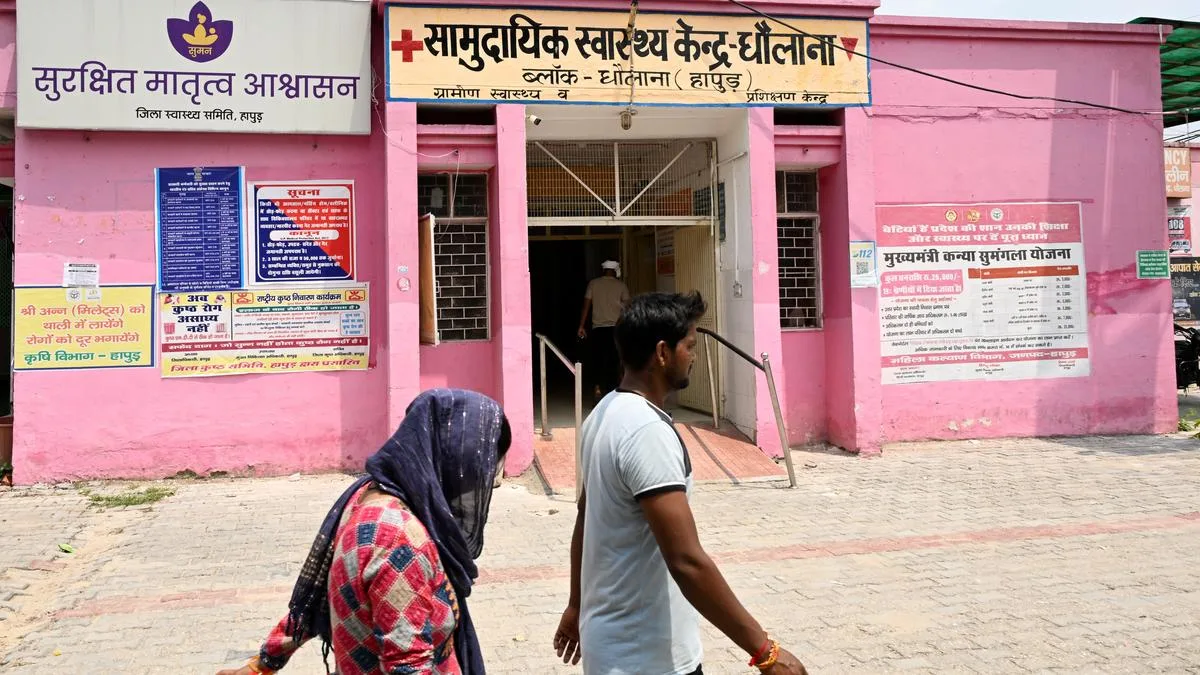
A view of a community health centre. Health outcomes are determined not by national wealth alone. They are also shaped by political choices. | Photo Credit: R.V. MOORTHY
On World Humanitarian Day, observed on August 19, we honour the people who provide care in crises and the communities who endure them. Often when we look at health crises, we look at large-scale disasters such as disease outbreaks, armed conflict or extreme weather events. But, on this day, let us push the envelope a little further and talk about the kind of crisis that does not show up at our doorstep overnight. This is the kind of health and humanitarian crisis that brews over years, decades, feeding off inefficient policies and profit-driven systems.
In South Asia, this crisis is especially urgent. The region is home to proven medical talent, pharmaceutical capacity, public health experience, and community resilience. Yet it also carries a heavy burden of preventable illness, malnutrition, infectious diseases, climate-related health risks, and out-of-pocket expenditure. For millions here, a health crisis begins not when an ambulance arrives, but when a treatable condition becomes unaffordable, diagnosis comes too late, or when a family must choose between food, rent, education, medicines, and a day’s pay.
World Humanitarian Day should therefore prompt a harder question: why do so many people need humanitarian assistance in the first place?
For Médecins Sans Frontières/Doctors Without Borders, these questions are not theoretical. Across our medical interventions in South Asia, we repeatedly see people reaching free care only after they have exhausted their savings, sold assets, borrowed money or spent heavily in private health facilities. And by then, the illness has often evolved into a personal crisis — monetary and social.
The warning signs are visible across the region. Out-of-pocket expenditure remains a major barrier to care. When illness pushes families into poverty, the cost is not only personal. It is also social and economic. A region that hopes to benefit from its demographic dividend cannot afford to have large numbers of people sick, untreated, indebted or forced out of work because healthcare is inaccessible.
Over five years from 2018-19 to 2022-23, the per-capita out-of-pocket expenditure(OOPE) in India rose 28.4%. In the same period, though India’s public share of total health expenditure grew to around 48%, it still stands far below that of China, Brazil and many OECD countries. Meanwhile, medical costs continue to rise sharply. One corporate health report placed medical inflation in India at 14%, while also finding that 71% of workers paid for healthcare out of pocket and only 15% had employer-supported insurance.
Of course, insurance does play a role, but it cannot replace public investment. A health card is not the same as a functioning primary healthcare network.
5News aggregated this summary from the outlet’s public feed. The full article, with all the context, is on www.thehindu.com — the content belongs to The Hindu.