Building a new house before selling the old one: Does Section 54 tax exemption apply? Rules explained
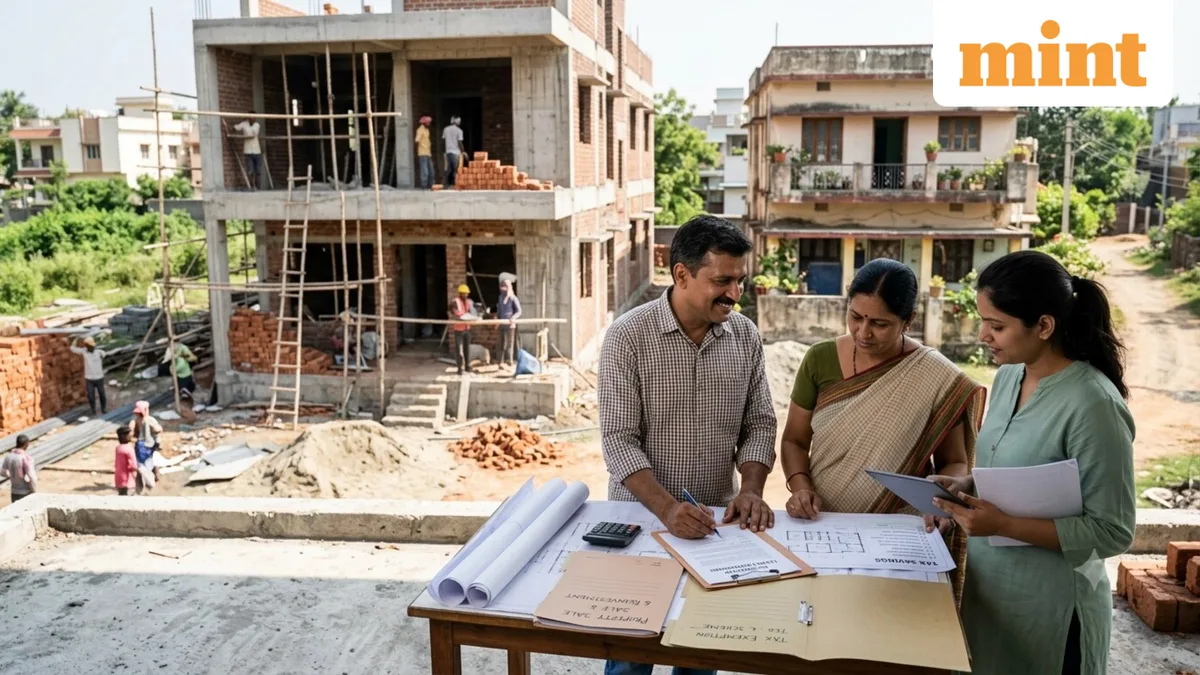
Starting construction of a new house before selling an existing residential property does not automatically rule out a Section 54 exemption.
However, the timing of construction, completion, and other conditions can determine whether the tax benefit is available. Here’s what taxpayers need to know.
Saurabh Kumar, Managing Partner at SK Attorneys, explained that Section 54 is a tax-saving provision that helps reduce or avoid capital gains tax on the sale of a residential property, provided that it was held for more than 24 months. Capital gain is the profit earned when the property is sold for more than its purchase cost.
Varad Kale, Partner at V.V. Kale & Company, stated that Section 54 is available to an individual/HUF on LTCG from the sale of a residential house. The exemption can be claimed by constructing a residential house within three years after the sale.
Kale added that the exemption is generally the lower of the LTCG or the amount invested, subject to the ₹ 10 crore cap. Where the LTCG does not exceed ₹ 2 crore, the taxpayer has a one-time lifetime option to invest in two residential houses in India instead of one.
Yes. Kale noted that Section 54 does not prescribe a specific period for starting construction before the sale. However, in his view, construction should not begin more than one year before the sale, as this could invite litigation.
Kumar added that there is no time limit on how early the construction may begin. Courts have focused on the completion date rather than the date construction started.
Kumar explained that Section 54 distinguishes between commencement and completion. If construction starts before the sale but is completed within three years after the sale, the exemption can still apply.
The taxpayer should have evidence that the house was completed and ready for use within the three-year period.
Kumar added that exemption can also be denied if the seller is not an individual or HUF and the new house is sold within three years.
Kumar stated that taxpayers should maintain a clear evidentiary trail, including:
Kale stated that the exemption can be affected to the extent the capital gain remains unutilised, and any amount not utilised within the prescribed period can become taxable.
Kumar explained that if the new house is not completed within three years, any unutilised CGAS balance is treated as LTCG in the year the three-year period expires under Section 54(2). This is a statutory tax consequence, not a penalty.
Kale explained that any unutilised capital gain by the Section 139(1) return -filing due date should be deposited in CGAS and subsequently used for eligible construction within three years. Payments should be made from CGAS as prescribed.
5News aggregated this summary from the outlet’s public feed. The full article, with all the context, is on www.livemint.com — the content belongs to LiveMint - Money.