Supreme Court upholds definition of ‘industry’ as per Industrial Relations Code, 2020
Account subscription benefits alongside Premium Stories, Editorials, Opinions and more. Unlock these with Subscription
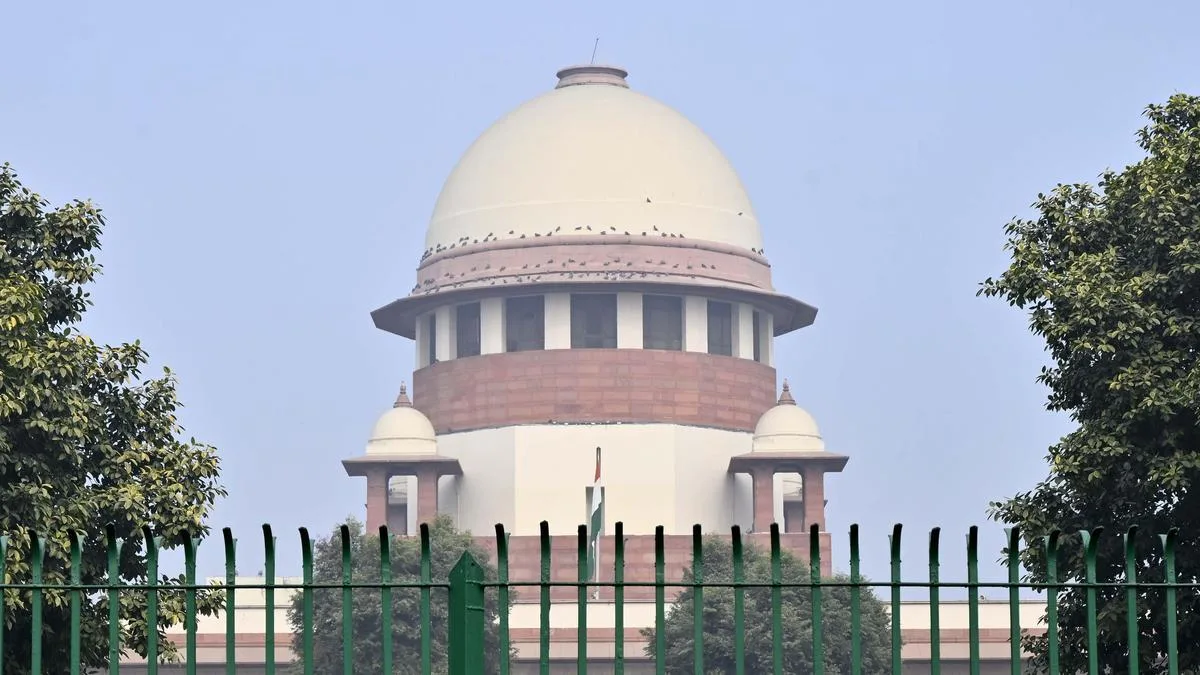
Supreme Court, in a majority opinion clarified that the 1978 judgment’s interpretation would not affect or influence ‘industry’ in Section 2(p) of Industrial Relations Code 2020. | Photo Credit: Shiv Kumar Pushpakar
In a verdict in which judges varyingly differed on issues, nine-judge Bench of the Supreme Court on Thursday (August 20, 2026) held that a nearly half-century-old expansive interpretation of ‘industry’, which previously granted workers stronger labour rights and protection, will not apply under the new Industrial Relations Code, 2020.
The reference before the Constitution Bench headed by Chief Justice of India Surya Kant was centered around a broad definition given to ‘industry’ in a 1978 seven-judge Constitution Bench judgment, authored by Justice V.R. Krishna Iyer, in the Bangalore Water Supply and Sewerage Board v. A. Rajappa case.
The verdict had enabled workers employed in a wide range of jobs to have a legal recourse, including collective bargaining, against unfair labour practices by employers. The 48-year-old verdict had exempted only core sovereign activities such as the judiciary, law and order, defence, etc. from the purview of ‘industry’, as defined under Section 2(j) of the Industrial Disputes Act, 1947, in order to protect the state’s functional autonomy.
The 1978 judgment had further introduced a ‘triple test’ which laid down conditions that any activity which was systematic or organised, operated on the basis of employer-employee cooperation and dealt in the production of goods and services to satisfy human wants came within the ambit of ‘industry’. The judgment had brought even hospitals, educational institutions and municipalities within the fold of ‘industry’.
The majority on the Bench held that ‘industry’ under Section 2(p) of the Industrial Relations Code (IRC), which came into force in November 2025, would not be “burdened” by the interpretation in the 1978 judgment of Section 2(j) of the 1947 Act.
The majority opinion on this particular point was authored by Chief Justice Surya Kant, and supported by Justices Satish Chandra Sharma, Alok Aradhe, Vipul M. Pancholi, with Justices P.S. Narasimha and Joymalya Bagchi expressing agreement in their separate opinions.
Chief Justice Kant said the 1978 judgment and its conclusion would not act as the “sheet anchor” or the foundation for any future interpretation of Section 2(p) of the IRC. This has effectively confined the 1978 verdict to legacy industrial disputes pending before courts, tribunals, labour authorities and other fora prior to the IRC.
“The future of ‘industry’ in Section 2(p) of IRC is not burdened by the interpretation of 2(j) in the Industrial Disputes Act,” Chief Justice Kant summed up at the end of an hour-long judgment pronouncement session on Thursday.
In fact, the CJI’s opinion even suggested a “refinement” of the 1978 triple test.
5News aggregated this summary from the outlet’s public feed. The full article, with all the context, is on www.thehindu.com — the content belongs to The Hindu.