How IITs and IISc are redefining medical education in India
Account subscription benefits alongside Premium Stories, Editorials, Opinions and more. Unlock these with Subscription
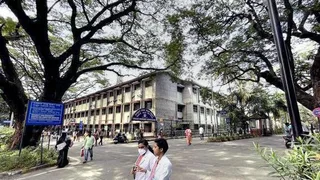
In March 2026, IIT Kharagpur—the oldest Indian Institute of Technology (IIT) that has been training thousands of minds to design bridges, cars, and computer chips for the last 75 years did something unprecedented. It formally applied to the National Medical Commission (NMC) to offer a postgraduate medical degree, the Doctor of Medicine (MD).
It was not an isolated move. In August 2026, an alumnus of IIT-Kanpur pledged a massive ₹400 crore boost —building on a landmark ₹100 crore donation in 2022 — to expand its medical school and 450-bed super-specialty hospital to offer postgraduate programs in super-specialty medicine.
Within days, IIT-Madras stepped up to announce an even bolder vision: offering not just an MD, but an MBBS and a Ph.D. in medicine through its School of Medical Sciences, started in 2023.
A century-old assumption — that engineering colleges build engineers and medical colleges make doctors — is falling apart.
For over six decades, the Indian Institutes of Technology (IITs) have served as India’s temples of engineering excellence. So why are they suddenly stepping into healthcare and running hospitals?
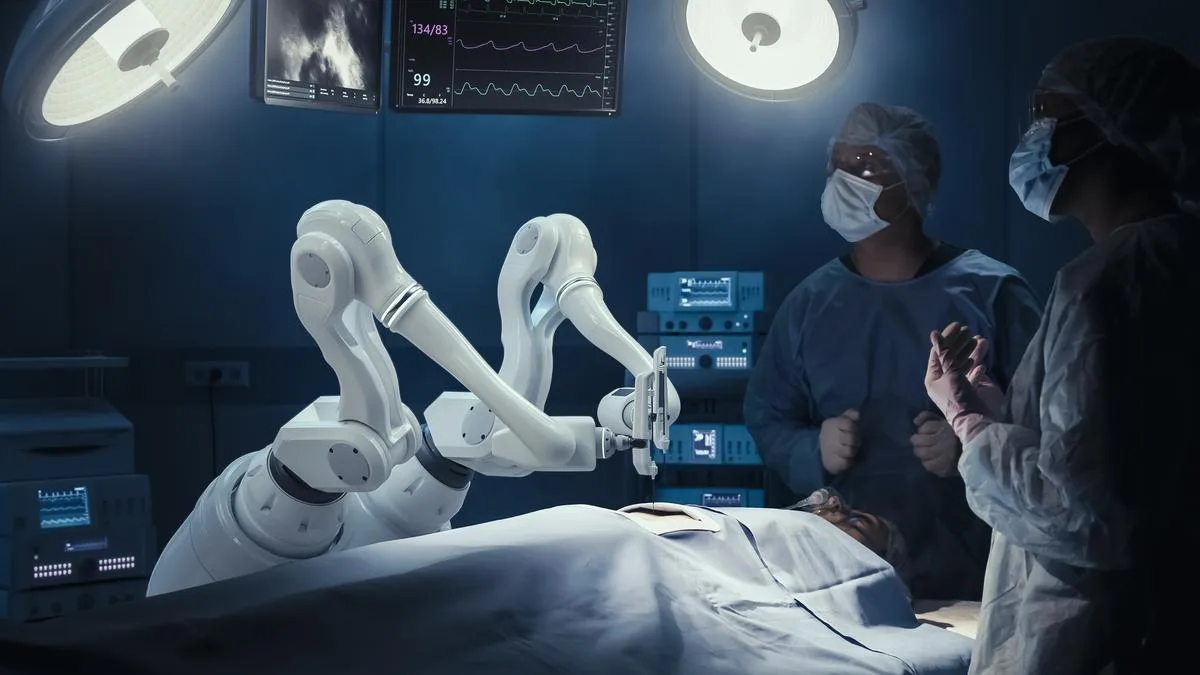
The short answer is: modern healthcare is no longer just about stethoscopes and prescriptions. It is driven by algorithms, microfluidics, robotic surgery, and biocompatible materials. Walk into a high-tech operating theatre today, and you will find as much engineering as medicine: robotic arms, real-time imaging, AI-assisted diagnostics, and 3D-printed implants.
Medicine is not the only sector witnessing this shift. Nursing and allied health are also transitioning. IIT Guwahati’s School of Health Sciences and Technology already trains students jointly with AIIMS Guwahati and the National Institute of Pharmaceutical Education and Research (NIPER). Meanwhile, IIT Kharagpur’s hospital project includes explicit plans for a nursing college and a paramedical training school alongside its medical courses.
India’s premier technology institutes have realised that the major challenges of this century — climate change, cancer, cognition, and clean energy — cannot be solved from inside a single-discipline silo. Engineering schools that just focus on engineering risk becoming mere component suppliers to the institutions that have a massive impact on solving these problems.
While the IITs made headlines with plans for traditional medical degrees, the Indian Institute of Science (IISc), Bengaluru, has pursued a distinctly different, research-first pathway into medical education.
Now established as the Tata IISc Medical School following a partnership with the Tata Group, the campus is executing an ambitious clinical and research infrastructure rollout.
The foundation stone for the 832-bed non-profit multi-specialty hospital — supported by a landmark ₹425 crore donation — was laid by the Prime Minister way back in June 2022 and was originally scheduled to be functional by December 2024.
5News aggregated this summary from the outlet’s public feed. The full article, with all the context, is on www.thehindu.com — the content belongs to The Hindu - Sci-Tech.