Muthanga eviction was a bid to crush the Adivasi movement: Geethanandan

Account subscription benefits alongside Premium Stories, Editorials, Opinions and more. Unlock these with Subscription
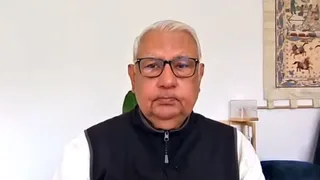
M. Geethanandan, social activist and State coordinator of the Adivasi Gothra Mahasabha (AGMS), during an interaction with ‘The Hindu’ in Kozhikode. | Photo Credit: K. Ragesh
The Muthanga land agitation of 2003 remains one of the most significant chapters in Keralam’s Adivasi rights movement. The stir culminated in a violent confrontation between security personnel and protesters inside the Muthanga Wildlife Sanctuary in Wayanad district, leaving police constable K.V. Vinod and Adivasi community member Yogi (Jogi) dead.
Last month, a court in Kalpetta, the administrative headquarters of Wayanad district, acquitted all those who faced trial in the Vinod murder case. It, however, sentenced M. Geethanandan, a social activist and State coordinator of the Adivasi Gothra Mahasabha (AGMS), which spearheaded the agitation, and three others to five years of rigorous imprisonment for attempting to murder another police officer.
More than two decades after the land struggle, its political and legal ramifications continue to be felt in Keralam. Mr. Geethanandan, who was granted bail after his sentence was suspended by the Kerala High Court, speaks to The Hindu about the Muthanga struggle, the long legal battle, Adivasi land rights and the challenges facing tribal communities.
After 23 years of legal proceedings, what does this case mean for the Adivasi community and their rights?
The court has referred to the Adivasis and described the Muthanga agitation as part of their struggle for freedom, which is a positive aspect. However, the 23-year-long trial has failed to address the broader social, historical and political context of the agitation.
The 2003 Muthanga land stir was the culmination of a two-decade-long Adivasi struggle. Earlier negotiations with the UDF (United Democratic Front) government led by then Chief Minister A.K. Antony resulted in an agreement and a rehabilitation package in 2001 to provide land to landless Adivasis through the Tribal Resettlement and Development Mission. When the agreement was not properly implemented, the Adivasis launched the Muthanga land occupation as a form of agitation.
Following the Muthanga agitation, land was distributed to several Adivasi families under the package, and the programme for providing land to the landless continues. However, this broader context and the long-standing struggle for land have not been adequately addressed in the trial.
Instead, the case has largely been treated as a criminal case against those who participated in the protest, leaving the wider social and political dimensions of the Adivasi struggle unaddressed.
Do you believe the system has failed to address the police action during the Muthanga eviction?
The suppression of the Muthanga agitation was, in our view, a horrific form of persecution of a vulnerable and totally unarmed community. The entire State machinery, particularly the police, was mobilised to crush the movement, while misleading police accounts and sections of the media helped isolate Adivasis and obscure the violence.
5News aggregated this summary from the outlet’s public feed. The full article, with all the context, is on www.thehindu.com — the content belongs to The Hindu - National.