Iran vows to retaliate after U.S. widens sanctions
Account subscription benefits alongside Premium Stories, Editorials, Opinions and more. Unlock these with Subscription
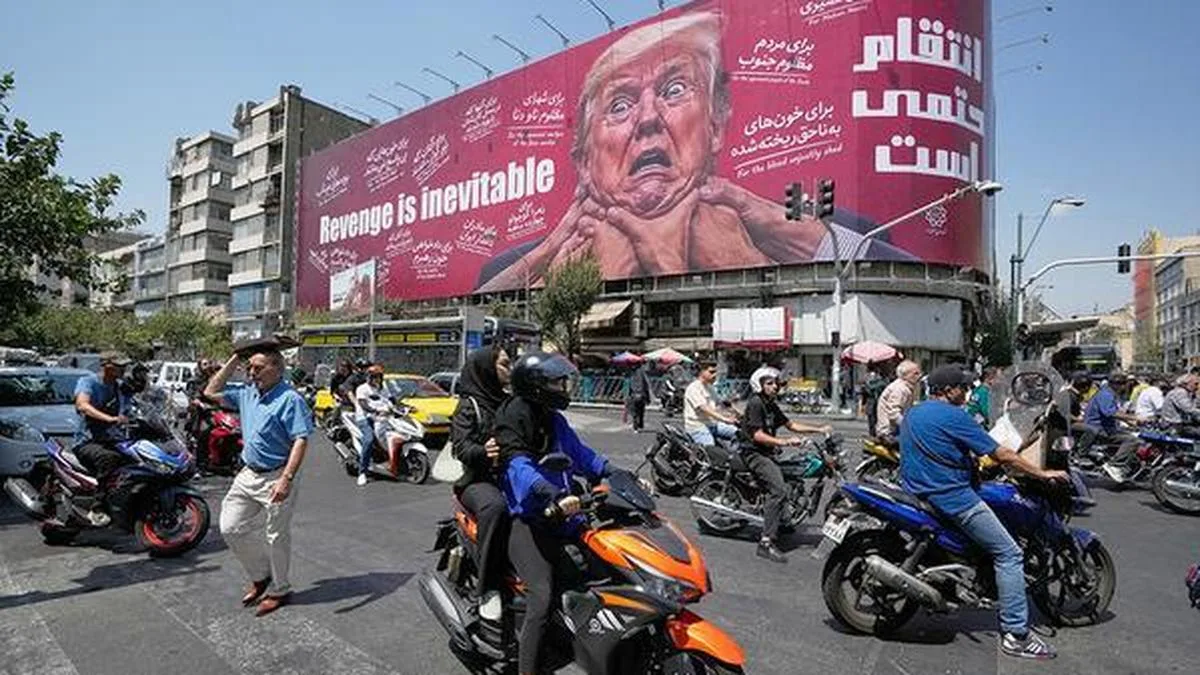
Motorcyclists pass a billboard depicting U.S. President Donald Trump with hands around his neck beneath the words "Revenge is inevitable" in Tehran, Iran, Monday, Aug. 24, 2026. | Photo Credit: AP
Iran promised to retaliate against expanded U.S. economic sanctions that the Americans said would cut off Iran’s economic lifeline, with Tehran expressing confidence that major trading partners would resist Washington’s pressure campaign.
U.S. Treasury Secretary Scott Bessent unveiled the measures on Monday (August 24) but stopped short of the most punishing sanctions, saying countries that continued trading with Iran risked being forced out of the dollar-based financial system.
Also Read | ‘Economic D-Day’: U.S. threatens Iran with new sanctions, Tehran fires back
Mr. Bessent declined to identify the countries that would be targeted or reveal when those penalties would take effect, saying he would instead provide them time to comply with the new directive.
The Treasury Department announced new sanctions on 60 individuals, entities and vessels, but the list did not include any of the Chinese financial institutions suspected of facilitating Iran’s oil trade.
Before the announcement, Iran threatened both a possible military response and further reduction in oil exports from the Gulf in response to any U.S. economic measures. Afterward, Iranian Economy Minister Ali Madanizadeh said, “We are fully prepared for the U.S. sanctions.”
“Naturally, the enemies intend to launch an economic terrorist attack on us, but we also have our own tools and know how to play the game. Our defense is no longer so defensive; the enemies should wait for an attack,” Madanizadeh told state television.
He also said neither China nor Russia had “accepted” the U.S. measures, and predicted other countries would resist them.
Brigadier General Hossein Mohebbi, a spokesperson for Iran’s Islamic Revolutionary Guard Corps, vowed heavy blows to U.S. vital interests and energy chokepoints if Iran’s infrastructure is threatened, Press TV reported.
Struggling to resolve an unpopular war that has pushed energy prices higher, the administration of President Donald Trump appears to be counting on further economic pressure even though Iran has spent decades under layers of U.S. and international sanctions that have battered its economy but have not deterred its leadership.
Though neither side has launched major strikes in weeks, the war shows little sign of reaching a diplomatic solution. In the meantime the U.S. is seeking new ways to end Iranian attacks on ships in the Gulf and, more recently via its allies, in the Red Sea.
Almost six months have passed since the U.S. and Israel launched strikes on Iran. While the war has degraded much of Iran’s conventional military capacity, inflicted economic pain and killed then-Supreme Leader Ayatollah Ali Khamenei, Iran has preserved enough missile and drone capability to attack its Gulf neighbors and threaten oil tankers in the Strait of Hormuz.
5News aggregated this summary from the outlet’s public feed. The full article, with all the context, is on www.thehindu.com — the content belongs to The Hindu.