With CM Vijay opening the Mettur dam, focus turns to longevity of water release
Account subscription benefits alongside Premium Stories, Editorials, Opinions and more. Unlock these with Subscription
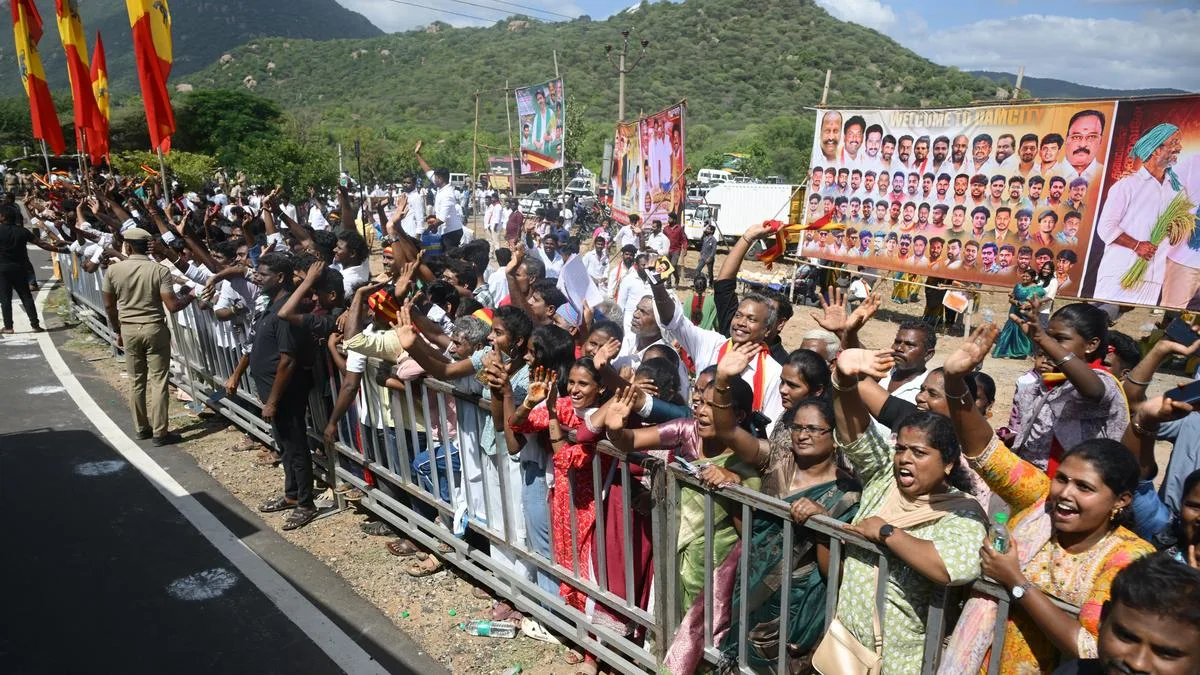
People are waiting for the arrival of Chief Minister C. Joseph Vijay for releasing water for delta irrigation from Stanley Reservoir in Mettur in Salem district in Tamil Nadu on September 1, 2026. | Photo Credit: E. Lakshmi Narayanan
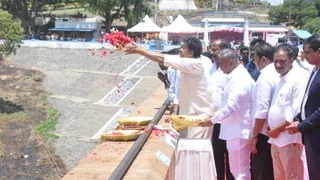
With Tamil Nadu Chief Minister C. Joseph Vijay opening the Mettur dam for irrigation on Tuesday (September 1, 2026) and the government planning to maintain the release for 45 days initially, the focus is on how long the authorities will be able to continue the release.
On Tuesday (September 1, 2026), the water level stood at 91.56 ft with the storage being about 54.45 thousand million cubic feet (tmc ft). The dam’s full level is 120 ft and the capacity is 93.47 tmc ft.
It appears the authorities will release one tmc ft a day. Given the storage and assuming the worst scenario of the State not realising any further inflow, they can maintain the release for about one and a half months, after giving allowance of 10 tmc ft for environmental flows, drinking water requirements and dead storage.
Another reason the government has taken into account is that the northeast monsoon, which normally yields one half of the annual rainfall for the State, is likely to set in on October 20, with a deviation of seven days either way.
Cauvery flow into Tamil Nadu during the difficult period of 2026-27 southwest monsoon
Note: Realisation is recorded at Billigundulu on the inter-State border where the Central Water Commission measures the flow. As against the quantum of 4.234 tmc ft to be released by Karnataka to Tamil Nadu during July 29-August 11 as per the decision of the Cauvery Water Management Authority, the realised figure was 8.27 tmc ft. Likewise during August 12-24, the stipulated quantum was 13.478 tmcft and the realised, 11.464 tmc ft. From August 25 to 30, the prescribed was 4.67 tmc ft and the received, 4.34 tmc ft.
One more factor the State government has considered is the possible realisation of the Cauvery water during September. Going by the data of realisation at Billigundulu in the last 30 years, the average figure is 36.8 tmc ft. So far, taking into account the monsoon deficiency of about 47% in the Cauvery catchment, nearly 20 tmc ft can flow from Karnataka in the next 30 days. In such an eventuality, the authorities will have the flexibility of continuing the release for another two weeks.
If one is to consider the worst scenario of water realisation in September, the lowest quantum that can be expected is around 10 tmc ft since 1974 when certain provisions of the 1924 inter-State agreement came for review. In September 1987, the State received was 10.57 tmc ft. .
5News aggregated this summary from the outlet’s public feed. The full article, with all the context, is on www.thehindu.com — the content belongs to The Hindu.