Tamil Nadu’s encroachment problem
Account subscription benefits alongside Premium Stories, Editorials, Opinions and more. Unlock these with Subscription
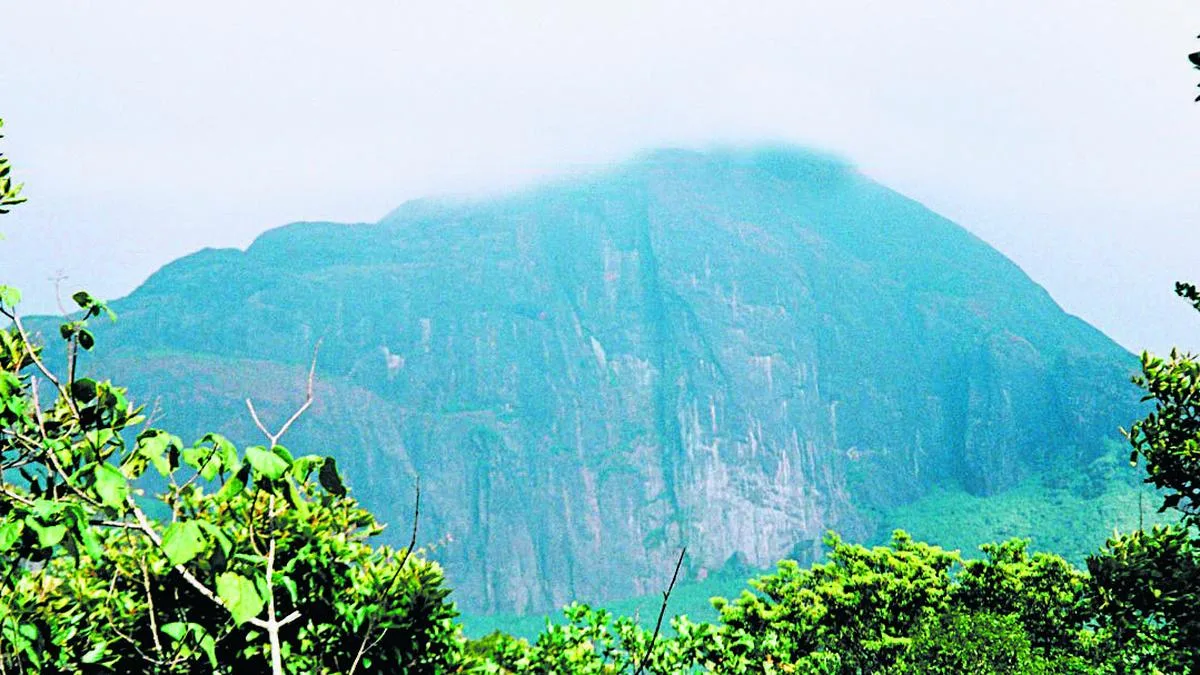
In 2025, the Supreme Court had directed the Central Empowered Committee to conduct an extensive survey of the Agasthyamalai landscape in order to identify all instances of non-forestry activities going on contrary to the Forest Conservation Act, 1980 and the Wild Life (Protection) Act, 1972 etc. | Photo Credit: Special Arrangement
Frustrated by the Tamil Nadu government’s inability to evict “encroachers” in the Agasthyamalai landscape, the Supreme Court recently said the matter required a structured, time bound, and closely monitored framework. A Bench of Justices Vikram Nath and Sandeep Mehta said that encroachments within the protected areas of the Agasthyamalai landscape, including the Kalakad Mundanthurai Tiger Reserve, the Srivilliputhur-Megamalai Tiger Reserve and the Kanyakumari Wildlife Sanctuary, have persisted over decades despite specific directions issued by the Madras High Court and the top court.
In fact, the Supreme Court went as far to suggest using the paramilitary to evict the encroachers to preserve and protect the ecologically sensitive regions.
Last year, the top court had directed the Central Empowered Committee (CEC) to conduct an extensive survey of the Agasthyamalai landscape in order to identify all instances of non-forestry activities going on contrary to the Forest Conservation Act, 1980 and the Wild Life (Protection) Act, 1972 etc. The CEC submitted its interim report and made several recommendations, including a time-bound, division-wise encroachment eviction plan.
With regard to the Kanyakumari Wildlife Sanctuary, the CEC reported sizeable encroachment, and non-availability of verified maps of the reserve forest. An area of 427.40 hectares has been encroached with 237.09 hectares involved in litigation. The report said that whenever the Forest Department had attempted evictions, law and order issues have arisen; a joint effort would be necessary.
Further, the CEC observed that the Srivilliputhur-Megamalai Tiger Reserve is one of the most ecologically vulnerable areas, as it forms the upper catchment of the Vaigai River, a critical water source for five downstream districts. As per official records of 2020, around 4,595 individuals are encroaching upon 5,071.27 hectares of reserved forest land. The CEC noted that these encroachments are old, with many of them involved in the permanent cultivation of crops such as silk cotton, cardamom, and beans, and that in spite of clear orders from the High Court to remove encroachments, no significant progress has been made so far. Moreover, a total of 116 government and public utility structures have been constructed inside forest lands without prior approval.
5News aggregated this summary from the outlet’s public feed. The full article, with all the context, is on www.thehindu.com — the content belongs to The Hindu - Sci-Tech.