Decoding 'constructive strategic stability' ahead of Xi's US visit
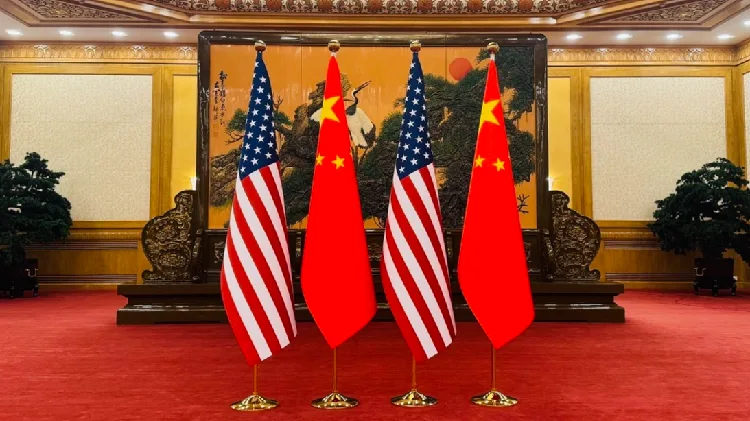
Chinese President Xi Jinping will pay a state visit to the United States from September 23 to 25 at the invitation of US President Donald Trump, with the two sides expected to discuss major issues concerning bilateral ties as well as broader global challenges.
The visit comes as China-US relations continue to feature the "constructive strategic stability" – a positive stability with cooperation as the mainstay, a sound stability with moderate competition, a constant stability with manageable differences, and an enduring stability with promises of peace.
What does this new positioning mean for the future of bilateral ties? What obstacles need to be overcome, and how can Beijing and Washington strengthen communication and manage differences to prevent competition from spiraling out of control? CGTN posed these questions to Hu Bo, director of the South China Sea Strategic Situation Probing Initiative and a research fellow at the School of International Studies, Peking University; Wang Honggang, director of the Institute of Peaceful Development at the Chinese Academy of Social Sciences; and Zhang Tengjun, associate research fellow at the Institute of American Studies at the Chinese Academy of Social Sciences.
CGTN: How do you understand the concept of "building a constructive China-US relationship of strategic stability"? What obstacles do the two sides need to overcome in practice? Hu Bo: The concept represents a repositioning of China-US relations after a period of prolonged strategic competition.
The process of stabilization actually began during the late period of the Joe Biden administration, as both sides, particularly the United States, recognized that they could not afford the costs of allowing competition to spiral out of control.
Therefore, stability is to some extent a result of necessity, and it is likely to be a long-term feature of the relationship that will not change substantially with a change of administration in the United States.
In practical terms, the two sides first need to ensure that military-to-military communication mechanisms remain open and effective, preventing excessive actions or escalation risks at the operational level.
Avoiding conflict between the two militaries is the most important common ground for stability.
Both sides should also reduce ideological approaches in their policies toward each other and avoid excessive politicization of bilateral relations.
Wang Honggang: The emergence of this new concept has objective foundations.
At least three factors are involved.
First is the growing convergence in the relative strength of China and the United States.
此摘要由5News从媒体的公开信息源汇聚而成。 包含完整背景的全文在www.cgtn.com — 内容归CGTN Politics (oficial)所有。