4 typhoons at once: Does climate change bring more devastating storms?
Editor's note: Wei Ke is a professor at the Institute of Atmospheric Physics, Chinese Academy of Sciences.
His opinions are his own and do not necessarily represent the views of CGTN.
Four typhoons spinning simultaneously across the Northwestern Pacific and the South China Sea on Monday marked an unusually active moment in this year's typhoon season.
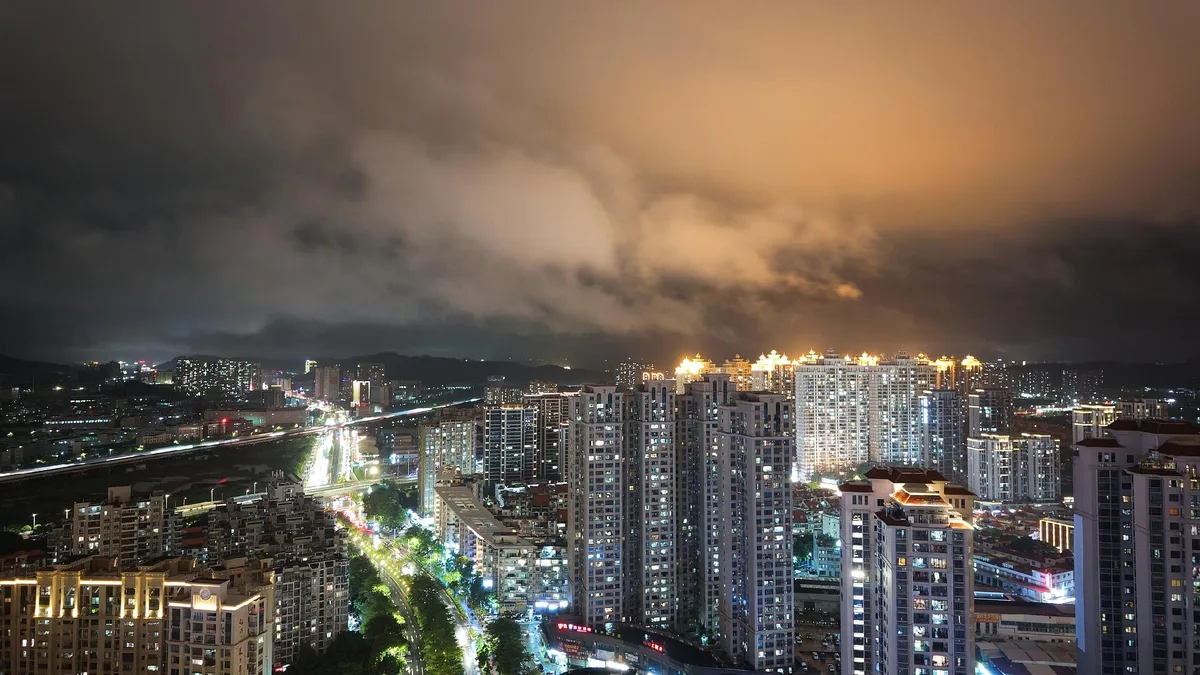
Typhoon Narra (19th named typhoon of this year) wreaked havoc across the Beibu Gulf; Typhoon Gaenari (20th) landed in southeast China's Fujian Province; Typhoon Saudel (18th), having traveled more than 3,000 kilometers across the Western Pacific, was gradually approaching the 48‑hour warning line.
Meanwhile, Typhoon Atsani (21st) was newly named, continuing to intensify and could threaten China.
Typhoon activity over the Northwestern Pacific has thus reached a seasonal peak.
Climatologically, an average of 13 to 14 numbered typhoons form over the Northwestern Pacific and the South China Sea between January and August.
This year has already seen 21 numbered typhoons, well above the long‑term mean.
This hyperactive typhoon season has drawn widespread public attention: Is global warming making typhoons more frequent? This seemingly straightforward question involves complex ocean-atmosphere interaction and cannot be answered with a simple yes or no.
Growing frequency and intensity Theoretically, typhoons originate over warm tropical oceans.
A global rise in sea‑surface temperature expands warm ocean areas and thickens upper‑ocean heat reservoirs, providing ample thermal energy for typhoon embryos to develop and intensify.
Even so, warm water is only one condition.
Typhoon formation depends on a mix of meteorological conditions: favorable wind‑humidity environments and suitable initial disturbances that serve as typhoon "seeds" over appropriate ocean areas.
These competing factors mean no simple link exists between global warming and total typhoon counts, leading to inconsistent research outcomes.
此摘要由5News从媒体的公开信息源汇聚而成。 包含完整背景的全文在www.cgtn.com — 内容归CGTN World (oficial)所有。