Super El Nino: Why 3 degrees of Pacific warming rattles global weather
Editor's note : This article was originally written in Chinese by Guo Zengyuan, senior engineer at China's National Climate Center.
The article represents the author's opinion, not necessarily CGTN's.
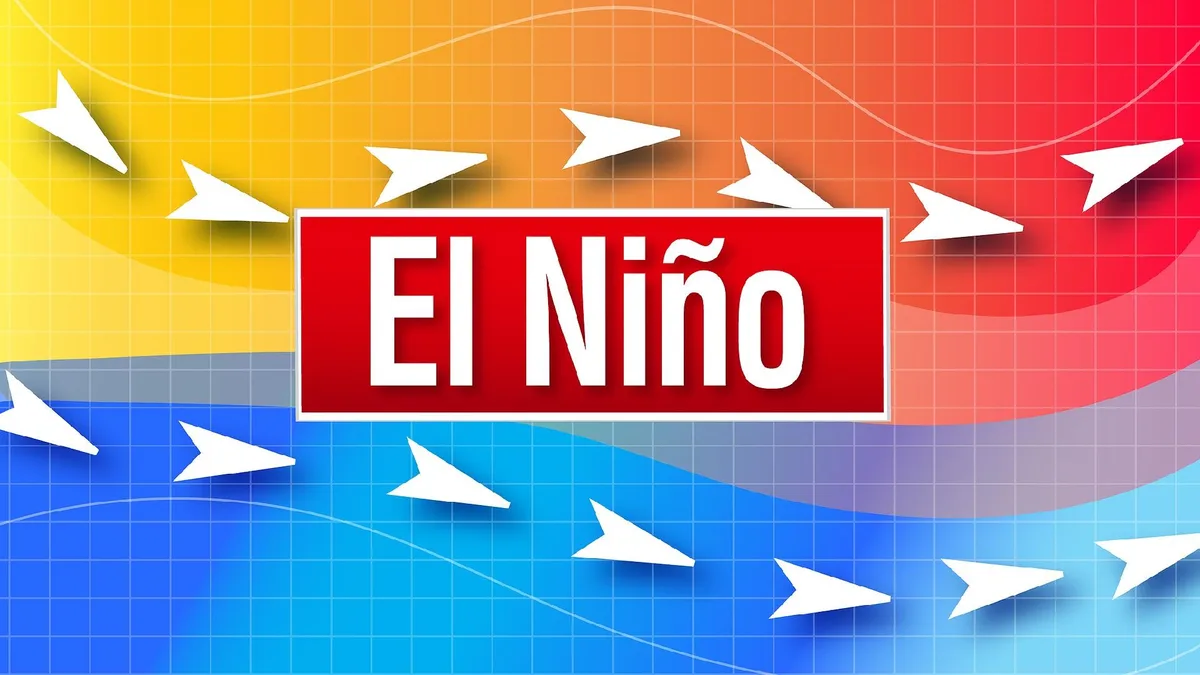
The equatorial Pacific has been warming steadily since September, and Chinese climate monitors say it is on track to become the strongest El Nino on record, likely peaking around November.
Sea-surface temperatures in the central and eastern equatorial Pacific have risen more than 3 degrees Celsius above normal – the first time the index has crossed that level on record at the seasonal scale, according to China's National Climate Center.
Forecasters expect the warming to keep fluctuating upward.
That raises an obvious question: A two or three degree swing in the air feels unremarkable, so how can a slightly warmer stretch of ocean disrupt weather around the world? Two things are easy to overlook.
First, El Nino is not a small patch of warm water.
It is a temperature anomaly spanning a vast stretch of the equatorial Pacific, and it usually lasts for months.
Second, the impact depends not just on how much the water warms, but on where.
The tropical ocean is a key source of heat and moisture for the atmosphere.
When the water is warmer, more moisture rises into the air, feeding clouds and rain – and that in turn changes where air rises and sinks.
El Nino shifts those zones, rearranging winds, pressure and rainfall across enormous regions.
A seesaw across the Pacific Normally, the equatorial Pacific is warm in the west and cool in the east.
Trade winds blow from east to west, piling warm surface water up near Indonesia, while cold water from deeper down wells up in the east to keep it cooler.
此摘要由5News从媒体的公开信息源汇聚而成。 包含完整背景的全文在www.cgtn.com — 内容归CGTN Tech & Sci (oficial)所有。