How a north China city is powering AI development with green energy
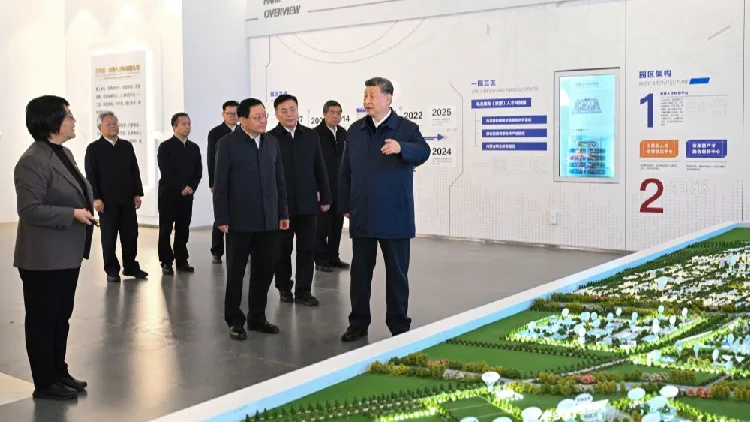
Ulanqab, a city in north China's Inner Mongolia Autonomous Region, is known as China's "potato capital" and "oat capital." Today, it is tapping its abundant wind and solar resources to power the growth of its computing industry, turning its natural advantages into new drivers of economic growth.
Since China launched its national "East Data, West Computing" project in 2022, Ulanqab has accelerated the development of its computing infrastructure.
In late 2025, the city unveiled a three-year development strategy to build a "token city," powered by green energy.
According to official data, the city had signed 109 computing center projects as of August 2026.
From January to August, the industry generated 5.68 billion yuan (about $849 million) in revenue, up 40.3% year on year.
Chinese President Xi Jinping visited Ulanqab on Friday, calling for better use of the region's abundant wind and solar resources to develop the green computing power industry.
He also stressed the need to coordinate high-quality development with high-level environmental protection and stay committed to a path of green development that prioritizes ecological conservation.
From traditional industries to green computing During his inspection, Xi visited the Chahar High-Tech Development Zone in Ulanqab, where he learned about Inner Mongolia's progress in advancing the construction of a hub for the "East Data, West Computing" project.
He stressed the need to ensure the efficient operation of completed projects and finish the construction of follow-up projects on schedule.
He also called for efforts to earnestly implement the requirements for efficient, green and safe development and actively promote the development of the green computing power industry.
The "East Data, West Computing" project aims to build a coordinated national computing network by directing computing demand from eastern China to western regions, optimizing the distribution of data centers and promoting regional development.
Inner Mongolia is one of eight national computing hubs established under the initiative.
Computing centers require reliable power supplies, high-speed networks and efficient cooling systems.
John Gong, a professor of economics at the University of International Business and Economics, told CGTN that Ulanqab has made effective use of its abundant renewable energy resources to power China's AI development and that Xi's visit underscored his support for Ulanqab's development model, which leverages local resource advantages to drive economic growth as well as technological innovation.
此摘要由5News从媒体的公开信息源汇聚而成。 包含完整背景的全文在www.cgtn.com — 内容归CGTN Politics (oficial)所有。