Why China’s rockets carry the name Long March
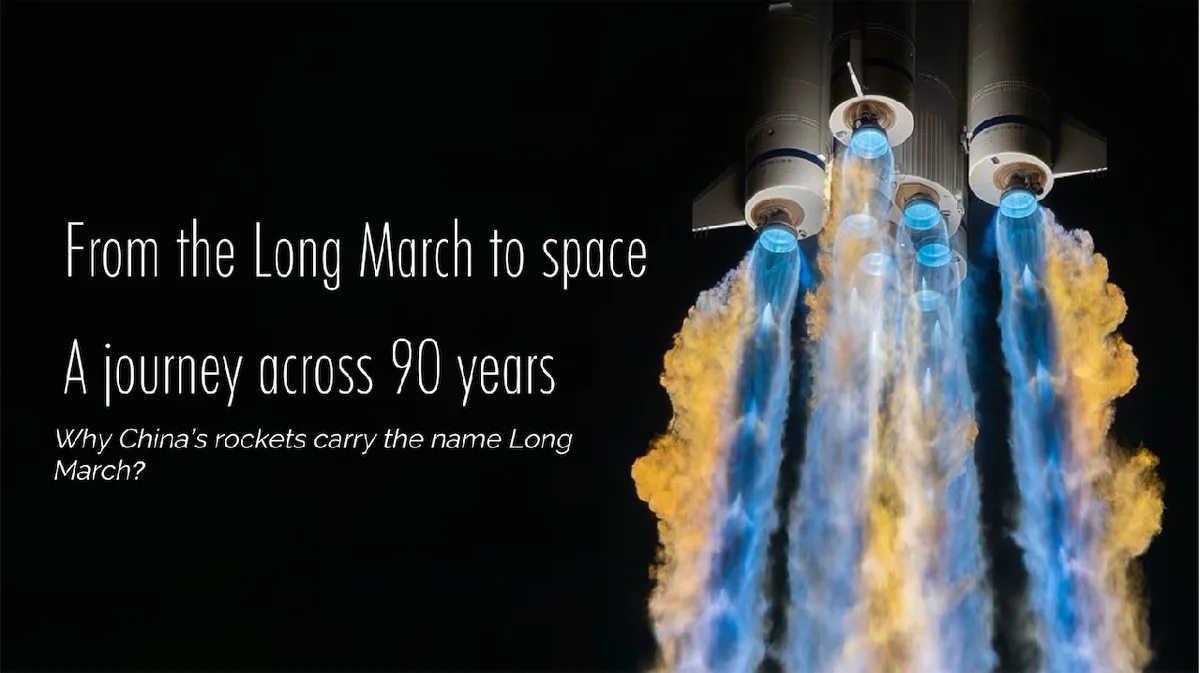
From the Xichang Satellite Launch Center in Sichuan, southwest China, Long March rockets continue to propel satellites and spacecraft into orbit.
The name can be traced back to the Red Army's Long March in the 1930s, one of the most defining episodes of modern Chinese history.
As China's space program grew over the decades, this name travelled alongside its rocket family.
The name was formally adopted back in 1966, when engineers set out to build the country's first satellite launch vehicle.
It was an uphill battle.
China's industrial foundation remained weak at that time, and access to foreign technology was extremely limited.
Designers relied on simple tools, even hand-cranked calculators, to crunch all the complex mathematics needed for rocket design and flight planning.
On April 24 1970, the Long March -1 rocket put China's first satellite, Dongfanghong-1, into orbit.
That launch marked China's arrival in the space age and gave this historic name fresh, new meaning.
Since then, Long March rockets have taken on a wide range of missions: satellite deployments, crewed space flights, lunar expeditions and deep-space exploration.
By October 10, 2026, the Long March family had completed 671 launches.
Learning from setbacks The story of Long March rockets is not just a list of milestones.
It also includes painful, hard-won failures.
On July 2, 2017, the Long March-5 Y2 rocket malfunctioned roughly 346 seconds after liftoff.
此摘要由5News从媒体的公开信息源汇聚而成。 包含完整背景的全文在www.cgtn.com — 内容归CGTN Culture (oficial)所有。