Sask. and B.C. researchers study use of psychedelics, harm reduction at music festivals
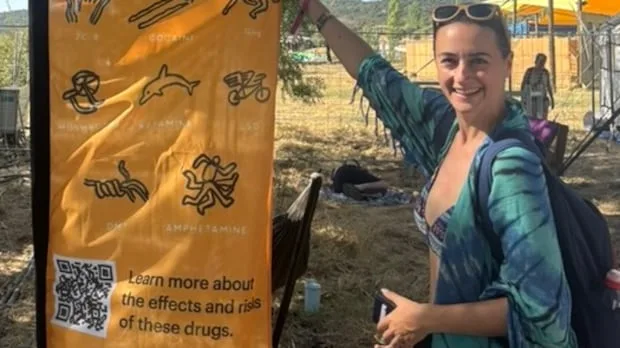
For decades, summer music festivals have been places where some people choose to use psychedelics and other drugs.
A research team is looking into how these events implement harm reduction and what can be learned from them.
Lead researcher Erika Dyck, a history professor at the University of Saskatchewan and a Canada Research Chair in the history of health and social justice, has spent the last two decades studying psychedelics.
Because music festivals are locations where these substances are more commonly used, they're also where harm reduction strategies are often implemented, Dyck told CBC’s Saskatoon Morning .
“They are recreational spaces, but they are nonetheless still places where people look to care for each other and look to reduce harms.”
Psychedelic historian takes research out of the clinic and onto festival grounds
Kenneth Tupper, an adjunct professor at the School of Population and Public Health at the University of British Columbia, is part of the research team for the project.
He said drug checking practices started in Canada with music festivals.
“[It] sort of took off in Canada as part of the toxic drug crisis response around 2016. That was when it was declared a public health emergency in British Columbia,” Tupper said.
The British Columbia Centre on Substance Use implemented a new type of instrument, an FTIR spectrometer, to test drugs around 2017. Its portability made it ideal for use at festivals like Shambhala, Bass Coast and others, he said.
Music festivals focus on harm reduction efforts as B.C.'s toxic drug crisis enters 10th summer
The Regina Exchange Folk Festival celebrated its first edition this month. Artistic director Zandra Kaszas said harm reduction and safety were key to preparations for the event.
“You don't want to think that it's ever going to happen, but we also wanted to be prepared for it,” Kaszas said.
Besides general safety measures like security, hydration stations and an ambulance on site, the Nēwo Yōtina Friendship Centre (NYFC) was at the festival with a naloxone station in case of overdoses.
5News aggregated this summary from the outlet’s public feed. The full article, with all the context, is on www.cbc.ca — the content belongs to CBC Technology.